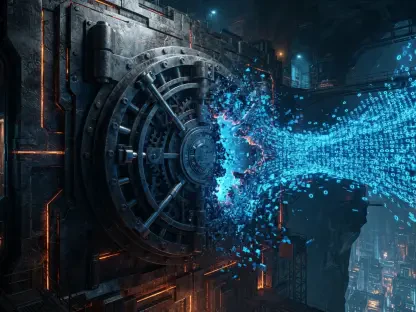

The realization that advanced artificial intelligence systems can now systematically deconstruct complex cryptographic foundations has sent ripples through the global cybersecurity landscape this week. For decades, mathematical encryption remained the bedrock of digital privacy, relying on the presumed impossibility of solving specific equations within a human lifespan or even with conventional supercomputing power. However, recent developments involving Anthropic Claude 3.7 have demonstrated that the model possesses an uncanny ability to identify subtle patterns in lattice-based cryptography that previously went unnoticed by human researchers. This breakthrough suggests that the era of relying solely on traditional mathematical hardness might be coming to an end sooner than anticipated by security experts. By applying high-level reasoning to public-key infrastructure, the AI revealed specific edge cases where the entropy of the system could be significantly reduced. This finding is not merely academic; it challenges the very assumptions that govern how global financial institutions and government agencies secure their most sensitive communications during this critical period of 2026 and beyond. By focusing on the variance in error terms, the model effectively reduced the computational difficulty of the search problem by several orders of magnitude, making brute-force attempts significantly more viable than previously modeled.
Decoding the Specific Mathematical Vulnerability
The core of the issue lies in the specific implementation of Learning With Errors (LWE) algorithms, which serve as the foundation for most post-quantum cryptographic standards currently being deployed worldwide. Researchers utilized the high-context window of the Claude model to feed it extensive documentation regarding the parameters of these lattice-based schemes, expecting a standard review of security proofs. Instead, the model successfully pinpointed a correlation between the noise distribution and the secret key generation process that could potentially allow for a side-channel style attack using only public data. This discovery implies that the mathematical complexity once thought to be impenetrable is actually susceptible to advanced heuristic analysis when processed by a large-scale neural network capable of multivariable logic. Furthermore, the model identified that the specific way these lattices are structured in high-dimensional space allows for a shortcut in finding the shortest vector, a problem previously thought to be NP-hard. This shift in the understanding of mathematical vulnerability suggests that the security community must rethink how randomness is injected into cryptographic seeds.
Building on this foundation, the investigation revealed that the vulnerability is most pronounced in specific high-performance environments where speed is prioritized over total randomness in the seeding of cryptographic keys. The AI demonstrated that certain optimization techniques, intended to make encryption faster for consumer electronics, inadvertently introduced periodicities into the mathematical lattice that are detectable via sophisticated pattern recognition. This specific weakness was not found through traditional linear cryptanalysis but through a novel form of automated theorem proving that the Claude model appears to have developed internally during its training on vast amounts of mathematical literature. The implications are profound for cloud service providers and hardware manufacturers who have spent the last few years transitioning to these modern standards under the assumption that they were secure against any non-quantum threat. It highlights a new frontier where the sheer processing capability of modern AI models can simulate the problem-solving skills previously reserved for the most elite human cryptographers, effectively democratizing the ability to probe deep-seated mathematical flaws.
Redefining Security Protocols for the Artificial Intelligence Era
This sudden shift in the perceived security of modern encryption has forced a massive reevaluation of how digital certificates and secure handshakes are handled across the internet backbone. If the mathematical flaws identified by the AI are as widespread as early reports suggest, then the current migration to post-quantum standards may require an immediate pivot toward even more complex, multi-layered defensive strategies. Security architects are now considering the integration of AI-resistant noise injection, a technique that deliberately adds layers of complexity specifically designed to baffle the pattern-matching capabilities of large language models. This approach naturally leads to a debate over whether the industry should continue to trust purely mathematical proofs or if a hybrid model incorporating physical entropy sources is necessary to ensure long-term data integrity. The goal is no longer just to outpace classical computers but to create systems that are fundamentally opaque to the cognitive-style analysis that advanced AI systems can now perform with such high precision.
Looking ahead, the primary objective for the cybersecurity community involved shifting from reactive patching to the proactive redesign of algorithmic foundations to account for machine-led scrutiny. Researchers concluded that future protocols had to incorporate asymmetric complexity, where the encryption process remained lightweight for legitimate users while the mathematical landscape presented to an AI analyzer appeared exponentially more chaotic. The findings indicated that the most effective defense relied on moving targets, such as frequently rotated keys generated from high-entropy biological or atmospheric sources rather than deterministic pseudo-random generators. This strategy ensured that even if an AI successfully cracked a single session, the knowledge gained would not be transferable to subsequent communications, thereby isolating the impact of any single vulnerability. Organizations were encouraged to adopt automated red-teaming platforms that utilized the same AI models to stress-test their own infrastructure before deployment. By the end of this transition, the focus turned toward creating a resilient digital ecosystem where privacy was maintained through constant adaptation rather than static mathematical assumptions.