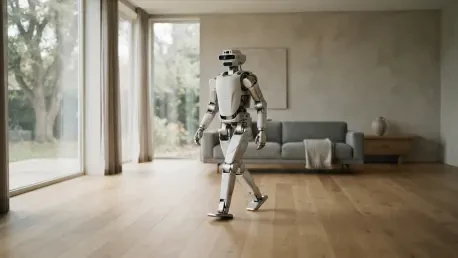

By testing the system across 360 individual trials in six distinct real-world environments, Apple has provided a data-driven analysis of the current reliability of humanoid locomotion. This research initiative, titled HALO or “Perceptive Humanoid Motion from Simulation,” marks a decisive evolution in the company’s artificial intelligence strategy as of November 2026. While the world has become accustomed to the digital intelligence of Siri and the broader Apple Intelligence ecosystem, HALO represents a strategic pivot into the complex field of embodied AI. This discipline seeks to move intelligence beyond the screen and into the physical world, creating machines that can navigate, interact with, and manipulate their surroundings with human-like dexterity. By releasing this technical disclosure, the robotics division has signaled that the next frontier of the user experience involves physical autonomy, where software is no longer a passive observer but an active participant in the human environment.
The Technical Architecture: Principles of HALO
Bridging the Digital and Physical Gap
The primary challenge in modern robotics remains the “sim-to-real” gap, a phenomenon where algorithms that perform perfectly in computer simulations fail when faced with the friction, lighting variations, and unpredictable physics of the real world. Apple’s HALO architecture addresses this by utilizing a sophisticated control system that prioritizes generalized motion over specific, pre-programmed maps. Instead of requiring a human operator to guide the robot through every possible scenario—a process known as imitation learning that is both slow and expensive—HALO employs a simulation-first pipeline. This allows the system to develop a robust sense of spatial awareness and motor coordination in a virtual space where failure has no physical cost. By the time the logic is deployed onto a physical humanoid, it has already encountered thousands of variations of floor textures, lighting conditions, and structural obstacles, making it far more resilient than its predecessors.
The implementation of this architecture represents a shift away from rigid, rule-based robotics toward a more fluid, neural-network-driven approach. By focusing on the underlying mechanics of motion rather than specific environmental maps, the HALO system achieves a level of adaptability that allows it to operate in unmapped spaces. This “zero-shot” capability means that the robot does not need a floor plan to begin moving; it perceives the world in real-time, using its simulated training to fill in the gaps in its knowledge. This approach is fundamental to creating a robot that can function in a dynamic home or office where chairs are moved, doors are left ajar, and people are constantly in motion. The resulting control logic is not just a set of instructions, but a learned behavior that mimics the way humans and animals navigate the complexities of their physical surroundings without needing a manual.
Simulation Pipelines and Massive Virtual Data
To build this level of competence, researchers leveraged approximately 300 hours of simulated human-like motion data across a wide variety of environments. This data was generated in roughly 1,000 distinct virtual rooms, each featuring unique furniture layouts, corridor widths, and floor plans. The scale of this virtual training is significant because it bypasses the physical limitations of real-world testing. In a traditional laboratory setting, collecting 300 hours of high-quality locomotion data would involve months of manual labor, frequent hardware maintenance, and the risk of damaging expensive prototypes. In a digital environment, these hours can be compressed into a fraction of the time, allowing the AI to iterate through millions of subtle adjustments to its walking gait and balance. This virtual diversity ensures the robot understands the concept of an obstacle rather than just the specific dimensions of a single room.
Furthermore, the simulation pipeline allows for the testing of extreme edge cases that would be dangerous to attempt in reality. The HALO system was exposed to uneven terrain, slippery surfaces, and unexpected physical nudges in the virtual world, teaching it how to recover its balance before it ever stepped onto a physical floor. This foundation of varied experience is what enables the robot to generalize its knowledge when it encounters a new piece of furniture or an unfamiliar rug. Instead of stalling or requiring a human reset, the system can draw from its vast library of simulated experiences to determine the safest and most efficient path forward. This methodology positions simulation as the primary engine of data generation in the 2026 robotics landscape, allowing for a pace of development that was previously unthinkable when researchers were limited by the physical constraints of a laboratory.
Computing Power and Task Coordination
Understanding the Advanced Capabilities of the Integrated Onboard Brain and the Revolutionary Power of Apple Silicon Technology
A critical component of the HALO system is its reliance on local, on-device inference facilitated by specialized hardware. The researchers opted to use a Mac mini powered by the M4 Pro chip with 64GB of unified memory as the primary processing unit for the robot. This choice was highly intentional, as it highlights the efficiency and power of current M-series silicon in a mobile, battery-powered context. By performing all “thinking” locally on the robot’s back, the system eliminates the latency issues associated with cloud-based processing. In robotics, a delay of even a few milliseconds in processing a vision frame or a balance sensor reading can result in a catastrophic fall. The high-bandwidth unified memory architecture of the M4 Pro allows the motion controller and the visual sensors to share data instantaneously, ensuring that the robot’s reactions are as near-instantaneous as possible.
Beyond performance, the use of local silicon serves a broader strategic objective regarding user privacy; in 2026, the prospect of a camera-equipped robot navigating a private home or office raises significant security concerns. Apple’s focus on on-device processing ensures that sensitive visual data never leaves the robot’s internal hardware. By proving that a Mac mini can handle the intensive demands of humanoid motion and high-level task planning, the company is demonstrating that powerful embodied AI does not have to come at the cost of data sovereignty. The thermal efficiency of the M4 Pro also allows the robot to operate for extended periods without overheating or draining its battery at an unsustainable rate. This makes the chip a leading contender for the “engine” of autonomous machines, capable of running complex neural networks while remaining cool enough for a compact humanoid chassis.
Orchestrating High-Level Tasks with Large Language Models to Enhance Complex Workflow Automation and System Efficiency
The HALO system does not simply move; it understands intent through the integration of a Large Language Model (LLM) that serves as its high-level task coordinator. For this project, researchers utilized Alibaba’s Qwen3.6-35B-A3B, an open-weight model that employs a “Mixture of Experts” (MoE) architecture. This design allows the system to remain highly efficient by activating only a small subset of its 35 billion parameters—roughly 3 billion—for any given task. Such efficiency is vital for maintaining high performance on mobile hardware. When a human provides a natural language command, such as “Go find the blue box and push it toward the hallway door,” the LLM acts as the brain that breaks this complex instruction down into a series of logical subtasks. It translates abstract human intentions into concrete physical goals, which the HALO motion engine then executes through motor control.
This hierarchy of intelligence—where a language model handles the logic and a motion engine handles the movement—bridges the gap between digital interaction and physical labor. The LLM allows the robot to handle ambiguity and context in ways that traditional robotics cannot. If a requested object is obscured, the language model can determine that the robot needs to move to a different vantage point to continue its search. This multilayered software stack represents a significant advancement in how we interact with machines. Instead of programming a specific path, the user simply communicates an outcome, and the system autonomously calculates the necessary physical maneuvers. This integration of reasoning and movement is the core of what makes HALO an example of true embodied intelligence, moving beyond simple automation into the realm of autonomous problem-solving.
Performance Benchmarks and Functional Reliability
Quantifying Success in Unmapped Environments
The reliability of the HALO system was rigorously tested across 360 individual trials, where it was challenged to perform in environments it had never encountered during its simulation phase. These tests included tasks such as following a person in motion, navigating through narrow corridors, and manipulating objects like boxes. In single-task scenarios, the system achieved an impressive 91% success rate. This level of proficiency in unmapped spaces is a major milestone for sim-to-real transfer, suggesting that virtual training has reached a point where it can accurately predict and prepare for the nuances of physical reality. The robot demonstrated a keen ability to generalize its knowledge; for instance, when it encountered a chair or a desk in a style not present in its training data, it was still able to identify the object as a solid obstacle and navigate around it safely.
Such a high success rate also highlights the maturity of the vision-processing algorithms that feed into the HALO motion controller. The system must constantly interpret a stream of visual data to understand depth, surface friction, and object persistence. Achieving 91% reliability means the robot is not just guessing but making informed, real-time decisions based on a stable internal model of the world. For a research platform operating in 2026, these results are among the strongest in the industry, particularly for a system that does not rely on pre-mapped environments or constant human supervision. It validates the “simulation-first” hypothesis, proving that with enough virtual diversity, a robot can enter a completely novel space and perform useful work with a level of competence that rivals systems trained through more laborious, real-world methods.
Overcoming Constraints in Sequential Operations
Despite the success in single-task trials, the HALO research also highlighted the inherent difficulty of complex, multi-step operations. When three tasks were chained together—such as finding an object, navigating to it, and then pushing it to a specific location—the success rate dropped to 70%. This decline is a classic example of “compounding errors” in robotics. If each individual step has a small chance of failure, those probabilities multiply as the sequence grows longer. A slight miscalculation in the first step can leave the robot in a suboptimal position for the second, eventually leading to the failure of the entire mission. This phenomenon is one of the most significant barriers to creating truly autonomous domestic assistants that can handle a whole afternoon of chores without human intervention.
To address this 70% bottleneck, the research points toward the necessity of “recovery behavior,” as the HALO system currently struggles to understand how to reset itself after making a mistake. The next stage of development will focus on teaching the robot to recognize its own failures in real-time and execute a “re-plan” sequence. This will involve the robot backing up, reassessing its surroundings through the LLM, and attempting a different physical approach to the task. Solving this problem of sequential reliability represents the “last mile” of humanoid robotics. While a 91% per-step success rate is excellent for a research prototype, reaching the 99.9% reliability required for a consumer product will necessitate a system that is not only smart enough to move correctly but also resilient enough to fix its own errors when things inevitably go wrong.
Market Positioning and Competitive Strategy: Establishing a Sustainable Advantage in a Rapidly Evolving Global Marketplace
Navigating Partnerships and Industry Shifts
The disclosure of the HALO project sent immediate ripples through the global technology and robotics markets. One of the most notable aspects of the report was the hardware choice: the Unitree Robotics G1 humanoid platform. This decision caused a surge in investor interest in Chinese robotics manufacturers, as it served as a high-profile validation of the G1’s capabilities. However, market analysts have been careful to distinguish between a research testbed and a formal production partnership. By choosing a commercially available chassis, Apple signaled that it is currently prioritizing the development of the “AI brain” over the mechanical “body.” This hardware-agnostic approach allows the company to iterate on its software across multiple physical platforms without being tied to a single manufacturing line or specialized robotic design.
This strategy reflects a broader trend in the 2026 tech landscape, where the value of robotics is increasingly seen in the software and the underlying silicon rather than the metal and plastic of the frame. By using the Unitree G1, Apple was able to bypass years of mechanical engineering to focus directly on the challenges of locomotion and task planning. This move also suggests that the future of robotics may involve a split between “platform providers” who build the robots and “intelligence providers” who develop the operating systems. Apple’s position as a leader in both consumer electronics and high-performance silicon makes it uniquely suited to become the dominant provider of the intelligence layer. This approach allows the company to stay flexible, potentially moving its HALO software to its own proprietary hardware designs once the software has reached a sufficient level of commercial maturity and reliability.
Comparing Embodied Intelligence with Its Primary Technological Rivals to Determine the Future of Autonomous Systems and Cognitive Architectures
When compared to other major players in the humanoid space, such as Tesla’s Optimus program, Apple’s HALO project reveals a distinct philosophy. Tesla has leaned heavily into a data-rich approach, utilizing the vast amounts of video data gathered from its fleet of vehicles and employing human teleoperation to “teach” its robots how to move. This is essentially a massive imitation exercise. In contrast, Apple’s “compute-heavy” approach through HALO relies on the power of simulations and advanced physics engines to generate its own training data. This allows for much faster iteration cycles, as the robot can “live” through thousands of scenarios in a virtual environment while a physical robot is still being unboxed. The Apple method focuses on creating a system that can reason its way through a problem using local compute power, rather than just repeating a motion it saw a human perform.
Furthermore, the privacy-first stance of local inference sets Apple apart from many other robotics startups that rely on cloud connectivity for their high-level logic. In 2026, the competitive landscape is defined not just by how well a robot can walk, but by how well it respects the boundaries of the user’s home. By proving that a Mac mini can run a 35-billion-parameter model and a complex motion engine simultaneously, Apple is challenging the notion that high-end AI requires a massive server farm. This positions Apple Silicon as a critical component of the robotics supply chain, potentially making it the preferred choice for any company looking to build autonomous machines that value security and low-latency performance. This technological path suggests that the race for humanoid dominance will be won by whoever can pack the most intelligence into the smallest, most efficient power envelope.
Strategic Ecosystem Synergy and Future Growth
Integrating Robotics with Existing Services
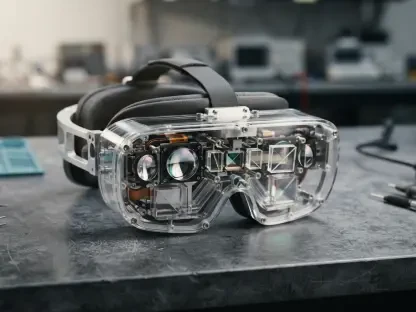
The research conducted through the HALO project has implications that extend far beyond the realm of bipedal robots. These advancements in spatial awareness and obstacle avoidance can be directly integrated into Apple’s existing product lineup to enhance the user experience. For instance, the same vision-processing logic used to help a humanoid navigate a room can be applied to accessibility features in iOS, helping visually impaired users navigate complex physical environments with high-precision audio feedback. Similarly, spatial mapping technologies are a natural fit for the Vision Pro headset, where understanding the geometry of a room is essential for creating convincing augmented reality overlays. The HALO project serves as a high-intensity laboratory for technologies that will eventually become standard features across the entire Apple ecosystem.
Moreover, the integration of Siri with the high-level planning capabilities of an LLM like Qwen points toward a future where digital assistants have physical agency. As of 2026, the “Siri of the future” is being envisioned as a coordinator that can bridge the gap between a digital request and a physical action. This could manifest as a home automation system that does not just turn on the lights but understands how to manage physical devices within a space. The HALO research provides the foundational motor skills and logic required for such a future. By solving the problem of how a machine moves and reasons in a 3D space, Apple is laying the groundwork for a more cohesive ecosystem where the digital and physical worlds are no longer separate. This synergy ensures that even if a standalone robot is not released immediately, the R&D investment will pay dividends across the company’s diverse product portfolio.
Moving Toward the Development and Implementation of Robust Commercial Applications for Industrial Environments
As the HALO project moves forward, the focus is shifting from basic locomotion toward the long-horizon logic required for commercial viability. For a robot to move from the research lab into the marketplace, it must demonstrate a level of reliability that matches the expectations of a consumer appliance. This means moving past the 70% success rate for chained tasks and developing a system that can handle hours of unsupervised operation. The research indicates that the next few years will see a heavy emphasis on “self-healing” AI, where the robot can detect if a motor is underperforming or if its visual sensors are being obscured by sunlight, and adjust its behavior accordingly. This robust, industrial-grade reliability is what will eventually separate laboratory prototypes from the domestic assistants that populate the homes of the future.
The path toward a consumer release will also involve refining the human-robot interaction aspect of the HALO system. While current research focuses on technical performance, the next phase will likely explore how these machines move around humans without being intrusive or intimidating. This includes “socially aware” navigation, where the robot understands personal space and can predict the movement of people in a crowded room. By 2026, the benchmarks established by HALO will have provided a clear roadmap for the industry. The focus is no longer on whether a humanoid robot can walk—that has already been proven. The question now is how quickly these systems can be made reliable, safe, and intelligent enough to become a ubiquitous part of daily life. Apple’s disciplined approach to this challenge suggests they are playing the long game, prioritizing a solid technical foundation over a premature product launch.
The Strategic Path Forward
The HALO research project has effectively demonstrated that the combination of simulation-first training and high-performance local computing power can overcome many of the traditional hurdles in humanoid robotics. By achieving a 91% success rate in single-task trials within unmapped real-world environments, the team confirmed that digital simulations are a powerful and efficient substitute for the slow process of physical data collection. The project also proved the viability of using standard Apple Silicon, such as the M4 Pro, to drive complex, multilayered AI systems on a mobile platform. This has significant implications for the future of privacy and performance in autonomous machines, showing that high-level reasoning and physical control can coexist within a local, secure hardware environment.
Looking ahead, the focus of the robotics industry has shifted toward the challenge of task chaining and autonomous error correction. The drop in success rates during sequential operations highlighted a critical area for future innovation, specifically the need for robots to possess a form of “physical common sense” that allows them to recover from mistakes. The research findings established a clear baseline for performance as of 2026, providing a framework for iterative improvements in both software logic and hardware efficiency. As these systems continue to evolve, the integration of embodied AI into the broader technology ecosystem has proven to be not just a possibility, but an inevitable progression of the current trajectory of machine intelligence. The HALO initiative succeeded in moving the conversation from theoretical robotics to practical, data-driven milestones that will define the next generation of physical computing.