
The dream of a truly intuitive smart home has often been hampered by the friction of incompatible ecosystems and assistants that fail to understand the nuances of daily life. For several years, homeowners have struggled with a fragmented landscape where simple tasks, such as dimming lights or adjusting thermostats, required navigating multiple apps or repeating voice commands several times. Apple is now addressing these long-standing frustrations by shifting its focus toward a deeply integrated AI-driven ecosystem that centers on a versatile new smart display. This strategy moves beyond selling individual gadgets, aiming instead to establish a comprehensive “brain” for the house that manages everything from security to communication. By leveraging advanced silicon and local processing, the company seeks to create an environment where technology proactively responds to user needs rather than waiting for explicit prompts. This transition represents a significant step in making the automated home a practical reality for the average consumer, moving away from the novelty of connected bulbs toward a unified, intelligent living space. It is a bold move to regain dominance in the smart home sector.
Designing the Hardware Brain: Physical Interfaces
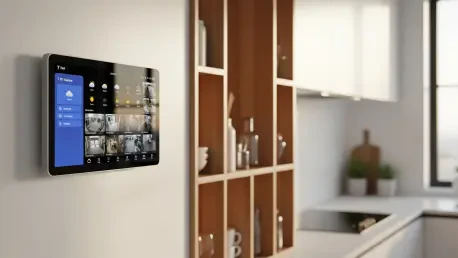
The centerpiece of this renewed push is a 7-inch smart hub that offers a balance between traditional tablet functionality and a permanent household fixture. This device is being developed in two distinct form factors to accommodate different domestic layouts: a tabletop model for communal spaces like kitchens and a wall-mounted version for high-traffic hallways or entryways. By utilizing magnetic mounting systems, the hardware becomes a flexible part of the home infrastructure rather than just another mobile device that gets lost between couch cushions. This approach allows the hub to maintain a constant presence, serving as a persistent portal for home management and real-time information. The inclusion of high-quality speakers and a wide-angle camera ensures that it can also function as a central hub for media consumption and video calls. These design choices reflect a commitment to creating a permanent, reliable interface that bridges the gap between digital services and the physical environment of the modern household. It acts as the anchor for all future home automation.
Supporting this hardware is a specialized operating system that draws inspiration from the most successful elements of existing software platforms. By blending the visual richness of a television interface with the glanceable, high-density information found on a smartwatch, the hub provides an intuitive experience that is readable from across a room. This hybrid interface allows users to monitor security feeds, check weather forecasts, and control appliances with minimal interaction, addressing the unique ergonomics of a stationary screen. The system is designed to be highly responsive, utilizing localized processing to ensure that home controls react instantly without the latency often associated with cloud-based solutions. Furthermore, the software architecture prioritizes simplicity, allowing every family member to navigate complex smart home settings without a steep learning curve. By focusing on the specific needs of a stationary home panel, the company has created a platform that feels distinct from a standard tablet, offering a more tailored and efficient way to manage a growing network.
Navigating the Intersection: Personalization and Privacy
One of the most transformative features of this new hub is the integration of ambient facial recognition technology, which allows the device to identify residents as they enter its vicinity. Unlike traditional biometric systems that require active participation, this implementation continuously monitors the environment to surface personalized data, such as private calendar entries, individual reminders, or curated music playlists. This capability effectively eliminates the friction of manual account switching, ensuring that a shared household device feels custom-tailored to whoever is currently standing in front of it. By recognizing different users, the hub can adjust its interface and functionality in real-time, providing a level of convenience that was previously unattainable in a multi-user environment. This proactive personalization is a key differentiator in the competitive smart home market, positioning the hub as a proactive assistant that understands the context of the household. It moves the user experience beyond generic automation toward a system that recognizes individuals.
However, the introduction of always-on monitoring systems brings significant ethical and privacy challenges that must be addressed to maintain long-term consumer trust. Concerns regarding how the device handles guests or “non-users” are paramount, as the system must distinguish between residents and visitors to prevent unauthorized access to sensitive personal information. There is also the potential for data leakage within the family unit, where private notifications might be inadvertently displayed to other members who happen to be nearby. To mitigate these risks, the company is doubling down on on-device encryption and localized data processing, ensuring that biometric information never leaves the home network. Despite these safeguards, the balance between high-end AI functionality and strict privacy remains a delicate one, especially as premium features may eventually be tied to cloud-based subscription models. Successfully navigating these hurdles will be essential for the widespread adoption of a device that is, by design, always watching and listening to the private lives of its users.
Strengthening Connectivity: An Interoperable Environment
To support the high bandwidth and low latency requirements of an AI-driven home, the broader hardware lineup is receiving substantial updates to its internal architecture. New iterations of the streaming box and the compact smart speaker are being equipped with advanced silicon capable of handling complex localized computations and real-time audio processing. These devices now include Wi-Fi 7 compatibility, providing the necessary network headroom to manage multiple simultaneous high-definition streams and a vast array of smart sensors without interference. By upgrading these secondary nodes, the ecosystem ensures that the entire domestic network can support a seamless, voice-controlled environment across every room. This distributed computing model reduces the reliance on a single central server, allowing for a more resilient and responsive smart home mesh. The transition to more powerful hardware in these auxiliary devices is not merely about performance but about creating a stable foundation that can accommodate the evolving demands of sophisticated automation and high-speed communication.
The role of these devices as central controllers for the Matter and Thread standards is becoming increasingly critical as more third-party accessories enter the market. Proper placement of these hubs is essential for maintaining a reliable mesh network that can reach every corner of a large residence without signal degradation. Users may need to evaluate their existing home network infrastructure, as the influx of always-on hardware places considerable pressure on upload speeds and wireless stability. A robust network is the backbone of a successful smart home, particularly when continuous security monitoring and real-time AI interactions are part of the daily routine. As the ecosystem matures, the integration of these protocols allows for a level of interoperability that was once impossible, enabling a wide range of devices from different manufacturers to communicate through the central hub. This standardization is a vital step toward a world where smart home technology is as reliable and easy to install as traditional electrical appliances, provided the underlying network can handle the traffic.
Advancing the Vision: Integrated Domestic Automation
Looking toward a more comprehensive vision of the future, the roadmap includes specialized hardware such as robotic displays and branded security cameras to offer a vertically integrated experience. A robotic version of the smart hub could theoretically follow a user through a room, ensuring that a screen is always visible and that microphones are perfectly positioned for voice commands. Furthermore, by producing its own line of security cameras, the company can guarantee that video data remains within its encrypted ecosystem from the moment it is captured until it is viewed by the user. This end-to-end control eliminates the vulnerabilities often found in third-party accessories, providing a level of security and peace of mind that is central to the brand’s identity. This long-term strategy aims to replace a collection of mismatched gadgets with a unified suite of products that work together with unprecedented cohesion. By controlling both the hardware and the software, the company can deliver a more polished and reliable automation experience that feels natural.
Ultimately, the success of this entire initiative rests on the performance of a significantly upgraded voice assistant that must demonstrate a leap in linguistic and contextual understanding. While the hardware provides a sophisticated distribution network, the “New Siri” is the true engine that will drive user adoption and daily utility within the household. This assistant must move beyond simple command-and-control tasks to engage in more natural, conversational interactions that understand the specific context of a user’s life and home environment. The smart home hub represents the ultimate test of these AI ambitions, as it moves technology out of the pocket and into the very fabric of the living space. If the assistant can successfully navigate the complexities of multi-user households and provide genuinely helpful suggestions, the hub will become an indispensable part of modern living. This evolution from a reactive tool to a proactive partner is the final hurdle in redefining the smart home, turning connected sensors into an intelligent ecosystem.
Implementing a Cohesive Strategy: Residential Innovation
The transition toward a more unified and intelligent home environment proved to be a pivotal moment for consumer technology and household management. As users adopted these integrated hubs, the focus shifted from managing individual devices to optimizing entire living spaces through a single, cohesive interface. This development encouraged many to upgrade their underlying network infrastructure to support the increased bandwidth and security requirements of a modern AI-centric home. The industry moved toward standardized protocols like Matter and Thread, which finally allowed for the seamless interoperability that had been promised for years. Homeowners realized that maintaining a robust local network was just as important as selecting the right hardware, leading to a surge in high-performance router installations. The integration of advanced automation also allowed for significant improvements in residential energy efficiency. This era demonstrated that the most effective smart home was one that prioritized user privacy and cross-platform communication above all else.