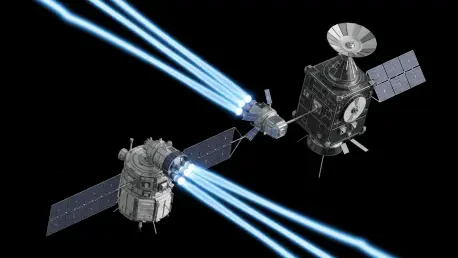

The vast expanse of orbital space is no longer just a silent vacuum of observation, as the aging Neil Gehrels Swift Observatory currently faces a critical descent toward the Earth’s atmosphere that necessitates an unprecedented robotic intervention. For over twenty years, this sophisticated instrument has served as the primary sentinel for gamma-ray bursts, but intensifying solar activity has significantly increased atmospheric drag, causing the craft to lose altitude at an alarming rate. To prevent a premature end to this high-value mission, NASA has entered into a strategic collaboration with Katalyst Space Technologies to test a specialized rescue mechanism. This mission represents a shift in how the aerospace industry manages legacy hardware, moving away from a culture of disposal toward one of active maintenance. By attempting to reposition a satellite that was never designed for servicing, engineers are pushing the boundaries of autonomous orbital mechanics. The success of this operation would not only preserve a vital astronomical tool but also validate the commercial viability of satellite life extension services.
The Mechanics of Orbital Preservation
Addressing the Threat: Atmospheric Drag and Solar Cycles
The current predicament facing the Swift Observatory is primarily driven by the Sun’s heightened activity, which expands the Earth’s upper atmosphere and creates a denser environment for satellites in low Earth orbit. As the observatory encounters more particles, the resulting friction saps its kinetic energy, causing its orbital path to decay toward a fiery re-entry. NASA engineers have already implemented emergency protocols, such as deactivating sensitive telescopes and reorienting solar arrays to minimize the cross-sectional area exposed to the atmospheric flow. These temporary measures are designed to buy time until a more permanent solution can be deployed, as every millimeter of drag reduction helps keep the satellite afloat. The situation highlights the inherent vulnerability of even the most robust space instruments to the unpredictable nature of solar weather and the physics of the thermosphere.
In response to these environmental challenges, the focus has shifted toward the development of the LINK robotic satellite, a specialized vehicle capable of performing high-precision orbital maneuvers. This craft is engineered to act as an external propulsion unit that can dock with or influence the movement of older satellites to restore their proper positioning. Unlike modern satellites that include standardized docking ports, the Swift Observatory was launched in an era where such servicing was considered impossible. Therefore, the LINK mission must rely on advanced proximity operations and robotic grappling techniques to secure the sinking craft without causing structural damage. This requires a level of autonomy and sensor fusion that represents the cutting edge of 2026 space technology, ensuring that the robotic rescuer can navigate the complex dynamics of a tumbling or drifting target in a high-stakes environment.
Robotic Intervention: The Engineering of an Orbital Boost
The technical execution of the LINK mission involves a complex sequence of maneuvers that begin with the robotic craft intercepting the Swift Observatory at its current degraded altitude. Once the robotic vehicle stabilizes its position relative to the observatory, it will utilize its onboard propulsion systems to provide the necessary delta-v to raise the science platform back to a sustainable orbit. This process is not merely about raw power; it requires delicate synchronization to ensure that the force applied does not overwhelm the structural integrity of the twenty-one-year-old frame. The collaboration between NASA and Katalyst emphasizes a modular approach to space logistics, where specialized “tug” satellites can be deployed on demand to save multi-million dollar assets. This capability is transforming the economic landscape of the space sector by extending the operational lifespan of existing infrastructure.
Furthermore, this mission serves as a critical proof of concept for the broader “servicing, assembly, and manufacturing” initiative that is currently redefining orbital operations. By successfully moving a non-cooperative and legacy asset, the aerospace community demonstrates that no satellite is truly “lost” as long as robotic intervention remains an option. This shift encourages more sustainable practices, reducing the accumulation of space debris by preventing high-value instruments from becoming derelict junk. The data gathered during this rescue will inform the design of future astronomical observatories, which will likely incorporate modular docking interfaces as a standard feature. As the LINK craft prepares for its mid-year deployment, the focus remains on the synergy between public scientific goals and private technical innovation, proving that the vacuum of space is a manageable frontier for robotic maintenance.
A New Era of Satellite Sustainability
Sustainable Operations: Protecting the Return on Investment
The decision to rescue the Swift Observatory was rooted in the immense scientific value it continues to provide to the global astronomical community, making the cost of a robotic mission far lower than the price of a replacement. Taxpayers and research institutions have invested decades of resources into the data pipelines and ground stations associated with this specific observatory, and losing it would create a significant gap in the study of high-energy cosmic events. By utilizing a commercial partner like Katalyst, NASA is leveraging private sector agility to solve a public sector problem, ensuring that the flow of gamma-ray data remains uninterrupted. This model of orbital life extension represents a more fiscally responsible approach to space exploration, where the goal is to maximize the utility of every kilogram of hardware launched into the sky.
Looking beyond the immediate needs of a single observatory, the success of this robotic maneuver established a blueprint for the future of space environmentalism. The aerospace industry has transitioned toward a philosophy where satellites are viewed as repairable assets rather than disposable commodities. This change was necessitated by the increasing congestion of orbital lanes and the rising costs of traditional launch cycles. By demonstrating that a specialized robot can intercept and boost a sinking satellite, the mission provided clear evidence that orbital maintenance is a viable pathway for long-term space sustainability. This proactive approach to asset management ensured that the lessons learned from the Swift rescue were integrated into the next generation of mission planning, effectively ending the era of abandoned space technology.
Strategic Outcomes: The Future of Autonomous Space Logistics
The successful docking and boosting of the Neil Gehrels Swift Observatory concluded a pivotal chapter in the history of satellite operations and validated the use of external propulsion modules. Engineers and mission planners analyzed the telemetry from the LINK satellite to refine the algorithms used for autonomous proximity operations, paving the way for more frequent servicing missions across various orbital planes. This mission demonstrated that even legacy hardware can be revitalized through innovative partnerships, provided that the robotic systems are flexible enough to handle non-standard interfaces. The data gathered from the observatory’s restored orbit allowed scientists to continue their pursuit of transient celestial phenomena without the looming threat of atmospheric re-entry.
The broader implications of this mission influenced the development of future space regulations, emphasizing the importance of active debris removal and life extension as core components of orbital safety. Leaders in the aerospace industry began prioritizing the inclusion of standard docking rings and refueling valves on all new hardware, recognizing that the ability to be serviced is as important as the mission itself. The Swift rescue served as a catalyst for a new market in orbital logistics, where commercial providers now offer routine “tow” services for satellites affected by drag or mechanical failure. Ultimately, the collaboration between NASA and Katalyst Space Technologies proved that the combination of robotic precision and strategic intervention could effectively shield humanity’s most important scientific eyes from the inevitable pull of the Earth.