
Oscar Vail has spent years navigating the complex intersection of high-end robotics and consumer electronics, making him a sought-after voice on the future of integrated living. As smart home technology shifts from utilitarian gadgets to curated design pieces, Oscar offers a unique perspective on how hardware like the IKEA Varmblixt balances aesthetic elegance with the technical demands of the modern smart home. In this discussion, we explore the nuances of atmospheric lighting design, the practical hurdles of device pairing, and the evolving role of standardized protocols like Matter in creating a cohesive, long-term ecosystem for the everyday user.
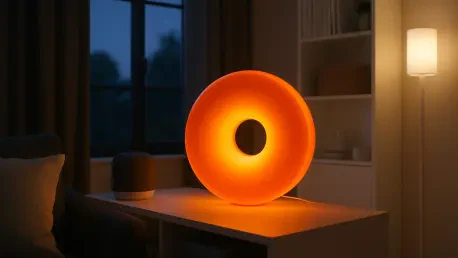
This donut-shaped lamp uses a frosted glass diffuser to create soft, indirect lighting. How do these specific design choices influence the ambiance of a living space compared to traditional bulbs, and what are the aesthetic trade-offs when choosing between placing it on a table or mounting it to a wall?
The shift from the 2022 glossy orange model to this new 2026 version with a white frosted glass diffuser is a masterclass in atmospheric control. Traditional bulbs often create harsh, direct focal points, but the donut-shaped design allows light to spill softly across surfaces, creating a gentle glow that feels more like an architectural element than a mere appliance. When you place it on a table, it becomes a tactile conversation starter that guests can’t help but touch, casting a warm 360-degree halo that softens the surrounding furniture. Mounting it to a wall, however, transforms it into a sculptural piece of art that uses the wall surface itself as a reflector to deepen the room’s sense of space. The major trade-off is the visible power cord; since it is a wired lamp, a wall mount requires clever cable management to maintain that clean, minimalist look near an electrical outlet.
Setting up smart devices can be difficult when Bluetooth or QR code pairing fails. Could you provide a step-by-step breakdown of how to troubleshoot connection errors using alternative linking methods, and how do these workarounds affect the initial user experience for those new to smart home technology?
Even for seasoned tech enthusiasts, the frustration of a failed QR code scan or a Bluetooth handshake that won’t complete is a significant barrier to entry. If the standard IKEA Home Smart app pairing fails, the best workaround is to actually wait for the app to acknowledge the failure notification before selecting the option to connect without Bluetooth. This manual bypass often forces the system to look for the device directly through the hub’s network, which I found successfully linked both the lamp and the Bilresa switches without a hitch. For a newcomer, these “fiddly” moments can be incredibly discouraging, turning a $99 excitement purchase into a technical chore. However, once that initial hurdle is cleared, the simplicity of the interface helps rebuild that lost confidence by offering a stable and responsive environment.
While some lights work with a basic remote, full functionality often requires an additional smart hub and the Matter protocol. What are the financial and technical implications of investing in a proprietary hub system, and how does this integration improve the long-term versatility of a smart home setup?
Investing in a proprietary system like the Dirigera hub introduces a significant financial jump, as the hub itself costs $109, which is actually more than the $99 price tag of the Varmblixt lamp itself. Technically, this investment is the gateway to the Matter protocol, which is essential if you want your lighting to “talk” to devices from different manufacturers in a unified ecosystem. Without the hub, you are limited to the physical remote and basic on/off functions, missing out on the full color wheel and advanced automation. In the long run, having a dedicated hub ensures that your devices are more than just standalone toys; they become part of a reliable infrastructure that can be expanded with motion sensors and complex schedules. It’s a classic “buy-in” moment where the upfront cost provides the technical foundation for a truly “smart” home rather than just a collection of connected gadgets.
Adaptive lighting schedules transition from cool temperatures during the day to warmer tones in the evening. How does this automated shift impact the daily rhythm of a household, and what are the practical benefits of using physical dimmer wheels over mobile app controls for these adjustments?
The “adaptive” lighting feature is designed to mimic the natural progression of daylight, shifting to cool, crisp tones during working hours to boost focus and then melting into warm, honey-like hues in the evening to signal the body to relax. This automated transition removes the mental load of manually adjusting your environment, allowing the house to breathe and change alongside your natural biological rhythm. While the app offers granular control over these schedules, there is a distinct sensory satisfaction in using a physical tool like the Bilresa dimmer wheel. Being able to physically scroll a wheel to dip the brightness during a dinner party feels much more natural and immediate than unlocking a phone and navigating through menus. It keeps the technology invisible and intuitive, which is exactly where smart home design should be heading.
Statement lighting often prioritizes mood-setting over high-intensity task lighting. In which specific room layouts does an indirect glow perform best, and what features should a user look for if they require more advanced capabilities like music synchronization or complex lighting scenes?
The Varmblixt thrives in lounge areas, bedrooms, or dining rooms where the goal is to create an inviting “vibe” rather than illuminating a workspace. Because its frosted diffuser is designed for indirect light, it won’t be sufficient for a home office where you need high-intensity task lighting to prevent eye strain. If you are looking for a more “active” experience, such as lights that pulse in time with your favorite playlist or sync with a movie, you would need to look toward competitors like Govee or Philips Hue, as the IKEA system currently prioritizes simplicity over high-speed data syncing. Users should look for “HDMI sync box” compatibility or dedicated music modes if they want their lighting to be part of an entertainment spectacle rather than a serene, static backdrop. For the Varmblixt, the beauty is in its curated color palette and its ability to act as a dramatic focal point that draws the eye without overwhelming the senses.
What is your forecast for smart home lighting?
I believe we are moving toward a “post-app” era where the most successful smart lighting will rely on ambient intelligence and standardized protocols like Matter to function entirely in the background. We will see a shift away from flashy, complex interfaces toward physical, tactile controllers and automated routines that feel like a natural part of the home’s architecture. The Varmblixt is a precursor to this, proving that consumers want iconic, beautiful objects that happen to be smart, rather than tech gadgets that try to look like lamps. As the cost of integration drops, the focus will move from “how do I connect this?” to “how does this light make me feel?”, making the smart home a more human-centric and emotionally resonant space.