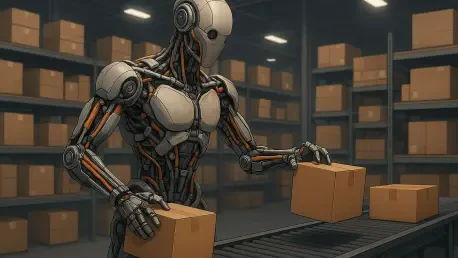

Legacy hardware from early 2024 provided the foundation for testing teleoperation, but the future of the technology rests on autonomous software integration. As industrial environments demand higher levels of precision, the transition from remotely piloted machines to self-governing systems has become the primary focus for robotics engineers. Clone Robotics recently signaled this shift with a demonstration of its Torso 3 system, which used a sophisticated musculoskeletal structure to mimic human movements through teleoperation. While the fluid motion of the five-fingered hands is striking, the tech serves as a bridge to the more robust Torso 4, scheduled for deployment this November. This iteration moves beyond the experimental legacy of previous designs, focusing on a stationary bimanual platform for real-world enterprise tasks. By prioritizing hardware that is easier to simulate, the industry moves closer to a reality where machines handle complex manual labor without constant human oversight or remote intervention.
Advances in Robotic Anatomy and Durability
Phase 1: Optimizing the Musculoskeletal Framework
The engineering philosophy behind the Torso 4 involves a comprehensive redesign aimed at maximizing industrial reliability while maintaining high-fidelity manipulation. Unlike traditional rigid actuators found in older models, artificial muscles and tendons allow for a more compliant interaction with physical objects. This musculoskeletal approach is not merely about aesthetic mimicry; it replicates the mechanical advantages of the human arm and hand, which are optimized for various grip types and force distributions. The new stationary bimanual platform enables the system to perform coordinated tasks using two arms, a necessity for assembly line or maintenance roles previously considered too complex for automation. By streamlining the internal hydraulics and tendon routing, the design reduces the likelihood of mechanical failure, ensuring that the hardware can withstand the rigors of continuous operation in a modern warehouse or factory setting.
Phase 2: Enhancing Autonomy Through Simulation-Ready Hardware
A critical component of this technological evolution is the development of hardware that is fundamentally compatible with modern simulation environments. Over the last several months, the development team has focused on creating a ground-up architecture that allows for more accurate digital twinning, which is essential for training autonomous software. When a robot’s physical responses perfectly match its simulated counterpart, the speed at which it can learn new tasks through reinforcement learning increases exponentially. This shift addresses a long-standing bottleneck where the gap between simulation and reality—the reality gap—prevented autonomous systems from functioning reliably in unpredictable environments. By optimizing the Torso 4 for these digital environments, the goal is to facilitate a faster rollout of autonomous capabilities, allowing the machine to transition from a human-controlled tool to an independent worker.
Strategic Comparisons and Market Readiness
Phase 3: Balancing Dexterity with Mechanical Efficiency
The divergent strategies in the robotics sector are best illustrated by comparing the five-finger anatomical approach of Clone Robotics with the simplified four-finger configuration recently adopted by Boston Dynamics for its Atlas platform. While reducing the number of digits can decrease mechanical complexity and potential points of failure, it may also limit the robot’s ability to utilize tools and interfaces designed specifically for human use. The Torso 4 maintains a five-finger model to ensure that it can seamlessly integrate into existing workspaces without requiring specialized adaptations to the environment. This adherence to human-centric design is based on the premise that a robot should adapt to the workplace, rather than the workplace adapting to the robot. Both firms agree on the vital importance of simplifying hardware to enhance the performance of the AI, marking a turning point where the focus is on how efficiently a robot can be taught.
Phase 4: Implementation Strategies for the Modern Workforce
The successful integration of these bimanual platforms required a strategic focus on high-value enterprise applications where dexterity and autonomy provided the greatest return on investment. Organizations that participated in early pilot programs focused on tasks such as assembly and sorting, which leveraged the unique capabilities of the musculoskeletal design. It was determined that the most effective implementation involved a phased rollout, starting with stationary roles before exploring mobile applications. Data collected during the final months of the development cycle indicated that the autonomous software outperformed human operators in consistency when performing repetitive tasks. Future considerations for businesses included investing in digital infrastructure to support real-time simulation updates and maintaining a fleet of standardized hardware to simplify maintenance. The transition proved that the combination of human-like anatomy and autonomous software was the path forward.