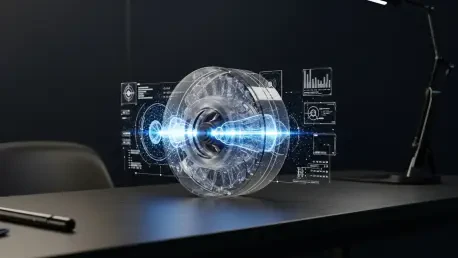

The global reliance on rare-earth minerals for electric vehicle propulsion systems and industrial robotics has reached a critical bottleneck that threatens to stifle sustainable technological advancement across multiple sectors of the modern economy. For decades, the engineering community accepted the limitations of heavy copper coils and permanent magnets as an inescapable reality of motor design, despite the resulting weight penalties and supply chain vulnerabilities. Traditional magnetic motors operate through complex electromagnetic interactions that generate heat and require bulky cooling systems, which often offset the efficiency gains found in power electronics. However, a fundamental shift is occurring as researchers move away from these conventional architectures toward electrostatic actuation. By leveraging specialized fluids, it is now possible to generate significant mechanical torque without the need for a single gram of neodymium or dysprosium. This transition represents a vital departure from established norms, offering a pathway toward lighter, more agile machinery that bypasses the geopolitical and environmental complications inherent in traditional magnet manufacturing processes.
Harnessing Lateral Electrostatic Forces
The functional core of this innovation lies in the utilization of ferroelectric fluids, which exhibit a unique molecular structure that aligns in an ordered fashion when exposed to an external electric field. Unlike standard dielectric liquids that merely polarize, these ferroelectric variants respond with a magnitude of force that was previously deemed impossible for electrostatic systems. This breakthrough centers on a sideways or lateral electrostatic force that allows the fluid to move along a surface rather than simply being pulled toward an electrode. Experimental data confirms that when this fluid is confined between closely spaced electrodes, it produces a consistent pushing force capable of driving liquid nearly 10 centimeters against the force of gravity. This lateral movement provides the mechanical foundation for a motor that does not require the traditional push-pull of magnetic poles. By optimizing the fluid composition, engineers have achieved higher force densities at significantly lower operating voltages than earlier electrostatic prototypes, marking a pivotal moment in the development of non-magnetic propulsion.
Engineering Applications and Sustainable Design
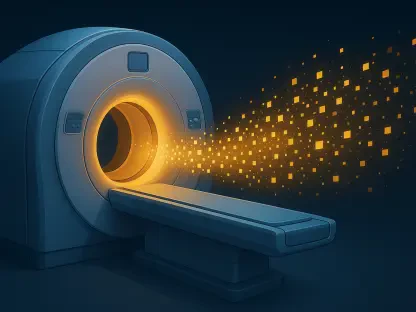
Moving from laboratory observation to practical implementation, a recently developed prototype constructed entirely from resin demonstrates the feasibility of magnet-free rotational motion. This device completely eliminates metal rotors and heavy armatures, converting the lateral electrostatic push of the ferroelectric fluid directly into torque. Such a design is particularly valuable in sensitive environments where magnetic interference can degrade the performance of medical imaging equipment, high-density data storage, or precision scientific instruments. Furthermore, the aerospace industry stands to benefit from the drastic reduction in total component weight, as eliminating copper windings allows for more payload capacity or extended range. The use of non-metallic materials also facilitates easier manufacturing through advanced additive techniques, enabling complex motor geometries that were once restricted by the physical properties of magnetic steel. By prioritizing safety and interference-free operation, this technology serves as a foundation for next-generation robotics that can operate safely alongside sensitive electronic hardware without the risk of electromagnetic disruption.
Industry leaders and design engineers should now prioritize the integration of non-magnetic actuation into their strategic development roadmaps to mitigate the rising costs of traditional raw materials. The transition to ferroelectric systems required a fundamental reassessment of fluid dynamics and electrostatic shielding, but the resulting prototypes proved that high-torque density is achievable through non-metallic means. Future implementation strategies should focus on scaling these fluid-based systems for heavy-duty industrial use and refining the longevity of the liquid components under continuous duty cycles. Research and development teams successfully validated the core mechanics of lateral force generation, providing a clear path for the commercialization of lightweight, interference-free motors. As supply chains for rare-earth magnets remained volatile, the adoption of this fluid-based alternative offered a robust solution for ensuring technological sovereignty and environmental sustainability. Moving forward, the focus must shift toward standardized manufacturing protocols that can produce these resin-based motors at a scale comparable to established induction systems.