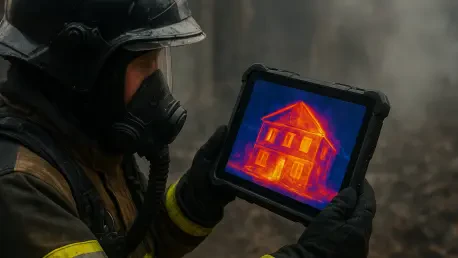

Information overload from body cameras and sensors is being addressed through AI pattern recognition that flags specific hazards for field units. This technological shift represents a fundamental realignment in how emergency services operate in 2026, moving beyond a reliance on voice-only communication toward a data-rich operational landscape. For decades, the public safety sector relied on incremental improvements to legacy systems, but the current era is defined by the rapid convergence of high-speed networks and autonomous hardware. Agencies are finding that the sheer volume of incoming information requires a sophisticated digital filter to prevent command fatigue and tactical errors during high-stress incidents. By prioritizing the development of these intelligent systems, departments are not just buying new equipment; they are fundamentally retooling their strategy to focus on the preservation of life through advanced foresight. This transformation ensures that every responder is part of a larger, more connected safety net.
Modernizing the Public Safety Toolkit: Beyond Foundational Devices
The bedrock of daily operations has traditionally rested upon the use of smartphones, land mobile radios, and ruggedized laptops. While these devices remain indispensable for baseline communication, there is a clear trend toward the adoption of “force multipliers”—technologies that expand the capabilities of existing personnel without the need for additional manpower. In the current landscape, law enforcement and fire services are moving away from reactive responses, where information is gathered only after arriving on a scene. Instead, the focus has shifted toward tools that provide comprehensive intelligence before a human being enters a potentially lethal environment. This evolution is particularly visible in the rising demand for assets that can collect, process, and transmit critical environmental data in real time. By integrating these advanced tools into their daily workflows, agencies are improving their ability to manage complex crises with a level of precision that was previously unattainable.
Foundational devices have undergone a radical transformation themselves, evolving from simple communication tools into multifaceted data hubs that support a wide range of specialized applications. Modern departments are increasingly looking for ways to streamline the flow of information from these hubs to the personnel who need it most. The shift toward data-driven operations means that responders are no longer flying blind into unknown situations; they are supported by a continuous stream of actionable insights. This change is driven by a recognition that the speed of an emergency requires a matching speed in the delivery of information. Consequently, the prioritization of high-tech assets has seen a double-digit increase in departmental interest over the last few years. This proactive stance allows agencies to allocate their human resources more effectively, ensuring that personnel are deployed where they can have the greatest impact while maintaining a secure perimeter through the use of autonomous surveillance.
Unmanned Aerial Systems: Tactical Scouting and Aerial Awareness
Unmanned Aerial Systems, commonly referred to as drones, have transitioned from experimental novelties to essential tactical assets in the field of public safety. These devices offer an invaluable bird’s-eye view of complex incidents, such as active suspect searches or the rapid spread of wildfires in difficult terrain. By arriving on-site moments ahead of human officers or firefighters, drones can identify suspect locations, spot trapped civilians, and map out safe entry and exit routes. The ability to deploy an aerial scout instantly provides incident commanders with a layer of situational awareness that traditional ground-based observations simply cannot match. Furthermore, drones equipped with advanced thermal imaging cameras allow responders to track invisible hotspots during commercial blazes or find missing persons in densely wooded areas at night. This technological advantage significantly reduces the time required to resolve an incident while simultaneously lowering the physical risk to the crews working on the ground.
Beyond mere surveillance, the current generation of drones serves as a vital component of the tactical decision-making process. In law enforcement scenarios involving armed individuals, a drone can be used to clear a building or monitor a perimeter, providing visual confirmation of threats without exposing officers to direct gunfire. In the fire service, drones provide a continuous feed of fire progression, allowing commanders to adjust their strategies dynamically as conditions change. This real-time feedback loop ensures that resources are not wasted on low-priority areas while high-risk zones are addressed immediately. The integration of these systems into standard operating procedures has become a hallmark of modern emergency response. As the technology continues to mature, the focus is shifting toward autonomous flight patterns and automated dispatch, where drones are automatically launched the moment a call is received by the public safety answering point. This ensures that the eyes of the department are on the scene before the first responder even leaves the station.
Robotics and Connected Vehicles: Enhancing Field Intelligence
Robotics are increasingly stepping into the role of scouts for high-risk environments where human entry would be inherently life-threatening. Whether dealing with a hazardous material leak, a chemical spill, or a structural collapse, robots can enter unstable zones to test air quality, identify toxic substances, and locate victims without putting a human responder at risk. By providing empirical data from inside these dangerous areas, these machines ensure that high-stakes decisions are made based on hard facts rather than dangerous assumptions. For example, in a hazardous materials incident, a robot can transmit live sensor readings that allow commanders to determine the appropriate level of personal protective equipment needed before any team member steps into the “hot zone.” This capability not only protects the lives of the responders but also speeds up the overall response time by providing immediate clarity in the face of uncertainty and environmental instability.
The concept of the connected vehicle is becoming a vital link in the broader public safety ecosystem, ensuring that the flow of critical information remains uninterrupted between dispatch and the field. Firefighters can now receive live drone feeds and building blueprints directly on their vehicle consoles while en route to a call, allowing them to formulate a plan before they even arrive. Similarly, ambulances are increasingly equipped with systems that transmit patient vitals to hospital emergency rooms in real time, ensuring that medical staff is fully prepared for the patient’s arrival. This level of seamless connectivity bridges the gap between the various phases of an emergency response, from the initial dispatch to the final handover at a receiving facility. By turning every response vehicle into a mobile command center, agencies are ensuring that their personnel have access to the same high-level data regardless of their physical location. This integration represents a shift toward a unified intelligence network that supports the entire public safety community.
Intelligent Systems: Managing Information and Overcoming Hurdles
As drones, body cameras, and environmental sensors generate massive amounts of data, Artificial Intelligence is becoming an indispensable tool for managing the resulting information overload. AI is not intended to replace human judgment but rather to serve as a sophisticated decision-support mechanism that sifts through raw data to find what matters most. By reducing the cognitive load on incident commanders during a crisis, AI allows them to focus on high-level leadership and strategy while the software handles the tedious heavy lifting of data analysis. Specifically, AI excels at pattern recognition by flagging potential hazards in video feeds and streamlining the flow of communications between various units. The adoption of these tools has accelerated rapidly, with a significant majority of agencies now utilizing AI-driven insights to manage their daily operations. This technological leap transforms a chaotic influx of sensors and signals into a coherent, actionable picture of the emergency landscape.
The successful implementation of these advanced technologies required agencies to navigate significant financial and educational obstacles. Budget limitations often served as the primary barrier to adoption, as the initial capital investment for advanced software and hardware could be substantial for municipal departments. Additionally, the learning curve associated with piloting drones or managing complex data systems demanded a sustained commitment to ongoing education. To address these challenges, many organizations prioritized the identification of specific operational needs before investing in new tools, ensuring that every dollar spent contributed directly to field safety. Training programs were overhauled to include technical certifications, allowing veteran responders to combine their decades of experience with the precision of modern data. This strategic approach ensured that technology was not adopted for its own sake, but rather as a practical solution to real-world problems. Ultimately, the sector demonstrated that a focused investment in both human talent and digital assets could create a safer, more efficient future for the entire community.