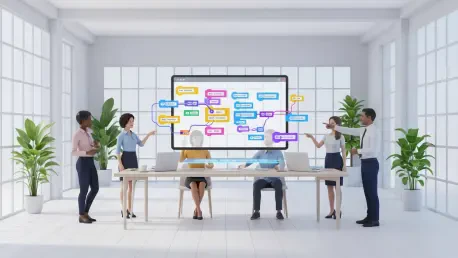

The integration of sophisticated generative artificial intelligence within the Slack ecosystem has fundamentally altered the landscape of professional communication by transforming static chat channels into dynamic engines of productivity. This shift moves beyond simple text exchanges into a sophisticated ecosystem where every conversation becomes a potential trigger for complex automated sequences that previously required manual intervention. By utilizing natural language processing, the platform now interprets user intent to suggest specific workflows that reduce the need for manual data entry or context switching across multiple software applications. The no-code revolution within the workspace allows employees without technical backgrounds to construct powerful logic chains that handle everything from sentiment analysis in customer feedback channels to automated project status updates. Instead of requiring a dedicated engineering team to build custom APIs, individual departments can now deploy autonomous agents that monitor real-time communications and perform tasks like summarizing missed meetings or drafting follow-up emails based on specific channel discussions. This accessibility democratizes high-level automation across the entire organization, ensuring that productivity is no longer bottlenecked by a shortage of developers.
1. Facilitating Seamless Workflow Integration Through No-Code Logic
The evolution of Workflow Builder represents a fundamental change in how administrative tasks are categorized and completed within high-growth business environments. Users can now leverage generative AI to create customized triggers that respond to specific keywords or emojis, effectively turning casual interactions into structured data points for external databases. For example, a marketing lead might set up a system where a specific reaction emoji on a campaign proposal automatically generates a brief in a project management tool and notifies the legal department for review. This level of granular control enables teams to maintain high momentum without getting bogged down in the minutiae of process management. Furthermore, the integration of AI-powered summaries allows latecomers to a channel to receive a distilled version of past discussions, highlighting key decisions and action items with remarkable accuracy. Such features ensure that historical context remains preserved and easily accessible, preventing the loss of critical information that often occurs in fast-paced digital environments where threads move quickly.
Beyond internal summaries, the no-code AI framework facilitates a more robust connection between Slack and various third-party enterprise resource planning systems. Through natural language commands, employees can query complex databases to retrieve specific sales figures or inventory levels without ever leaving the chat interface. This seamless interaction is powered by large language models that translate human questions into precise queries, returning formatted results that are immediately useful for decision-making. The ability to verify information and execute updates in real-time across disparate platforms significantly reduces the cognitive load on staff members who previously had to toggle between dozens of browser tabs. Moreover, the automation engine can be trained on specific company documentation, allowing it to act as an internal support bot that answers frequently asked questions about policy or technical procedures. This self-service model not only empowers employees to find answers independently but also frees up human resources and IT departments to focus on more complex, strategic initiatives rather than repetitive troubleshooting.
2. Strategic Implementation And Future Organizational Resilience
The transition toward an AI-augmented workspace required a deliberate shift in how leadership viewed the role of communication software within the broader corporate tech stack. Successful firms prioritized the identification of high-impact, repetitive tasks that were ripe for automation, rather than attempting to overhaul every process simultaneously. This phased approach allowed teams to build confidence in no-code tools and provided the necessary space to refine governance policies regarding AI usage. Organizations that invested in comprehensive training programs found that their workforce became more adept at identifying new opportunities for automation, leading to a bottom-up innovation culture. By fostering a deep understanding of what generative AI could achieve within Slack, these companies effectively bypassed the technical barriers that previously limited the reach of digital transformation. The emphasis shifted from merely using a tool to actively shaping a dynamic environment where human creativity and machine efficiency existed in a symbiotic relationship.
Decision-makers implemented rigorous auditing processes to monitor AI interactions, ensuring that the outputs remained unbiased and aligned with corporate values. To maximize the return on investment, it became essential for IT leaders to consolidate various standalone AI tools into a centralized hub to reduce complexity and lower licensing costs. Strategic planning involved mapping out long-term goals for automation, such as integrating predictive analytics into standard workflows to anticipate market shifts before they occurred. Companies that embraced this holistic view of no-code AI secured a competitive advantage by operating with a level of speed and precision that was previously unattainable. The path forward involved continuous experimentation with new AI capabilities as they emerged, encouraging a cycle of constant improvement and adaptation. By treating the communication platform as a living laboratory for efficiency, businesses ensured they stayed at the forefront of the technological curve while providing their employees with a more engaging and purposeful work experience.