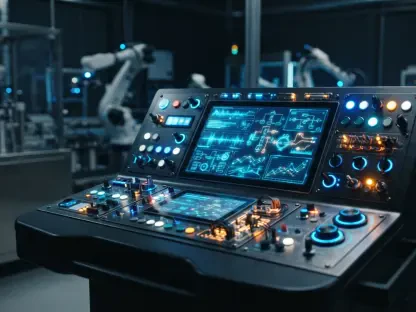

As precision engineering reaches new heights of complexity, the traditional methods of training apprentices through static paper manuals and passive observation have become increasingly obsolete in the modern smart factory environment. Longitudinal studies are necessary to determine if the rapid skill acquisition observed in virtual environments translates to long-term knowledge retention on the job. This fundamental challenge is currently being addressed by a growing body of research focusing on the integration of immersive technologies within the pedagogical frameworks of advanced manufacturing. A comprehensive systematic review conducted by researchers at Flinders University, recently detailed in the journal Frontiers in Virtual Reality, provides an exhaustive analysis of these digital interventions. By synthesizing 38 empirical studies, this research offers a critical assessment of how Augmented Reality (AR) and Virtual Reality (VR) are reshaping workforce development across sectors like aerospace, automotive production, and high-precision shipbuilding. The study, which utilized rigorous PRISMA guidelines to filter more than 1,400 records, aimed to identify the specific technologies being used, their industrial applications, and the factors that dictate whether a digital training program succeeds or fails. This investigation comes at a time when the “Industry 4.0” transition demands a more agile and digitally literate workforce capable of operating within highly automated and data-rich environments.
Technological Trends and Development Methods
Patterns in Technology Adoption and System Design: The Dominance of AR
Research indicates a clear and distinct hierarchy in the types of immersive tools currently dominating the advanced manufacturing landscape, with Augmented Reality emerging as the most frequently studied and implemented technology. This preference is largely driven by the ability of AR to overlay digital information, such as 3D blueprints or step-by-step instructions, directly onto the physical workspace, allowing workers to maintain situational awareness while receiving real-time guidance. Virtual Reality follows as the second most common tool, favored for creating entirely simulated environments where trainees can practice dangerous or high-stakes procedures without any risk to themselves or expensive equipment. Interestingly, while the industry continues to explore these two primary pillars, other variants like Mixed Reality (MR) and Extended Reality (XR) remain significantly underrepresented in current literature. Furthermore, the role of serious games—digital environments designed for learning rather than entertainment—is still in its infancy within the manufacturing sector. This concentration of research suggests that while the industry is eager to adopt immersive solutions, companies are prioritizing tools that offer immediate, tangible benefits to manual precision and task execution over more abstract or gamified learning platforms that might address broader organizational concepts or soft skills.
Collaborative Engineering: The Critical Need for Co-Design
A significant and somewhat troubling finding of the recent research involves the “expert-designed” nature of most immersive training systems currently in use. The majority of the applications analyzed were developed by software engineers and technical researchers in relative isolation, often without substantial input from the individuals who will actually use the technology: the factory workers themselves. The authors of the Flinders University review identify this lack of “co-design” as a major missed opportunity that often results in a lack of contextual relevance on the shop floor. When digital tools are built without considering the lived experience and ergonomic needs of the workforce, the resulting training programs may fail to address the real-world complexities of the job. For instance, a VR simulation might be technically perfect but physically exhausting or unintuitive for a worker who has spent decades using specific physical tools. Engaging workers early in the development phase ensures that the digital interface aligns with existing workflows and addresses the subtle nuances of manual labor that a researcher might overlook in a controlled laboratory setting. Moving toward a collaborative model of development is essential for creating tools that are not only technologically advanced but also practically viable for long-term integration into daily industrial operations.
Operational Impact and Performance Results
Industrial Applications and Quantifiable Training Benefits: Enhancing Precision
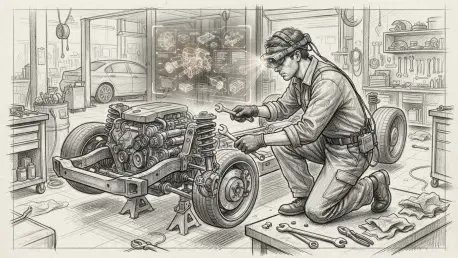
The application of immersive technologies is far from uniform across the industrial spectrum, with assembly tasks emerging as the primary beneficiary of these digital interventions. According to the research data, nearly 30 percent of the studied applications focused on assembly, where workers must master complex, multi-step procedures such as putting together an aircraft engine or a sophisticated circuit board. These technologies allow trainees to practice in a risk-free digital space, which effectively eliminates the need for expensive physical prototypes and prevents the wastage of raw materials during the initial learning phase. Beyond general industrial contexts, specific sectors like additive manufacturing, wind energy, and automotive production are seeing significant investment in these tools. However, the review points out that several industries, including food and beverage production and textiles, have yet to fully explore the potential of immersive training. The primary advantage identified across all active sectors is the ability to provide intuitive, real-time visual cues that reduce the mental workload of the trainee. Instead of memorizing a thick manual, a worker can simply follow a digital arrow or a highlighted component on their AR headset, which streamlines the learning process and allows for a much faster transition from trainee to productive employee.
Cognitive Load and the Maturation of Evidence: Analyzing Metrics
Data from the reviewed studies shows a strong association between the use of immersive technology and improved performance metrics, particularly in areas like task-completion speed and error reduction. Some experiments reported that participants trained in Virtual Reality completed complex assembly tasks significantly faster than those who relied on traditional 2D videos or paper manuals. In high-skill trades like welding, Augmented Reality assistance led to a notable reduction in completion times and much faster learning rates for novices. These improvements are often attributed to the reduction in cognitive load; because the technology provides “just-in-time” information, the worker does not have to expend mental energy switching between a manual and the physical task. Despite these impressive figures, the researchers maintain a cautious stance, emphasizing that these results should be viewed as associations rather than proven causal effects. The evidence base is still maturing, and many existing studies rely on small sample sizes or lack the standardized testing required for definitive scientific proof. There is also a noted lack of “assessor blinding” in many studies, where the person measuring the results knows which group used the technology, potentially introducing bias. Nevertheless, the trend toward increased efficiency and higher accuracy is consistent enough to suggest that immersive tools offer a superior alternative to conventional training methods.
Implementation Challenges and Future Outlook
Overcoming Technical Barriers and Human Factors: Constraints on Adoption
Despite the undeniable performance benefits, several recurring challenges continue to hinder the seamless integration of AR and VR on the factory floor. Technical limitations remain a significant bottleneck, with hardware issues such as short battery life, limited field of view, and the physical weight of headsets causing discomfort during prolonged use. These ergonomic hurdles are joined by the high cost of developing custom software and purchasing high-end hardware, which often puts these advanced tools out of reach for small and medium-sized enterprises. Furthermore, there is a clear gap in workforce readiness; many employees require substantial training just to learn how to navigate the immersive technology itself before they can even begin the actual task training. Beyond the technical side, human factors and psychological concerns play a major role in the success of these programs. Some workers have expressed anxiety regarding job security, fearing that the data collected by these devices could be used to automate their roles or subject them to excessive performance scrutiny. Privacy concerns regarding continuous data collection and the monitoring of eye movements or physical gestures were also highlighted as potential barriers to employee buy-in. Addressing these fears through transparent policies and physical improvements to the hardware will be a critical step for any organization looking to scale these technologies.
Strategic Integration: Future Considerations for Industry Leaders
The systematic review concluded that the future of industrial training depended on moving beyond experimental applications toward a more holistic and integrated approach. The researchers recommended that organizations prioritized the alignment of technology with specific tasks rather than adopting VR or AR simply for the sake of modernization. One of the most significant takeaways was the need for adaptive learning models that utilized artificial intelligence to adjust the difficulty of a simulation based on an individual worker’s real-time performance. The study also highlighted the importance of hybrid models that combined the technical precision of AR with the cognitive engagement found in serious games to keep workers motivated. Furthermore, the authors advocated for much stronger collaboration between academic institutions and the manufacturing sector to bridge the gap between theoretical research and shop-floor reality. By the conclusion of the research period, it became clear that while immersive technologies had already demonstrated the potential to revolutionize training, their full impact would only be realized through better co-design and a focus on the psychological needs of the workforce. The transition toward these digital tools was framed not just as a technical upgrade, but as a fundamental shift in how human expertise was cultivated and maintained in an increasingly digital world. These findings suggested that the next phase of progress would require a shift from measuring short-term speed gains to ensuring that workers truly internalized the complex skills required for the modern industrial age.