
The quiet rural landscapes of Japan are currently witnessing an unprecedented surge in aggressive wildlife encounters that have forced local authorities to rethink traditional conservation and safety strategies in the face of rising bear populations. With over 50,000 reported sightings and a devastating record of human fatalities recorded just in the previous year, the boundary between wilderness and civilization has blurred dangerously. This crisis has seen Asiatic black bears and brown bears wandering into high-traffic areas such as primary schools, bustling supermarkets, and even popular hot spring resorts, creating a pervasive sense of fear among residents. As traditional methods like culling and physical fencing prove insufficient to manage the scale of the intrusion, technology has emerged as a frontline defense. The situation has moved beyond simple animal management into a full-scale public safety emergency, necessitating the deployment of innovative solutions that can deter predators without relying solely on lethal force or permanent ecological disruption.
Technological Architecture of the Deterrent Systems
Sensory Systems and Psychological Deterrence
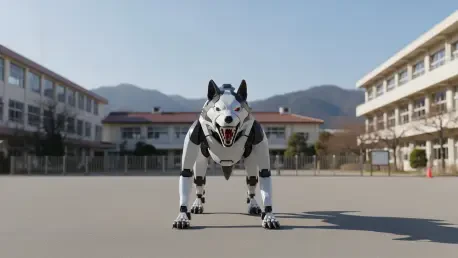
Developed by the Hokkaido-based robotics firm Ohta Seiki, the Monster Wolf represents a sophisticated blend of animatronics and sensor technology designed to trigger an instinctive flight response in large predators. The unit is constructed on a sturdy pipe-framed body and is draped in realistic artificial fur to provide a more life-like silhouette that mimics a natural enemy. Its most striking feature is a pair of glowing red LED eyes that pierce through the darkness, coupled with a menacing, open-mouthed expression that serves as a permanent visual threat. Integrated infrared sensors detect movement within a specific radius, instantly activating a complex suite of deterrents that are far more intense than traditional stationary scarecrows. By using light and sound as a primary weapon, the device aims to create a psychological barrier that bears are unwilling to cross, effectively reclaiming human spaces while minimizing the need for physical confrontation or the use of firearms in populated areas.
Beyond its visual impact, the robot is equipped with a high-fidelity audio system capable of broadcasting over 50 distinct sounds that can reach distances of up to one kilometer. These auditory signals are not limited to generic alarms; they include a diverse range of predatory growls, human voices, and sharp electronic sirens designed to prevent the animals from becoming accustomed to a single noise pattern. To further enhance the illusion of life, the robot utilizes a motorized neck that allows its head to oscillate, creating the impression that it is scanning the environment for intruders. During the nighttime hours, blue LED lights flash from its tail section, providing an additional layer of sensory overload that disrupts the nocturnal comfort of the bears. This combination of unpredictable movement and varied acoustics makes it difficult for local wildlife to dismiss the robot as an inanimate object, which is a common failure point for many older, less sophisticated deterrent technologies.
Innovation: Adaptive Mobility and Future Iterations
As the crisis continues to evolve, the underlying technology of the Monster Wolf is also undergoing a significant transformation to meet the needs of a more mobile and active population. Engineering teams are currently conducting field tests on wheel-based versions of the robot that can autonomously patrol perimeter fences or residential boundaries without human intervention. There is also a parallel effort to miniaturize this technology into handheld iterations specifically designed for hikers, students, and outdoor enthusiasts who require portable protection. These upcoming developments indicate a move toward personal safety robotics that can be integrated into daily life, providing a non-lethal defense mechanism for those living on the edge of wilderness zones. The goal is to create a dynamic network of mobile deterrents that can react in real-time to the movement patterns of bears, rather than relying on static placements that clever animals might eventually learn to circumvent by taking a different path.
Despite the current success of the animatronic wolves, some ecological experts maintain a degree of caution regarding their long-term effectiveness in the field. The primary concern is habituation, a process where bears might eventually recognize that the sounds and lights do not lead to physical harm, thereby losing their fear of the mechanical deterrents over several seasons. To counter this, developers are looking into integrating artificial intelligence that can vary the behavior of the robots based on the specific movements and reactions of the approaching animals. By making the robot’s responses less predictable and more interactive, engineers hope to maintain the fear factor necessary to keep bears at a safe distance. This ongoing cat-and-mouse game between human ingenuity and animal adaptation highlights the complexity of managing wildlife in a modern world. It suggests that while robotics offers a powerful temporary solution, the ultimate strategy must involve a continuous cycle of technological refinement.
Societal Integration and Economic Impact
Rising Demand: Infrastructure and Public Safety
The rapid escalation of bear-related incidents has transformed the Monster Wolf from a niche novelty into an essential piece of infrastructure for a wide variety of Japanese organizations. Originally retailing for approximately $4,000, these units are now being deployed by farmers protecting their crops, operators of prestigious golf courses, and managers at remote construction sites. This surge in demand has led to significant production challenges for Ohta Seiki, with the firm’s leadership reporting that the company is currently navigating a two-to-three-month backlog of orders from desperate municipalities. The shift in market perception is palpable; where critics once dismissed the animatronic wolves as gimmicks when they were first introduced, they are now viewed as vital assets in a multi-layered security strategy. This reliance reflects a broader trend in Japan where shrinking human populations in rural areas are leaving a vacuum that emboldened wildlife is increasingly willing to fill with surprising aggression.
To address the backlog, the manufacturing sector is looking toward more scalable production methods and modular designs that can be assembled quickly in local workshops. This economic shift is not just about selling a product; it is about creating a new category of “wildlife defense as a service” where municipalities can lease and maintain fleets of robots based on seasonal bear activity. Such a model allows smaller villages with limited budgets to access top-tier technology during peak danger periods without the heavy upfront cost of a permanent purchase. Furthermore, the integration of these robots has sparked a new interest in tech-driven agriculture, as younger farmers see these automated tools as a way to modernize and protect their livelihoods against traditional threats. The economic ripples of the Monster Wolf extend beyond Hokkaido, signaling a future where robotics becomes the standard for managing the complex intersection of human development and the natural world in various ecological contexts.
Strategic Planning: Long-Term Solutions and Actionable Steps
The transition from skepticism to the widespread adoption of high-tech deterrents suggested that future wildlife management will depend heavily on the integration of robotics and data-driven analysis. Moving forward, local governments were encouraged to incorporate these automated systems into a larger, more comprehensive plan that included habitat restoration and community education to address the root causes of bear encroachment. Authorities found that relying on a single technological solution was less effective than deploying a diverse array of sensors and deterrents that worked in concert. By investing in autonomous patrolling units and personal safety devices, communities established a more resilient buffer between human settlements and the shifting territories of large predators. This proactive approach provided a sustainable path for coexisting with a resurgent wildlife population while prioritizing the protection of citizens in increasingly vulnerable regions through the use of non-lethal, high-tech intervention strategies.