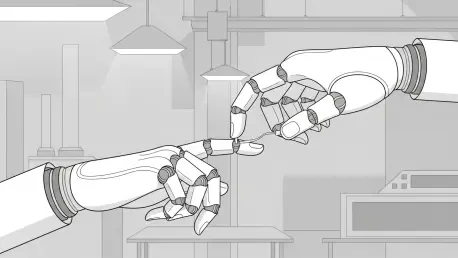

Modern industrial landscapes are undergoing a profound transformation as manufacturers pivot away from rigid, specialized automation toward highly adaptable systems capable of executing complex, human-centric maneuvers. At the heart of this shift is the concept of Physical AI, a discipline that merges advanced machine learning with sophisticated mechanical hardware to solve the long-standing problem of robotic clumsiness. Swiss startup Mimic Robotics has introduced a significant breakthrough in this field with the Mimic Hand M1, a device engineered to bridge the gap between digital intelligence and physical execution. Unlike traditional industrial grippers that rely on simple clamping motions, this new system prioritizes a fluid, humanoid approach to manipulation. This innovation represents a departure from the task-specific era of robotics, signaling a move toward general-purpose utility where a single robotic end-effector can navigate varied environments, from electronics assembly lines to laboratory settings, with the same level of finesse as a trained technician.
The Foundations of Bio-Inspired Engineering
Mechanical Design: Relocating Actuators for Agility
The mechanical sophistication of the M1 is rooted in its unique tendon-driven architecture, which purposefully mirrors the musculoskeletal structure of a human arm. Traditional robotic hands often struggle with a heavy, bulky profile because engineers typically try to pack multiple electric motors directly into the fingers, leading to overheating and limited mobility. In contrast, the M1 design relocates the primary actuators to the forearm section, allowing the hand itself to remain slim, lightweight, and incredibly agile. By utilizing a network of high-strength tendons routed through precision-engineered pulleys and low-friction bearings, the developers successfully minimized mechanical wear while maximizing operational longevity. This structural choice ensures that the hand can withstand the rigors of continuous industrial operation without sacrificing the speed or delicacy required for high-precision tasks, making it a robust solution for factories that require around-the-clock productivity from automated fleets.
Anatomical Precision: Solving the Cross-Embodiment Gap
Achieving true dexterity requires more than just slim packaging; it demands a high count of articulating joints to replicate the nuance of human finger placement. The M1 features 15 active degrees of freedom spread across 21 different joints, providing the mechanical range necessary to perform lateral finger spreads and complex opposable thumb movements. This anatomical fidelity is vital for overcoming the cross-embodiment gap, a common hurdle in robotics where an AI trained on human movement fails to translate those skills to a robot with a different shape. Because the M1 shares the same basic proportions and movement constraints as a human hand, the process of teaching the robot through demonstration becomes remarkably straightforward. This compatibility allows the system to learn from human experts in real-time, drastically reducing the time required to program the robot for new roles. As industrial needs shift between 2026 and 2030, this ability to rapidly adapt to new physical workflows will define the leaders in the global manufacturing sector.
Intelligence and Integrated Performance
Sensory Feedback: Balancing Power With Delicate Precision
Beyond its mechanical agility, the M1 is defined by a remarkable balance between raw industrial power and the sensitive touch required for handling fragile materials. The system is capable of securing and lifting loads exceeding 55 pounds, yet it remains sensitive enough to detect minute force changes as subtle as 0.1 newtons through its sophisticated motor feedback loops. To augment this physical awareness, high-resolution tactile sensors are integrated into the fingertips, allowing the AI to measure pressure distribution and grip stability in real-time during every interaction. This sense of touch enables the robot to adjust its grip dynamically, ensuring that it can handle slippery glass containers or delicate electronic components without causing damage or losing contact. By feeding this constant stream of tactile data back into the underlying neural networks, the hand develops a nuanced understanding of material properties, allowing it to transition seamlessly between heavy-duty lifting and the sorting of varied objects.
Operational Strategy: Future-Proofing Factory Automation
The integration process for this technology extended beyond the hardware itself, as the developers prioritized a holistic ecosystem that included specialized wearable devices for human operators. By utilizing an advanced exoskeleton, technicians were able to record their own hand movements directly into the robot’s training environment, effectively transferring years of human expertise into digital models. This methodology eliminated the need for manual coding, as the AI observed and replicated the subtle variations in human grip and wrist rotation. Early adopters recognized that companies seeking to modernize operations succeeded by considering how such flexible platforms replaced arrays of specialized tools, thereby reducing overall capital expenditure. The development of the M1 proved that the future of automation rested on the synergy between human-like mechanical design and data-driven learning. As industries transitioned into this more versatile era, the focus shifted from purely autonomous logic to collaborative systems that thrived in environments built for people.