
The landscape of domestic robotics has traditionally focused on the efficient execution of mundane tasks like vacuuming floors or mowing lawns, but a significant shift is currently underway as designers prioritize emotional intelligence. Colin Angle, the visionary who founded iRobot and brought the Roomba into millions of homes, is now steering his expertise toward a different kind of household need that centers on human connection. Through his latest venture, Familiar Machines & Magic, he has introduced “the Familiar,” a robotic companion that moves beyond simple utility to address the growing issue of human loneliness in a modern world. This development represents a pivotal transition in the industry, moving from machines that act as utilitarian tools to entities that function as social partners within the home environment. Instead of focusing on mechanical precision alone, the project leverages advanced behavioral algorithms to foster a sense of genuine connection between the device and its human owner. By prioritizing social presence, the machine aims to fill a void in the household market that has long been neglected by the manufacturers of more traditional, task-oriented appliances.
A New Philosophy in Artificial Life
Designing for Connection: The Power of Tactile Comfort
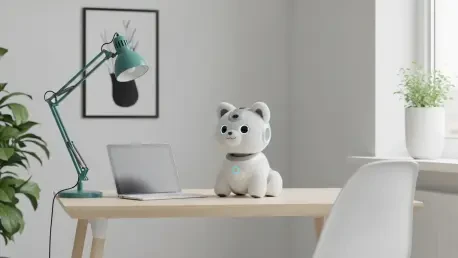
The Familiar stands out from its precursors by embracing a physical form that prioritizes comfort and tactile engagement over industrial efficiency. Measuring roughly the size of a bulldog and covered in soft, high-quality plush fur, the robot is designed to be touched, held, and interacted with as a physical presence rather than a plastic appliance. Its aesthetic features, such as large, doe-like eyes and soft, bear-like ears, are carefully calibrated to trigger nurturing instincts in humans without falling into the “uncanny valley.” By utilizing sensors beneath its fur, the machine can detect physical affection and respond with subtle movements, such as leaning into a hand or shifting its weight to indicate comfort. This emphasis on soft robotics marks a departure from the sleek, hard-shelled surfaces that have defined home technology for decades. The result is a creature that feels approachable and safe, inviting owners to treat it with the same care they might afford a living pet in a domestic setting. This tangible softness provides a sensory experience that digital assistants cannot replicate, bridging the gap between a cold device and a warm companion.
Establishing Unique Identity: Avoiding Biological Mimicry
One of the most intentional aspects of the design is the deliberate avoidance of exact biological mimicry, ensuring the robot does not become a direct replica of a specific breed of dog or cat. This philosophical choice by the engineering team aims to prevent users from imposing rigid behavioral expectations that a machine might fail to meet, such as expecting a robotic cat to purr or jump on high shelves. Instead, the Familiar establishes its own unique identity through a repertoire of emotive movements, including elaborate “greeting stretches” when an owner enters the room or a rhythmic swaying of its tail-like appendage. These behaviors are designed to convey a sense of life and personality that is distinct to the machine itself, allowing it to carve out its own niche in the human imagination. By forging a new category of “familiar” creature, the robot encourages a more flexible and imaginative bond between the human and the machine. This allows the user to define the relationship on their own terms, fostering a sense of curiosity and ongoing discovery as they learn the specific quirks and habits of their robotic companion.
The Intelligence Behind the Fur
Social Adaptability: Leveraging Generative AI
The sophisticated interaction displayed by the Familiar is largely powered by the rapid integration of generative artificial intelligence and large language models into robotic systems. While earlier attempts at companion robots relied on pre-programmed scripts and limited response trees, this new generation of technology allows the Familiar to process complex audio input and environmental cues in real time. The robot actively listens to human conversation through its integrated sensory array, allowing it to pick up on emotional tones and specific keywords that inform its behavior. Over time, the machine learns the daily rhythms and habits of its owner, such as knowing when to offer a quiet presence during a morning coffee or when to encourage movement after a long period of inactivity. This level of social adaptability represents a significant leap forward from the navigational algorithms used in vacuum cleaners. It transforms the robot into a learning entity that evolves alongside its human counterpart, ensuring that the interaction remains fresh and personally relevant throughout its entire operational lifespan.
Emotive Communication: The Role of Non-Verbal Audio
In a strategic move to preserve the illusion of a pet-like existence, the development team opted for the Familiar to communicate through expressive animal-like sounds rather than synthesized human speech. By avoiding the persona of a digital assistant or a talking appliance, the robot bypasses the cognitive dissonance that often occurs when machines attempt to mimic human verbal communication. These vocalizations—ranging from soft chirps to rhythmic humming—are used in conjunction with body language to express a wide spectrum of emotions, from excitement to tranquility. This non-verbal approach allows the owner to interpret the robot’s needs and feelings through a more intuitive, emotional lens, much like the bond shared with a biological animal. Furthermore, this design choice ensures that the Familiar remains firmly in the category of a companion rather than a tool, preventing it from being viewed as just another interface for a search engine or a home control system. This focus on emotive audio feedback deepens the sense of presence, making the machine feel like a sentient member of the household.
Bridging the Pet Ownership Gap
Vulnerability and Need: Triggers for Human Empathy
Central to the success of the Familiar is its ability to project a sense of vulnerability and need, which naturally triggers empathetic responses from human caregivers. Experts in robotic psychology emphasize that for a machine to be effective as a companion, it must not appear too perfect or self-sufficient; instead, it should invite interaction through its perceived dependency. The Familiar is programmed to seek attention and express a desire for physical contact, which encourages owners to engage in social behaviors that combat the onset of loneliness. This interaction serves as a critical bridge for those who may have limited social contact with other humans on a daily basis. Beyond mere emotional support, the robot also acts as a subtle motivator for physical activity, as its tendency to follow an owner from room to room or wait by the door encourages gentle movement throughout the day. By serving as an active participant in the domestic environment rather than a stationary decoration, the robot fosters a dynamic relationship that can significantly improve the mental and social well-being of its users.
Maintenance-Free Companionship: Solving the Ownership Gap
The emergence of the Familiar demonstrated that the next frontier of domestic technology would likely be defined by a machine’s ability to capture the human heart rather than its capacity to clean a floor. As the industry moved forward from the current year of 2026, the focus transitioned toward refining the nuances of artificial empathy and long-term social bonding. Stakeholders in the healthcare and eldercare sectors recognized the potential for these robotic companions to serve as integral components of mental health support systems, offering a scalable solution to the global loneliness epidemic. Future considerations will likely involve the integration of more sophisticated biometric sensors to allow these robots to monitor the physical health of their owners, further bridging the gap between companionship and caregiving. For developers and investors, the lesson was clear: utility alone is no longer enough to satisfy the evolving needs of the modern household. By embracing the soft, the emotive, and the social, the robotics industry paved the way for a new generation of machines that were treated not merely as tools, but as members of the family.