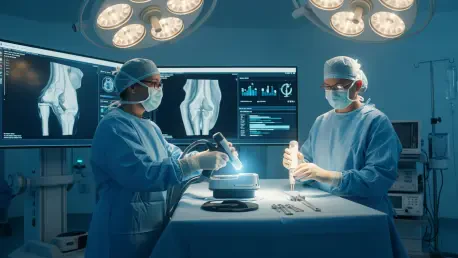

The evolution of orthopedic surgery has reached a pivotal juncture where the demand for microscopic precision and the physical constraints of the operating room are finally being addressed through the integration of highly portable robotic systems. This shift represents a significant departure from the large, stationary platforms that once dominated the surgical landscape, offering a more versatile approach to joint replacement that prioritizes both surgeon ergonomics and patient safety. As the healthcare industry continues to emphasize outpatient procedures and rapid recovery times, the move toward handheld robotic instruments has become a necessity rather than a luxury. These devices provide the high-level computational guidance expected of modern medical technology while maintaining the tactile feedback that surgeons rely on for complex bone resections. By reducing the physical footprint of robotic assistance, medical facilities can now integrate advanced surgical precision into standard operating rooms without needing dedicated spaces. This progress ensures that cutting-edge technology remains accessible to a broader range of clinical environments, from major metropolitan hospitals to specialized orthopedic clinics that handle high volumes of knee arthroplasty.
Clinical Advancements: Robotic Surgical Evolution
Part 1: Precision Mechanics and Haptic Guidance
The core functionality of this handheld robotic system lies in its sophisticated software interface, which creates a virtual boundary around the patient anatomy to prevent accidental damage to surrounding soft tissue during the procedure. This digital guardrail system allows for incredibly precise bone preparation, ensuring that the final implant fit is optimized to the specific biomechanics of the individual patient. Surgeons benefit from a real-time feedback loop that provides tactile resistance if the cutting tool approaches the edges of the pre-planned resection area, effectively combining human expertise with robotic consistency. This level of accuracy is particularly beneficial in total knee arthroplasty, where even a few millimeters of deviation can significantly impact the long-term success of the joint replacement. Furthermore, the system simplifies the preoperative planning phase by using advanced imaging data to create a detailed three-dimensional model, which serves as a blueprint for the entire operation. This integration of data-driven planning and handheld execution streamlines the surgical workflow, allowing for a more predictable outcome across diverse and challenging anatomical variations encountered in daily practice.
Part 2: Strategic Implementation and Healthcare Outcomes
The successful implementation of this handheld robotic platform provided a clear roadmap for the future of orthopedic interventions, demonstrating that high-precision tools could be both effective and portable. Healthcare providers observed a significant reduction in the duration of hospital stays as patients benefited from the less invasive nature of the robotically guided resections. The focus then moved toward expanding the capabilities of the software to include more complex ligament balancing algorithms, which allowed surgeons to fine-tune the tension of the knee joint with unprecedented accuracy. Training programs were updated to include comprehensive simulation modules, ensuring that the next generation of specialists was fully proficient in utilizing these digital assistants. As the technology matured, the industry turned its attention to the integration of longitudinal data tracking, linking intraoperative data with long-term functional recovery scores to refine the overall surgical approach. This cycle of continuous improvement established a new baseline for what was considered standard of care in joint replacement. Future developments likely involved the expansion of this handheld capability to other areas of orthopedics, ensuring that the benefits of miniaturized robotics were realized across the entire musculoskeletal spectrum.