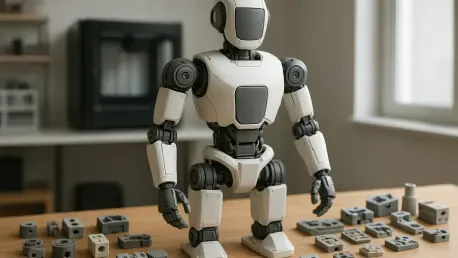

The robotics landscape has long been defined by high walls and proprietary secrets, where the most advanced humanoid machines remain locked behind corporate NDAs and multi-million dollar research grants. The collaboration between hardware giants like Nvidia and platforms like Hugging Face signals a fundamental shift toward an open ecosystem for training physical artificial intelligence models. Vulcan Robotics is positioning itself at the epicenter of this transition with the launch of Sourccey, a 40-inch tall, dual-armed home robot that rejects the black box philosophy of industry titans. By choosing to release the full mechanical designs, electrical schematics, and underlying AI models to the general public, the company is attempting to transform the very nature of robotic ownership. Sourccey is not intended to be a finished, static appliance, but rather a modular development kit that allows any capable engineer to peek under the hood and contribute to its evolution in real time.
Technical Foundation and Software Integration
Building an Accessible Hardware Platform: Standardizing the Chassis
The core architecture of Sourccey relies on the democratization of manufacturing, utilizing standard PLA plastic and desktop 3D printing technologies to bring hardware costs down to an unprecedented level. Instead of utilizing carbon fiber or specialized alloys that require industrial-grade casting, the robot’s chassis can be printed in a typical home workshop, allowing for rapid prototyping and immediate physical iterations. This choice not only lowers the initial financial investment for hobbyists but also fundamentally changes the lifecycle of the machine. When a joint wears out or a limb requires a specific modification for a new task, the user simply prints a replacement part rather than waiting for a proprietary shipment from a distant factory. This level of self-sufficiency ensures that the robot remains functional for years, as the maintenance is entirely decoupled from the original manufacturer’s supply chain, empowering users to take full control of their hardware’s longevity.
Leveraging the LeRobot Open-Source Framework: Software Synergy
On the computational side, the integration with the LeRobot framework provides a standardized software foundation that bridges the gap between hardware execution and complex neural networks. By leveraging this open-source platform, developers can access a centralized repository of teleoperation data and pre-trained models, effectively bypassing the arduous process of building an AI stack from scratch. This shared ecosystem mirrors the success of natural language models, where communal data collection leads to exponential improvements in machine capability. For Sourccey, this means that a task learned by one unit—such as identifying a specific kitchen tool—can be instantly shared with every other unit on the network. This synergy between accessible hardware and standardized software creates a powerful entry point for researchers who previously lacked the resources to experiment with dual-armed manipulation. The result is a platform that grows smarter through the collective effort of a global community.
The Future of Collaborative Robotics
The Decentralized Development Loop: Crowdsourcing Reality
Navigating the chaotic environment of a modern household presents a unique set of challenges that traditional, pre-programmed robotics often fail to overcome. Vulcan Robotics addresses this by fostering a decentralized development loop where the global community acts as a distributed research and development department. Because no single company can simulate every possible variable—from the specific lighting of a basement to the unpredictable movement of a family pet—the open-source model allows for real-world testing on a massive scale. As users across different continents encounter unique obstacles, they can refine the robot’s navigation algorithms and share those improvements back to the main branch. This approach mimics the development of open-source operating systems, where the collective debugging of thousands of users leads to a level of robustness that proprietary systems struggle to match. This distributed intelligence ensures the robot remains adaptable to a wide range of domestic settings.
Shared Innovation and Modification: The Evolutionary Cycle
This collaborative loop also extends to the physical utility of the robot, as developers create and share custom attachments or specialized motor profiles for niche household tasks. The transparency of the platform encourages a culture of tinkering that is often discouraged by the restrictive warranties of mainstream tech companies. When a user develops a more efficient way for the dual arms to coordinate for a task like clearing a table, the mechanical and digital blueprints are made available for others to verify and adopt. This creates a rapid evolutionary cycle where the most effective solutions naturally rise to the top, becoming the new standard for the entire user base. By removing the barriers to modification, Vulcan Robotics has ensured that the machine is a living project rather than a static product. This sense of shared ownership not only accelerates technical progress but also builds a resilient ecosystem that is not dependent on the survival or success of any single corporate entity.
Milestones in Autonomy and Performance: Imitation Learning Results
Current performance metrics for Sourccey highlight the effectiveness of its imitation learning approach, with the robot achieving a 90% success rate in folding various types of shirts. This level of dexterity is achieved through teleoperation, a process where human operators demonstrate the task while the AI records the relationship between visual input and motor output. By capturing these high-fidelity demonstrations, the robot can learn the subtle, non-linear movements required to handle flexible materials like cotton or linen. This method is significantly more efficient than traditional hard-coding, as it allows the AI to develop an intuitive understanding of physics through observation and repetition. While these results are currently categorized as experimental, they provide a concrete proof of concept for the viability of dual-armed home assistants. The focus remains on expanding this library of demonstrations to include more complex chores, such as loading a dishwasher, to enhance the robot’s utility.
Future Projections and Autonomy: The Path toward 2028
As the platform continues to mature, the focus will transition from human-guided demonstrations to autonomous decision-making in unscripted environments. Industry analysts and Vulcan Robotics experts projected that the convergence of refined motor control and advanced vision systems would lead to full autonomy for general household tasks by 2028. This upcoming period of development will prioritize the generalization of skills, allowing the robot to apply what it learned in one kitchen to an entirely different layout without further training. Stakeholders should prepare for this shift by engaging with the open-source repositories now, as early adoption provides a significant advantage in shaping the future of domestic automation. The move toward an open-source architecture showed that the future of robotics belonged to the community rather than to a few isolated corporations. By establishing a collaborative foundation today, the industry took a decisive step toward making physical artificial intelligence a practical reality.