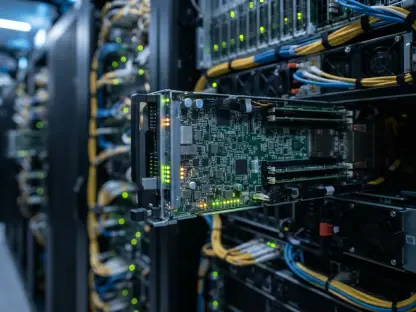

The strategic decision to either maintain a proprietary intelligence layer or rely on third-party cloud infrastructure has become the most critical pivot point for modern enterprise leadership. The landscape of enterprise software is currently undergoing a fundamental transformation, transitioning from a reliance on massive, centralized cloud infrastructures to a more distributed, localized model of owned intelligence. As the tech industry navigates an unprecedented race to develop and deploy artificial intelligence, the limitations of the current cloud-centric paradigm are becoming increasingly visible. This shift is not merely a technical adjustment but a strategic pivot that will likely define the competitive hierarchy of the global business environment over the coming years.
Introduction
This analysis explores the emerging divide in the enterprise software market between companies that rent capabilities from major hyperscalers and those that own their intelligence layers through localized compute. This transition is catalyzed by the specific requirements of the physical economy, including industries like manufacturing, logistics, and field services, where the limitations of browser-based cloud tools are most acute. Readers can expect to learn about the environmental pressures on data centers, the rise of the small data center, and how intelligence compounds when held as a private asset.
The scope of this exploration covers the convergence of edge computing and operational intelligence, specifically focusing on how organizations can bypass cloud bottlenecks. It addresses the practicalities of data sovereignty and the technical architectures required to manage high-frequency operational execution. By the end of this discussion, the necessity of moving toward a more action-oriented and sovereign form of enterprise intelligence will be evident for those seeking long-term resilience.
Key Questions or Key Topics Section
Why Is the Global Shift Toward Owned Intelligence Gaining Unprecedented Momentum?
The mounting pressure on global data center infrastructure is a primary driver behind the move toward distributed intelligence. The rapid expansion of frontier models has triggered a construction boom, yet this growth comes with significant environmental and social costs that are becoming harder to ignore. Organizations face intense scrutiny regarding the massive electricity and water requirements for cooling these facilities, leading to a point where grid expansion and land use often encounter community backlash and regulatory hurdles.
Furthermore, the centralized cloud model faces supply chain volatility that threatens the reliability of always-on services. By decentralizing computation and moving toward on-device or local compute, companies can bypass the bottlenecks inherent in the centralized cloud. This ensures lower latency and more predictable cost structures, allowing for a strategic pivot from renting generic capabilities to owning a localized intelligence layer that functions independently of external disruptions.
What Defines the Fundamental Concept of a Small Data Center in Modern Enterprise?
A central theme in this technological evolution is the distinction between traditional edge computing and the modern small data center approach. Historically, edge installations were narrow-purpose devices designed for simple, localized tasks with limited scope. In contrast, the new model popularized by leaders like Amit Shah of InstaLILY provides a full intelligence stack at the perimeter. This architecture allows for a sophisticated interplay between high-level cloud reasoning and immediate, localized action.
This stack integrates three core components to create a seamless operational environment. First is the intelligence layer built from proprietary knowledge known as InstaBrain, which acts as the reasoning engine for the company. This is complemented by InstaWorkers, which are agents that execute tasks directly within digital or physical systems. Finally, a unified governance system called InstaControl manages the execution across both local and cloud environments, eliminating the trade-off between power and proximity.
How Does the Physical Economy Benefit Most From Localized Artificial Intelligence Layers?
The physical economy, comprising sectors like manufacturing and field services, operates under constraints that standard cloud environments often fail to meet. While generative chatbots work well in a web browser, they are insufficient for complex industrial workflows that demand specific institutional knowledge and exception logic. Generic cloud models lack the operational context of a specific warehouse or factory floor, making them less effective in environments where every second of downtime carries a heavy financial penalty.
Latency and connectivity are also critical factors, as a remote cloud server becomes a liability in remote industrial sites or high-speed production lines. By implementing localized intelligence, manufacturers have successfully reduced logistics routing times from fifteen minutes to a mere three. This shift allows for data trust and auditing, as companies no longer have to hand over critical decision-making processes to a cloud-based black box they cannot fully govern or control.
Is Rented Artificial Intelligence a Sustainable Long-Term Strategy for Competitive Businesses?
The move toward distributed intelligence differs from previous waves of technology because value compounds at the edge. Every exception handled and every workflow optimized by a local system contributes to a private intelligence layer that becomes smarter and more valuable over time. Unlike a file-sharing network that remains static, an intelligence layer evolves. Therefore, the competitive advantage in the future will belong to companies that effectively own and cultivate their own intelligence assets rather than those simply paying a subscription for generic tools.
Consequently, the assumption that artificial intelligence will live exclusively in the cloud ignores the reality of how industrial operations function. For these sectors, the value of the technology is found not in its general knowledge, but in its ability to master the nuances of a specific environment. Relying solely on rented models creates a dependency that may stifle innovation and prevent the development of a unique, compounding asset that could otherwise define a company’s market position.
Why Are Traditional Cloud Hyperscalers Lagging Behind in the Distributed Revolution?
There is a notable lag in the adoption of distributed models by traditional hyperscalers, largely attributed to their existing economic incentives. The business models of cloud giants are built around centralized consumption and a pricing structure based on the number of tokens processed in their centers. Moving inference to the edge essentially compresses the revenue per token for these providers and complicates a roadmap designed for massive, centralized training runs.
However, the demand for localized control is becoming too strong for the market to ignore. Companies currently leading this charge are those whose customers feel the most cloud pain, such as logistics networks and industrial operators. As these sectors demand more localized control, traditional cloud providers will be forced to choose between cannibalizing their core revenue or losing significant market share to specialized, distributed providers who offer more sovereignty.
Summary or Recap
The transition from renting generic artificial intelligence to owning a proprietary intelligence infrastructure represents a maturing understanding of technology in the enterprise sector. The rise of the small data center reflects a shift toward placing reasoning and execution closer to the actual work, ensuring reliability and contextual accuracy. This model allows for a hybrid approach where deep reasoning remains in the cloud while high-frequency operations occur locally, providing the best of both worlds.
Key takeaways include the importance of viewing intelligence as a compounding asset and the necessity of bypassing cloud bottlenecks for operational efficiency. Enterprises must recognize that the era of browser-based tools is giving way to an era of integrated, action-oriented systems. By moving toward a sovereign form of intelligence, businesses can protect their data, reduce latency, and build a unique competitive advantage that grows in value with every operational decision made.
Conclusion or Final Thoughts
The strategic landscape of the tech industry reached a point where the distinction between rented and owned intelligence dictated the long-term success of the physical economy. Leaders recognized that while the cloud offered convenience, true operational excellence required a localized stack that understood the unique exceptions of their specific industries. The transition toward a sovereign intelligence layer represented a move away from passive software consumption toward active asset building.
Enterprises that audited their current reliance on hyperscalers were better positioned to integrate the small data center model into their existing workflows. They prioritized the creation of private reasoning engines that could function independently of global grid pressures and connectivity issues. This evolution proved that the winners of the current cycle were those who focused on operational intelligence as a compounding asset, ensuring their systems were as resilient as the physical infrastructure they managed.