
Innovation in manufacturing is no longer restricted to a single plant when institutional knowledge is democratized across the entire engineering and production floor. This fundamental shift marks the transition from traditional, rigid automation to a more fluid model known as Industrial Intelligence. In the current landscape of 2026, manufacturers are grappling with the need to scale output without simultaneously ballooning their operational complexity. By integrating collective experience, historical data, and real-time business insights, companies are building a functional engine that drives sustainable growth. This approach moves beyond the simple execution of tasks; it creates a framework where intelligence is embedded into the fabric of the organization. The goal is to move from isolated pockets of brilliance to a unified system where every facility operates at its peak, leveraging a shared repository of insights. This evolution ensures that production lines are not just faster, but resilient to disruptions.
Institutionalizing Knowledge: Bridging the Expertise Gap
The historical challenge for many factory floors has been the reliance on “tribal knowledge,” where critical operational intelligence resides within the minds of veteran operators rather than in accessible documentation. While a standard operating procedure can outline a sequence of events, the actual execution often relies on the nuanced judgment of a worker who understands how specific materials behave under varying conditions or recognizes when a subtle machine vibration necessitates an intervention. Industrial Intelligence seeks to institutionalize this expertise by capturing the context surrounding daily operations and turning it into a structured asset. By doing so, manufacturers ensure that their most valuable insights are preserved and disseminated across the entire workforce. This strategy transforms the role of the operator from a simple executor into a contributor to a broader knowledge ecosystem, ensuring that wisdom remains behind even when an employee eventually leaves the facility.
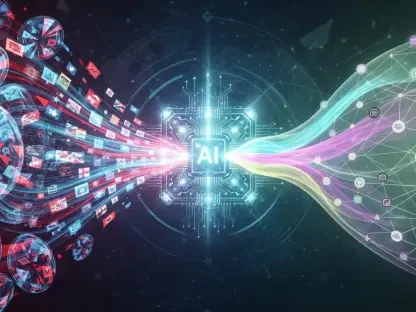
To move beyond localized expertise, industrial leaders have begun to capture the broader context that surrounds raw production records. For an engineer or a manager to evaluate a process change effectively, they require more than just a surface-level list of output figures; they need a comprehensive view of equipment configurations, quality benchmarks, and the specific trade-offs made during a particular shift. By connecting these once-disparate elements, innovation is no longer trapped within the walls of a single maintenance workshop or engineering lab. Instead, these insights spread seamlessly across the production floor, allowing for a more agile response to shifting market demands. This democratization of knowledge ensures that the entire enterprise benefits from the best practices developed at the individual level, creating a compounding advantage. When every worker has access to the collective intelligence of the organization, the speed of problem-solving increases, fostering a culture of improvement that scales easily.
Physical AI: Translating Intelligence Into Autonomous Action
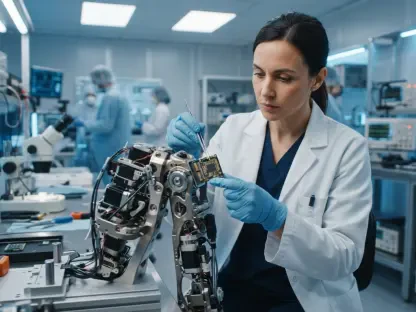
The emergence of Physical AI represents the critical link between high-level digital intelligence and mechanical action on the factory floor. Unlike traditional business intelligence, which primarily offers retrospective reports on past performance, Physical AI involves systems that can perceive environmental conditions, reason through complex variables, and execute physical tasks in real time. These systems create a continuous feedback loop where machines respond dynamically to changing conditions rather than following a pre-programmed, static path. This capability transforms the factory floor into a responsive environment where intelligence participates directly in the physical workflow. By utilizing advanced sensors and machine learning models, Physical AI allows equipment to adjust its behavior based on the specific state of the materials or the environment. This shift from reactive monitoring to proactive execution is the cornerstone of the modern manufacturing facility, enabling a level of precision that was previously impossible.
One of the most significant advantages of Physical AI is its sophisticated ability to manage variation, which has long been a hurdle in high-volume production. In robotic-handling operations, for instance, vision systems now allow machines to assess a part’s exact orientation and material properties to determine the most efficient grip and movement. This moves the process beyond simple observation; it is a system capable of making autonomous adjustments within validated limits. For example, if a batch of raw material arrives with slight deviations in density, the AI-driven system can modify its pressure or speed parameters to maintain a consistent quality output. This level of adaptability ensures that high-quality standards are met even when input conditions are not perfect, reducing waste and rework significantly. By managing these micro-variations automatically, Physical AI allows the human workforce to focus on high-level strategic oversight, creating a stable environment that can scale without technical friction.
Proven Success: Real-World Applications and Strategic Simulation
Major industry players have already demonstrated the profound efficacy of integrated intelligence through significant operational breakthroughs. Toyota Industries, for example, successfully connected fragmented data within its paint shops to provide its teams with the context needed to understand the root causes of defects. This integration reduced analysis cycles from five days to less than four hours, allowing teams to intervene before defects became permanent outcomes on the assembly line. Similarly, at its facility in Singapore, Rockwell Automation implemented a “maintenance copilot” that synthesizes technical manuals and veteran knowledge to assist new technicians. This application significantly streamlined the onboarding process, reducing the time required to learn complex troubleshooting from nine months down to just three. These examples highlight that the primary value of the technology lies in its ability to make existing data actionable, turning latent information into a decisive competitive advantage for the modern enterprise in 2026.
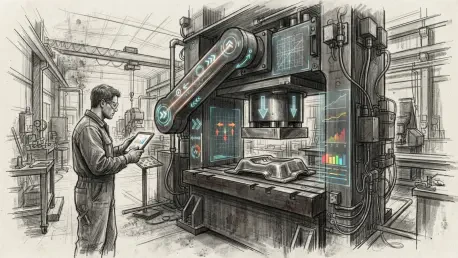
To further mitigate the risks associated with scaling, modern manufacturers have increasingly turned to simulation as a core component of their operational strategy. Simulation creates a “safe space” for experimentation, allowing engineers to test process changes and new configurations in a high-fidelity digital environment before they are ever implemented on a physical line. This ensures that the production floor is never used as the site of an unproven trial, which protects output stability and equipment longevity. However, the deployment of such advanced technology must be grounded in a culture of rigorous operational discipline. Trust in these systems does not stem from the sophistication of the AI model alone, but from established safety boundaries and clear lines of authority regarding system changes. Effective implementation required that human operators maintained the ability to intervene and return equipment to a safe state. This balance between autonomous intelligence and human oversight allowed organizations to innovate safely.
Human-Centric Systems: Cultivating an Adaptive Industrial Future
The ultimate objective of Physical AI is to augment human ingenuity rather than replace it with fully autonomous systems. By delegating repetitive, physically taxing, or high-risk tasks to intelligent equipment, manufacturers allow their employees to dedicate their time to complex problem-solving and creative innovation. Agent-assisted systems help workers navigate information-dense environments by surfacing relevant data exactly when it is needed, which simplifies the decision-making process for technicians on the floor. This creates a symbiotic relationship where more capable machines enable the workforce to become more capable in their specific roles. The result is a more engaged and empowered labor force that can manage larger and more complex operations with greater ease. As machines take over the rote aspects of production, the focus of the human worker shifts toward optimizing the entire ecosystem. This human-centric approach ensures that technology serves as a tool for empowerment rather than a source of job displacement.
In the recent shift toward advanced manufacturing, the most successful organizations prioritized the democratization of expertise and the integration of Physical AI. These leaders recognized that long-term growth depended on making institutional knowledge mobile across the entire enterprise. They implemented systems that acted autonomously within validated parameters, which allowed for a state of continuous learning and adaptation. By treating Industrial Intelligence as the total sum of their technical know-how and operational data, these companies turned everyday observations into compounding advantages. The focus remained on actionable next steps, such as establishing clear safety protocols and investing in simulation tools to reduce physical risks. Manufacturers who embraced this model achieved significant improvements in productivity without increasing the burden of organizational complexity. They demonstrated that the future of the industry rested on the ability to solve complex problems through a unified workforce. This approach solidified a new standard.