
The digital architecture that once facilitated vibrant human exchange has transformed into a sprawling labyrinth where automated scripts simulate the pulse of a living community. For over a decade, social platforms served as a daily ritual—a landscape for genuine humor, niche advice, and authentic human connection. However, a single viral glimpse into the physical reality of a “headless” smartphone farm, where rows of screenless devices churn out endless automated engagement, recently dismantled that illusion for even the most dedicated users. When the realization settles that a heated debate or a viral post is merely the output of a blinking light on a wire rack in a distant warehouse, the social fabric of the internet does not just fray; it effectively vanishes.
This phenomenon points toward a profound existential crisis for digital communication. The internet was originally envisioned as a decentralized hub for human interaction, but the rise of the Dead Internet Theory suggests that the vast majority of web traffic is now bot-driven. This shift represents more than an influx of spam; it marks the fundamental transformation of the digital environment into a sterile landscape of algorithmic manipulation where human participants are increasingly the minority. As platforms prioritize engagement metrics over authentic interaction, the very definition of a “social” network is being rewritten by lines of code rather than human relationships.
The Ghost in the Machine: Why Your Last Online Argument Might Have Been with a Rack of Servers
The erosion of organic spaces is most visible in the transition from community-led moments to feeds hyper-optimized for “rage-bait.” In the early years of digital forums, legendary events like the “Rampart” AMA disaster stood as testaments to the unpredictable, organic nature of human crowds. Today, those spontaneous interactions have been largely replaced by industrialized influence. The shift from individual, clumsy bots to industrial-scale “bot farms” allows for the manufacturing of public opinion through sheer processing power, making it nearly impossible to distinguish between a popular movement and a programmed campaign.
As social platforms transition into primary training grounds for artificial intelligence, the fundamental value of the human user has shifted. No longer viewed as a participant in a social exchange, the individual has been reduced to a data point used to refine large language models. This pivot toward data-harvesting prioritizes the quantity of engagement over the quality of connection, effectively hollowing out the digital town square until only the echoes of automated scripts remain. The result is a sterile environment where the user is the product being consumed by machines.
From Digital Town Square to Automated Echo Chamber
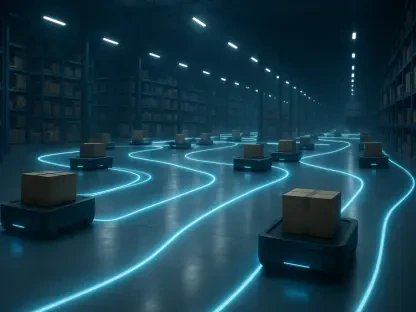
Understanding the mechanics of this automated landscape requires looking at the physical infrastructure that sustains it. Research from institutions like Cambridge University confirms that the underground market for inauthentic content is no longer a fringe operation but a thriving global industry. Modern bot farms utilize “headless” smartphones—hardware stripped of screens—to bypass modern security protocols. Because platforms frequently require SIM cards and valid phone numbers for verification, these wire racks house hundreds of thousands of active accounts within a single facility, all managed by a few centralized servers.
This industrialization of influence consumes massive amounts of physical resources. These operations require significant electricity and water for cooling, effectively translating raw environmental resources into digital engagement and emotional manipulation. By deploying vast numbers of synchronized accounts, these farms create a false sense of consensus. This simulation of majority opinion makes minority views appear universal, effectively isolating genuine human users and making them feel like outliers in their own digital neighborhoods. This manufactured consensus can swing markets, influence elections, and dictate the boundaries of acceptable discourse.
Behind the Curtain: The Mechanics of the Modern Bot Farm
Engaging with a bot-saturated internet carries a documented psychological toll. When humans treat automated scripts as human peers, they subject their nervous systems to a cycle of manufactured stress. Tech and health writers have identified a recursive phenomenon known as the “meta-stress” loop. This occurs when users ruminate on the stress caused by online interactions, creating a feedback loop of psychological distress that has no human resolution because the source of the conflict was never human to begin with.
The realization of how this content is produced often serves as a permanent deterrent to engagement. Much like viewing a documentary on industrial food production can permanently alter one’s appetite, seeing the “blinking and whirring” reality of bot farms makes it impossible to view social media as a healthy space. When the perceived “other” on the screen is likely a script, the empathy and connection that once defined social media are replaced by a profound sense of digital isolation. This environment fosters a unique form of loneliness, where one is surrounded by “activity” but devoid of actual company.
The Psychological Toll of Fighting Phantoms
Reclaiming digital sovereignty requires more than simple willpower; it demands a strategic restructuring of one’s relationship with technology. One effective intervention is the “greyscale” method, which involves setting a phone’s display to black and white. This strips away the dopamine-triggering colors designed to make social media applications hyper-stimulating and addictive. By removing the visual rewards of the interface, users can begin to break the physiological cycle of mindless scrolling and regain control over their attention spans.
Beyond visual adjustments, the active deletion of accounts provides a more permanent solution. Moving past “taking a break” to the definitive removal of digital profiles often results in a measurable “rush of adrenaline” as the user detaches from the engagement cycle. To maintain these new boundaries, a three-question filter is essential: Why was this written? Am I being emotionally manipulated? Is this interaction worth my finite mental energy? These questions act as a personal firewall against automated scripts designed to bypass emotional defenses and provoke reactive engagement.
Reclaiming Sovereignty: Strategies for Digital Hygiene
The investigation into the Dead Internet Theory revealed that the decline of digital connection was not an accidental byproduct of growth, but a systemic result of industrial-scale automation. Evidence showed that the transition toward a bot-dominated web fundamentally altered how information was consumed and how stress was processed. The shift from participation to data extraction suggested that the era of the “social” web had reached its logical conclusion. As users realized that their digital peers were often racks of screenless phones, the incentive to participate in public forums diminished significantly.
Ultimately, the path forward required a return to local, physical communities and high-utility digital tools that prioritized human intent over algorithmic growth. Strategies such as halving screen time and utilizing built-in operating system limits moved from optional suggestions to essential survival skills for the digital age. As the curtain was pulled back on the “bot farm” reality, the focus shifted from winning digital arguments to preserving mental clarity and seeking out verifiable human spaces. This transition marked the beginning of a more intentional era, where the value of a connection was measured by its human origin rather than its engagement metrics.