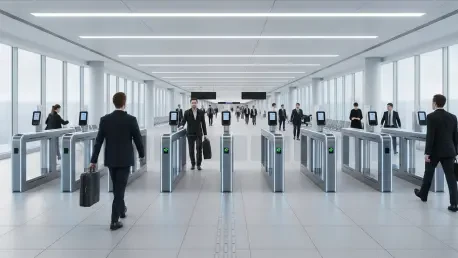

The resurgence of international mobility has reached a critical juncture where the necessity for airtight security must be harmoniously balanced with the logistical demand for rapid passenger throughput at busy global transit hubs. This unprecedented pressure on border agencies has catalyzed the adoption of Automated Border Control solutions that leverage artificial intelligence to process travelers with high levels of precision. These systems are no longer merely experimental additions to airport terminals but have become central pillars of national infrastructure strategy across the globe. By moving beyond the limitations of manual passport inspections, authorities can effectively mitigate the risks associated with fraudulent identification while simultaneously reducing wait times for the public. The integration of high-speed biometric verification and real-time data analysis allows for a more proactive defense posture, identifying potential threats well before they reach the primary inspection line. As travel volumes climb, the reliance on these automated frameworks is set to deepen significantly.
Defining Market Mechanics: Economic Drivers and Infrastructure Needs
Modern Automated Border Control systems are characterized by their sophisticated use of biometric modalities, including facial recognition, iris scanning, and fingerprint authentication, to verify the identities of travelers. These technologies are often housed within automated e-gates that interact directly with the electronic chips embedded in modern passports, creating a seamless interface between physical and digital identity. This transition toward a low-friction environment significantly reduces the number of physical touchpoints required for a passenger to move from the gate to the exit. By automating the routine aspects of identity verification, border personnel can be redirected toward higher-value tasks, such as conducting detailed interviews with travelers who present genuine security concerns. This technological synergy not only enhances the overall efficiency of the terminal but also improves the accuracy of background checks by cross-referencing biometric data against international watchlists. The resulting infrastructure is more resilient and adaptable.
The economic trajectory for the automated border sector indicates a period of robust and sustained expansion, with the total market value projected to experience a significant surge over the coming decade. Building upon recent progress, the industry is positioned to grow at a double-digit rate from 2026 through 2035, potentially exceeding a total valuation of $8.6 billion. This aggressive growth is largely fueled by comprehensive government mandates aimed at modernizing aging border infrastructure to keep pace with the rapid digitalization of global commerce. As nations invest in upgrading their land, sea, and air ports of entry, the demand for integrated software platforms and advanced hardware sensors continues to rise. This financial commitment reflects a broader understanding that secure and efficient borders are essential for maintaining national economic competitiveness in an increasingly interconnected world. The trend toward cloud-based management systems also contributes to this growth, as agencies seek scalable solutions that ensure high security.
Advanced Innovations: Biometric Corridors and AI Authentication
Current innovations within the sector are increasingly focused on the development of biometric corridors that allow for the verification of passengers while they remain in motion, eliminating the need for stationary checks. These high-speed solutions utilize advanced artificial intelligence algorithms designed to detect sophisticated fraudulent documents and deepfake biometric spoofs in a matter of seconds. By analyzing subtle patterns in skin texture, heat signatures, and movement, these AI-driven systems provide a layer of security that manual inspections simply cannot match in a high-volume environment. Furthermore, the implementation of cloud-native architectures ensures that biometric data and security alerts are synchronized across global networks instantly. This real-time connectivity allows border agencies to share critical information about emerging threats, creating a more cohesive and responsive defense against illegal entry and identity theft. As these technologies become more refined, they are expected to significantly reduce the operational footprint of transit stations.
The development and deployment of these complex technological ecosystems are being led by a select group of major corporate entities, including prominent organizations such as Thales Group, NEC Corporation, and Vision-Box. These industry leaders provide the essential hardware and software frameworks required to build and maintain smart airports and automated transit hubs globally. Their work involves the creation of multimodal biometric sensors that can simultaneously capture and verify multiple forms of biological data, ensuring a high degree of confidence in every identity match. Through continuous research and development, these companies are pushing the boundaries of what is possible in identity management, focusing on creating systems that are both highly secure and nearly invisible to the user. Their influence extends beyond just providing equipment; they are instrumental in shaping international standards for data privacy and biometric interoperability. This collaborative approach between the private sector and government is vital for future security.
Geopolitical Leadership: Regional Implementation and Digital Credentials
The United States currently holds a commanding position in the global border control market, supported by substantial government investment in smart airport initiatives and enhanced security measures at land borders. The American strategy focuses heavily on the deployment of facial recognition technology to streamline the flow of low-risk travelers, which effectively allows border agents to concentrate their limited resources on more complex and high-risk cases. This data-centric approach serves as a blueprint for other nations that are looking to modernize their own border protocols in response to rising migration pressures. By integrating advanced analytics with existing security frameworks, the United States has demonstrated that it is possible to improve national security outcomes without sacrificing the efficiency of commercial travel. This focus on digital transformation is also driving innovation in mobile identity management, as agencies explore new ways to verify credentials before a traveler even reaches the port of entry. The success of these programs will likely accelerate adoption globally.
The evolution of international travel is clearly trending toward a future where physical credentials like paper passports and plastic ID cards may eventually become entirely obsolete. This transition is expected to be led by mobile-first travel solutions, where secure digital identities are stored on personal smartphones and communicated to border systems via encrypted wireless protocols. By combining these digital documents with multimodal biometrics, the next generation of border control will offer a seamless, one-step journey from the initial check-in process to the final arrival at the destination. This shift toward a fully digitized ecosystem promises to further reduce the complexity of international travel while providing authorities with more reliable data for risk assessment. As digital identity standards become more standardized across international borders, travelers will experience a consistent and predictable process regardless of their location. This development not only enhances the convenience of travel but also strengthens the global security net through secure records.
Strategic Outlook: Transitioning Toward Seamless Global Mobility
The implementation of these advanced systems necessitated a shift in how governments approached the concepts of privacy and data security. Stakeholders recognized that while biometrics offered unparalleled security, the success of these programs depended on building public trust through transparent data management practices. Agencies focused on establishing clear legal frameworks that protected individual rights while allowing for the necessary sharing of security information between nations. The transition to automated borders demonstrated that technological innovation, when paired with thoughtful policy, could effectively address the most pressing challenges of global mobility. Future considerations were directed toward the expansion of these biometric frameworks to include a wider range of services beyond just border crossing, such as secure check-in and luggage tracking. By prioritizing the development of interoperable systems and fostering international cooperation, the global community ensured that the infrastructure for travel remained resilient.
National security experts emphasized the importance of continuous monitoring and system updates to counter the evolving nature of cyber threats and physical document forgery. The integration of artificial intelligence into border protocols proved to be a decisive factor in managing the sheer scale of modern global migration without overwhelming existing personnel. Decisions made during this period established the foundation for a more interconnected world where travel was both a privilege and a streamlined experience for those who followed the rules. Governments that invested early in these automated systems saw significant improvements in their ability to process high volumes of international visitors while maintaining a high standard of safety. Moving forward, the focus shifted toward refining these technologies to be even more inclusive and accessible to diverse populations. The collective efforts of technology providers and border agencies successfully redefined the international transit experience, proving that security and efficiency were not mutually exclusive.