
Researchers proved that quantum information can survive the journey between two distinct facilities on Long Island without the signal degradation typically associated with long fiber runs. This landmark achievement, facilitated by a collaborative effort between Brookhaven National Laboratory and Stony Brook University, represents a significant turning point in the development of a scalable quantum internet within the United States. By transmitting quantum states across a 13-mile open-air link, the project has effectively demonstrated that the fragile nature of photons does not necessarily require the physical protection of fiber-optic glass. This shift toward free-space optical communication addresses one of the most persistent bottlenecks in quantum networking: the loss of signal integrity over distance. As part of the Department of Energy’s Genesis Mission, this experiment provides a essential blueprint for a network that can integrate seamlessly with existing infrastructure while offering a level of flexibility that underground cables cannot match. The success of this wireless link suggests a future where high-performance computing and secure data transmission are accessible across diverse terrains, bridging the gap between isolated research hubs and creating a unified, high-security digital environment that is robust enough for real-world application.
Establishing the Physical Infrastructure: Building the Network Backbone
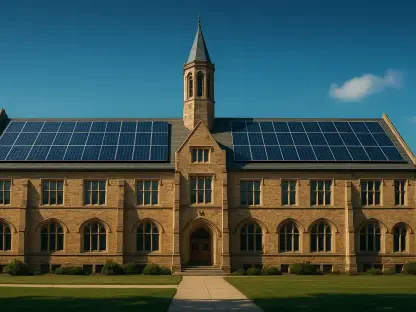
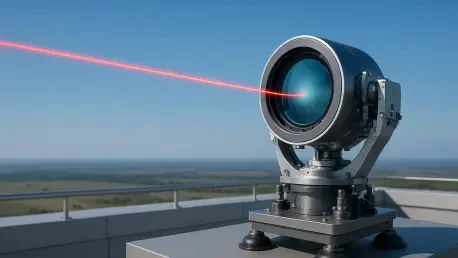
The successful deployment of the 13-mile quantum link required the construction of sophisticated rooftop facilities designed to maintain a precise line of sight between the two institutions. This physical backbone was essential for ensuring that the single photons emitted from the source could be reliably captured by the receiver across the horizon. By positioning the transmission and receiving equipment on the highest accessible points at Stony Brook University and Brookhaven National Laboratory, the team minimized terrestrial obstructions that could interfere with the optical path. This infrastructure serves as a permanent testbed for future experiments, allowing researchers to study how different environmental factors influence the stability of quantum signals. The establishment of this dedicated link also highlights the necessity of localized infrastructure in the broader effort to build a national quantum backbone. Each site was meticulously calibrated to handle the specific demands of quantum light, from the vibration-isolated mounting of the lasers to the specialized power systems required for continuous operation. This foundational work ensures that subsequent tests can be conducted with a high degree of repeatability, providing a stable platform for the next decade of quantum communication research.
Building the Watchtower and the Lighthouse: Part 1. Designing the Facilities
The “Quantum Watchtower” at Stony Brook University functions as the primary control center for the network, housing the complex laser arrays and quantum sources needed to generate entangled photons. This facility is the starting point of the 13-mile journey, where researchers employ advanced modulation techniques to encode information onto individual light particles. The technical requirements for the Watchtower are immense, as it must maintain perfect alignment with the distant receiver despite subtle shifts in the building’s structure or environmental vibrations. To complement this, the “Quantum Lighthouse” was established at Brookhaven National Laboratory as the primary receiving aperture. The Lighthouse is equipped with ultrafast cameras and high-sensitivity detectors capable of distinguishing single quantum signals from the background noise of the surrounding environment. These two facilities act as a closed-loop system, where data collected at the Lighthouse is used to adjust the transmission parameters at the Watchtower in real-time. This coordination is vital for maintaining the fidelity of the quantum states, especially during long-term experiments where external conditions are constantly changing. The synergy between these two sites proves that high-precision quantum hardware can be successfully operated in standard institutional environments.
Building the Watchtower and the Lighthouse: Part 2. Geographic and Technical Integration
One of the most significant logistical challenges of the project was finding a clear line of sight across the 13-mile expanse of Long Island’s varying landscape. The researchers had to identify a specific structure within Brookhaven National Laboratory that was tall enough to see over the intervening trees and suburban developments to reach the university’s campus. Once this line of sight was established, the team implemented a sophisticated control system to manage the beam’s trajectory through the air. This system utilizes a series of motorized mirrors and sensors that constantly monitor the position of the incoming light, making micro-adjustments to the steering to keep the beam centered on the receiving aperture. This level of precision is comparable to pointing a laser at a needle’s eye from several miles away, a task made even more difficult by the curvature of the Earth and the refractive index of the air. The control systems also manage the synchronization of the quantum clocks at both ends of the link, ensuring that the time-stamps of the emitted and received photons are perfectly aligned. The successful integration of these geographical and technical elements demonstrates that the physical hurdles of long-distance terrestrial quantum links can be managed through innovative engineering.
Implementing Astronomical Precision in Quantum Transmission: Part 1. Atmospheric Stabilization
Because the Earth’s atmosphere is a turbulent and unpredictable medium, the research team adopted stabilization techniques traditionally used in the field of astronomy to protect the quantum signals. Atmosphere-induced turbulence can cause a phenomenon known as “beam wander,” where the light pulses shift slightly off-course due to changes in air density, wind, and heat. By treating the receiving aperture like a terrestrial telescope, the team was able to apply adaptive optics and stabilization algorithms that compensate for these distortions in real-time. These methodologies allow the system to lock onto the incoming signal, maintaining a high collection efficiency even when the air is thick with humidity or heat shimmer. This cross-disciplinary approach is a primary reason why the 13-mile record was possible, as it allowed the fragile photons to traverse a medium that would normally scatter them. The use of astronomical collection techniques also provides a scalable solution for future links, as larger apertures can be used to capture even more light over longer distances. By leveraging the expertise of the astronomy community, the quantum researchers have found a way to turn the atmosphere from a barrier into a manageable channel for secure data transmission.
Implementing Astronomical Precision in Quantum Transmission: Part 2. Daytime Operational Success
The most impressive aspect of the daytime testing phase was the ability of the system to isolate single quantum photons against the overwhelming background radiation of the sun. Normally, the sheer volume of solar photons would saturate any high-sensitivity detector, making it impossible to identify the specific particles carrying the quantum information. To overcome this, the team utilized a combination of narrow-band spectral filters and temporal gating, which essentially only allows light of a specific color and at a specific micro-second to reach the detector. This filtering process is so effective that it can reduce the background noise by several orders of magnitude, leaving only the intended quantum signal. Proving that these links can operate during peak daylight hours is a critical step toward a 24-hour quantum internet, as it ensures that the network is not limited by the time of day. This achievement dispels the notion that wireless quantum communication is only feasible in the dark of night, opening the door for continuous, high-speed data transmission in commercial and government sectors. The success of these daytime tests also provides valuable data on how solar heating of the atmosphere affects beam stability, allowing for more robust control algorithms in future iterations.
The Strategic Importance of Quantum Links: Security and Global Scalability
The strategic value of establishing a long-distance quantum link extends far beyond the immediate technical achievement, as it lays the groundwork for a fundamentally more secure and collaborative digital infrastructure. In an era where traditional encryption methods are increasingly vulnerable to the rising power of classical and quantum computers, the development of quantum-secured networks is a matter of national importance. This 13-mile link serves as a primary example of how quantum entanglement can be used to create communication channels that are inherently immune to eavesdropping. Beyond security, the transition to open-air links allows for the rapid deployment of quantum nodes without the massive capital investment required for laying new fiber-optic cables. This flexibility is vital for connecting mobile units, temporary command centers, or remote research facilities that are not currently served by existing physical networks. Furthermore, the ability to transmit quantum information across the landscape facilitates a more integrated scientific community, where quantum resources can be shared across institutional boundaries. The scalability of this technology ensures that as new quantum processors are developed, they can be easily linked together to form a distributed computing network that is much more powerful than any single machine.
Guaranteeing Security Through Quantum Entanglement: Part 1. The Physics of Data Integrity
At the heart of the quantum network’s security is the phenomenon of entanglement, which links pairs of photons in a way that their states are inseparable, regardless of the distance between them. During the nighttime testing phase, the researchers successfully distributed these entangled pairs across the 13-mile link, confirming that the particles retained their quantum correlation after traveling through the atmosphere. This is a vital result because entanglement is the primary mechanism for Quantum Key Distribution, a method of encryption that is theoretically unhackable. Because any attempt to measure or intercept a quantum particle changes its state, an intruder would immediately be detected, and the compromised key would be discarded before it could be used. This level of data integrity is essential for sectors that handle highly sensitive information, such as finance, defense, and healthcare. The Long Island experiment proved that the fragile state of entanglement can survive the rigors of atmospheric transit, which was previously a major concern for scientists. By demonstrating that entangled photons can be shared between two distinct facilities, the team has provided a concrete path toward a network where security is guaranteed by the laws of physics.
Guaranteeing Security Through Quantum Entanglement: Part 2. Practical Applications and Native Wavelengths
A primary advantage of open-air quantum links is their ability to transmit light at its native wavelength, which is often difficult to achieve with standard fiber-optic cables. Many advanced quantum devices, such as those based on trapped ions, operate at specific visible light frequencies that suffer from high attenuation when passing through the glass cores of fiber-optic systems. To use fiber, these signals must often be converted to different wavelengths, a process that can introduce noise and reduce the efficiency of the quantum connection. By using a free-space link, researchers can transmit these native wavelengths directly through the atmosphere, preserving the original state of the information and simplifying the overall architecture of the network. This capability is essential for distributed quantum computing, where separate quantum processors must be linked together to perform complex calculations. By connecting different types of quantum hardware across the 13-mile span, the Brookhaven and Stony Brook team has shown that a heterogeneous network is possible. This means that a quantum computer in one facility could potentially use the memory or processing power of a device in another facility, creating a unified system that functions more effectively than any single machine.
Reaching Toward Yale and Outer Space: Part 1. Expanding the Regional Quantum Network
The success of the 13-mile link has already paved the way for more ambitious regional expansions, most notably a planned 30-mile connection that will cross the Long Island Sound to reach Yale University. This upcoming phase of the project will test the limits of free-space optical technology over water, which presents a different set of atmospheric challenges, including increased humidity and unique thermal gradients. Bridging the gap between Stony Brook and Yale will create one of the most significant quantum corridors in the world, connecting two of the leading research institutions in the field. This expansion is a critical step in testing the robustness of the network over even greater distances and through more complex environments. By establishing these trans-regional links, the researchers are building a flexible infrastructure that can eventually cover the entire Northeast corridor. This modular approach allows for the gradual expansion of the network, as new nodes can be added simply by establishing a line of sight and installing the necessary optical equipment. The Long Island Sound project will also serve as a testbed for hybrid networking, where fiber-optic cables and open-air links are used in tandem to provide a reliable and efficient connection.
Reaching Toward Yale and Outer Space: Part 2. Integrating Satellite and Global Systems
The ultimate vision for this research is the integration of ground-based links with satellite communication to create a truly global quantum internet. While terrestrial links are effective for regional connectivity, they are eventually limited by the Earth’s curvature and the density of the atmosphere at lower altitudes. By sending quantum signals to orbiting satellites, researchers can overcome these physical boundaries, allowing for secure communication across continents and oceans. The 13-mile achievement on Long Island is a essential precursor to this goal, as it refined the precision pointing and atmospheric compensation technologies that are required for satellite-to-ground links. A satellite-based network would allow the United States to maintain a high-security communication backbone that is independent of physical cables, making it much more resilient to natural disasters or physical interference. This transition from fiber to open air, and finally to space, represents a logical progression in the modernization of global data transmission. The research conducted at Brookhaven and Stony Brook provides the necessary data to design the next generation of space-borne quantum emitters and receivers. As the cost of launching small satellites continues to decrease, the possibility of a worldwide quantum-secured network becomes increasingly realistic.
Orchestrating the Next Phase of Quantum Integration
The successful demonstration of the 13-mile quantum link on Long Island established a clear trajectory for the future of secure communication and distributed computing in the United States. By proving that entanglement could be preserved across long-distance open-air channels, the collaborative effort between Brookhaven and Stony Brook provided the essential evidence needed to transition from theoretical models to large-scale infrastructure projects. Moving forward, the focus should shift toward the standardization of free-space optical components to ensure seamless interoperability between different quantum hardware platforms. Stakeholders must also prioritize the development of adaptive optics that can handle more extreme weather conditions, such as heavy fog or precipitation, which remain the next major hurdles for terrestrial wireless networks. Furthermore, the expansion of the existing network to include more nodes across the New York region will be essential for testing the scalability of multi-user quantum systems. This project served as a call to action for policy makers and private investors to accelerate the integration of quantum-safe encryption into national data backbones. The insights gained from this record-setting experiment showed that the physical limitations of the past could be overcome through disciplined engineering and cross-disciplinary innovation. Ultimately, the work on Long Island laid the foundation for a global network that is fundamentally more secure and versatile than any system currently in operation, ensuring that the nation remains a leader in the quantum era.