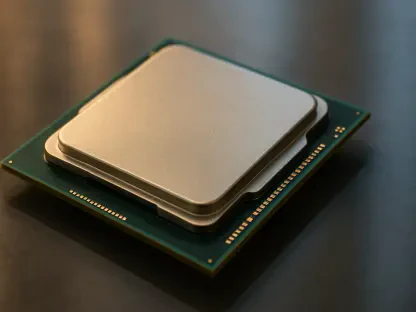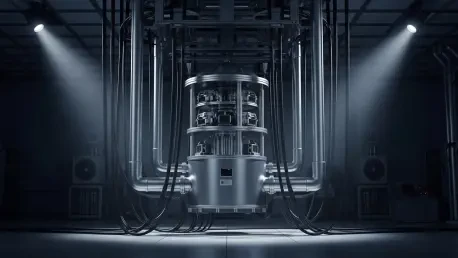

The transition from classical bit-based computing to the probabilistic realm of quantum mechanics marks a definitive turning point in human history, challenging the very limits of what is mathematically possible. For decades, the global technology industry relied on the steady march of Moore’s Law, yet as transistors shrunk toward the size of a single atom, the physical barriers of heat and quantum tunneling became insurmountable obstacles for traditional silicon. Enter the Willow chip, Google’s latest quantum processor designed specifically to bypass these classical bottlenecks by leveraging a modular architecture that addresses the critical issue of decoherence. This hardware represents a shift from theoretical experimentation to a more robust, error-corrected phase of quantum development. While previous chips struggled with maintaining stable states for more than a few microseconds, Willow utilizes state-of-the-art superconducting circuits to execute complex algorithms that were once dismissed as purely academic exercises.
The Evolution of Quantum Stability: Scaling Beyond the Lab
The engineering behind Willow signifies a departure from the noise-heavy environments that characterized early quantum systems, moving instead toward a scalable framework of logical qubits. By integrating advanced error-correction protocols directly into the hardware layer, the chip minimizes the interference that typically leads to computational collapse. Unlike its predecessors, which required millions of physical qubits to generate a single stable logical qubit, Willow utilizes a more efficient grid of interconnected oscillators that maintain coherence across larger arrays. This advancement allows researchers to run high-fidelity gates with a precision that was previously unattainable in open-system environments. The modular nature of the processor further enables a plug-and-play functionality, where multiple units can be linked to increase processing power without a linear increase in thermal noise or physical footprint, ensuring the system remains viable for large-scale industrial use.
In terms of raw performance, Willow demonstrated an unprecedented ability to solve problems that would remain beyond the reach of the most powerful classical supercomputers for thousands of years. Recent benchmarks focused on the simulation of complex quantum systems, such as the electronic structure of molecules used in sustainable energy storage. While a classical system might approximate these interactions through brute-force statistics, Willow provides an exact mapping of quantum states, revealing properties that were once obscured by computational limitations. This capability is not merely about speed; it is about the qualitative shift in the type of questions that scientists can now ask. By providing a clear path to simulating large-scale quantum dynamics, the chip serves as a bridge between abstract theory and practical engineering, particularly in the fields of high-temperature superconductivity and cryptographic resilience against emerging quantum threats.
Strategic Integration for Future Computational Resilience
The introduction of this technology demanded a fundamental shift in how global industries approached data security and material research, which led to significant investments in quantum-ready infrastructure. Organizations prioritized the development of specialized software layers that interfaced with quantum hardware to translate raw qubit operations into actionable intelligence. The previous reliance on traditional encryption methodologies was effectively rendered obsolete, as the industry transitioned toward lattice-based cryptographic standards from 2026 to 2028. Governments and private enterprises recognized that the path to solving the energy crisis lay in quantum-enabled catalyst design, which reduced the cost of green hydrogen production. By establishing collaborative hubs for quantum experimentation, stakeholders ensured that the benefits of Willow were not confined to the laboratory but were integrated into the global supply chain, fostering a new era of scientific discovery and resilience.