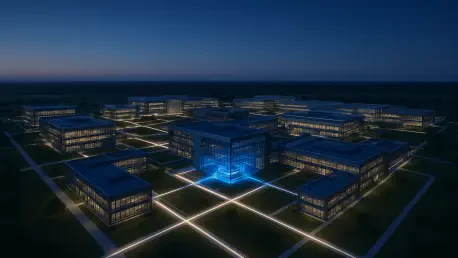

The recent Texas Quantum Summits at UT Dallas and Texas A&M have already primed the state’s university system to utilize the Foundry as a bridge to industrial application. This development represents more than just a local expansion; it signifies a strategic pivot in how the United States approaches the transition from theoretical physics to commercially viable hardware. Located on a sprawling 16-acre site in Travis County, the Occam Foundry is a partnership between Texas Quantum Partners and the real estate firm Samara, designed to serve as a comprehensive “quantum node.” For decades, the industry has struggled with the so-called valley of death, where innovative laboratory breakthroughs fail to reach the market due to a lack of specialized manufacturing infrastructure. By consolidating high-tech fabrication, prototyping, and academic inquiry into a single cohesive campus, this project aims to solve the systemic fragmentation that has historically slowed the growth of the quantum sector.
Streamlining Development: Prototyping and Fabrication
To address the inherent friction in high-tech design, the campus places hardware designers and fabrication facilities in immediate physical proximity. This integration allows for a significantly accelerated iterative process, enabling engineering teams to test and refine their prototypes without leaving the Austin tech corridor. By concentrating these resources in one location, the project reduces the logistical delays and communication breakdowns that typically slow down the transition from an initial concept to functional, reliable hardware. In the current landscape, moving a design from a digital model to a physical chip often involves disparate vendors and long shipping cycles, which can add months to development timelines. Occam Foundry eliminates these barriers by providing on-site access to specialized cleanrooms and advanced lithography tools. This streamlined approach not only saves time but also allows for the kind of rapid experimentation that is vital for success.
The facility maintains a sharp focus on three core pillars: quantum sensing, networking, and timing. These specific technologies are essential for high-precision measurement, secure communication protocols, and advanced navigation systems that do not rely on traditional satellite signals. By providing the highly specialized manufacturing tools required for these technological niches, the foundry ensures that researchers can produce tangible results that align with rigorous industrial standards and investor expectations. While many headlines focus solely on the long-term goal of universal quantum computing, these near-term applications in sensing and timing offer immediate utility for the defense and telecommunications sectors. The ability to manufacture these components at scale allows the industry to move beyond small-batch laboratory samples and toward mass-market products. This shift is critical for demonstrating that quantum technology is a practical investment rather than a distant dream.
Policy and Security: The Legislative and Strategic Framework
The development of this campus is closely tied to recent policy efforts at both the state and federal levels, reflecting a bipartisan consensus on technological sovereignty. The Texas Quantum Initiative, which was signed into law in 2025, established a governor-appointed committee and a dedicated grant fund specifically for commercially relevant infrastructure. Occam Foundry serves as the private sector’s direct answer to this legislative mandate, providing the meaningful tools needed to generate a real return on investment for state-funded scientific research. This alignment ensures that public money spent on basic science actually results in local manufacturing and job creation. By acting as the bridge between public policy and private enterprise, the foundry creates a stable environment where long-term projects can flourish without the constant fear of shifting political winds. It provides the physical proof that Texas is committed to remaining a global leader in high technology.
On a national scale, the project supports federal mandates aimed at accelerating quantum computing for mission-critical calculations and national defense strategies. Government agencies are currently facing strict deadlines to migrate to post-quantum cryptography to protect sensitive data against emerging cyber threats that could bypass traditional encryption. The foundry provides the secure, specialized environment necessary for developing the hardware and software solutions that will meet these national security requirements throughout the next decade. As international competition in the quantum space intensifies, having a domestic facility capable of high-level prototyping is a matter of strategic importance. This facility allows American firms to maintain control over their supply chains and intellectual property in a way that offshore manufacturing cannot guarantee. By securing the production side of the equation, the United States can better protect its most sensitive advances.
Economic Synergy: Regional Strength and Industrial Expansion
Texas currently stands as the eighth-largest economy in the world, making it an ideal environment for large-scale technological investments and industrial expansion. Occam Foundry benefits significantly from its proximity to other massive industrial projects, such as newly constructed advanced semiconductor factories and aerospace research facilities. This strategic location allows the campus to tap into existing supply chains and a deep pool of technical talent already present in the regional manufacturing sector. The presence of giants like Samsung and Texas Instruments in the surrounding area creates a secondary economy of vendors and experts that the quantum industry can leverage. Furthermore, the existing infrastructure for logistics and power in Travis County supports the high energy and precision requirements of quantum fabrication. This synergy reduces the overhead costs for startups that would otherwise have to build their own support networks from scratch.
The economic stakes are massive, with quantum computing and its associated technologies expected to generate trillions of dollars in global value by 2035. The campus is designed to capture a significant portion of this value by supporting hundreds of high-paying technical jobs and offering global connectivity via nearby transportation hubs. Its placement ensures that it remains an attractive destination for international research partners and anchor tenants who require high-speed access to both talent and markets. By creating a physical hub for this activity, the project fosters a culture of accidental innovation where experts from different fields can collaborate in person. This density of talent is often the secret ingredient in successful tech hubs, and the foundry is positioned to be the heartbeat of this new industrial cluster. The long-term goal is to transform the regional economy into a self-sustaining ecosystem that attracts further investment and maintains its competitive edge.
Collective Evolution: Innovation Models and the Path Forward
The long-term success of the initiative relies on a collaborative model involving property developers, private investors, and prestigious academic institutions. While real estate experts from Samara manage the physical growth and operational stability of the site, the university system provides a steady stream of scientific breakthroughs ready for industrial scaling. This partnership ensures that the foundry remains a cohesive ecosystem where scientific brilliance and industrial scale can successfully merge without the friction of competing interests. Academic researchers often lack the capital or business acumen to bring a product to market, while industrial giants may struggle to innovate at the fundamental level. By providing a neutral ground where these two worlds meet, the foundry facilitates a more efficient transfer of knowledge and technology. This model encourages a faster path to commercialization, as patents and ideas can be vetted for market viability early on.
Industry leaders recognized that the completion of the Occam Foundry provided a blueprint for solving the commercialization gap through physical and strategic integration. The project demonstrated how specialized infrastructure could transform a disparate field of researchers into a focused industrial powerhouse capable of meeting national demands. Stakeholders prioritized the establishment of clear communication channels between the fabrication teams and the theoretical physicists to ensure that design constraints were understood from the beginning. This proactive approach reduced the time spent on unmanufacturable concepts and redirected resources toward scalable solutions. Looking ahead, companies should look to integrate their own research and development wings into similar hubs to remain competitive. The focus shifted from merely discovering new physics to mastering the precise manufacturing techniques required for global deployment. This transition marked a new era where quantum technology moved from a laboratory curiosity to a standard component of the digital economy.