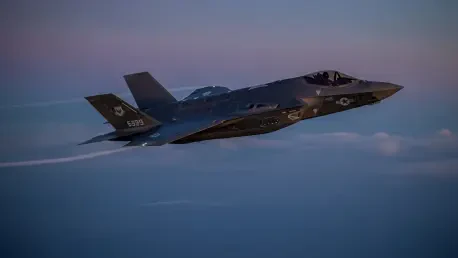

The F-35 Lightning II stands as a testament to the digitization of modern combat, operating less like a traditional fighter jet and more like a high-performance server node soaring at supersonic speeds. This fifth-generation platform serves as a critical conduit for massive amounts of sensitive data, which it synthesizes from a vast array of onboard sensors to provide pilots with unprecedented situational awareness. However, the foundational security of this entire ecosystem is predicated on the strength of classical cryptographic protocols that are increasingly threatened by the eventual arrival of advanced quantum computing. While current encryption methods are nearly impossible for traditional supercomputers to crack within any practical timeframe, the emergence of quantum processors utilizing qubits and the principles of superposition introduces a terrifying new variable. If an adversary achieves a breakthrough in quantum processing, the invisible digital walls protecting the F-35’s communications could effectively vanish, leaving the fleet exposed in a way that physical armor cannot prevent.
The Vulnerability of Interconnected Combat Networks
The F-35 is designed to function as the central nervous system of a “system of systems,” constantly exchanging mission-critical intelligence with orbital satellites, ground-based command centers, and other allied aircraft. This level of interconnectivity is a primary force multiplier, but it also creates a sprawling surface area for sophisticated cyber warfare operations that seek to exploit any weakness in the data chain. Quantum computers possess the theoretical capacity to run algorithms, such as Shor’s algorithm, which can factor large prime numbers exponentially faster than the silicon-based hardware currently used by global defense agencies. In a high-intensity conflict, a quantum-enabled adversary could intercept encrypted tactical directives and mission plans in real-time. Such a breach would allow hostile actors to anticipate every maneuver, essentially neutralizing the strategic advantage of stealth and network-centric operations before a single missile is even fired.
Beyond the immediate risk of real-time interception, the defense community faces the persistent and insidious threat often referred to as “store now, decrypt later” tactics. Hostile entities are currently believed to be intercepting and archiving massive quantities of encrypted American and allied military communications, including telemetry from F-35 test flights and operational missions. While these data packets remain unreadable today, they are being held as digital collateral until quantum hardware reaches the necessary threshold of stability and qubit count to unlock them. This means that even if a quantum breakthrough does not happen for another few years, the tactical secrets of today could be exposed in the near future. Historical flight patterns, pilot communication styles, and sensor calibration data could all be laid bare, providing a retrospective roadmap that allows adversaries to study and eventually counter the specific operational habits of the world’s most advanced air force.
Securing Logistics and Critical Mission Data
A significant portion of the F-35’s operational readiness depends on the Operational Data Integrated Network, a digital logistics backbone that manages everything from global supply chains to individual software updates. This network is a high-value target for quantum attacks because it contains a comprehensive repository of sensitive technical specifications and maintenance logs that are vital to the health of the fleet. If a quantum computer were used to penetrate this infrastructure, an adversary could theoretically inject malicious code into software updates or alter maintenance records to suggest that critical components are functional when they are actually failing. This form of digital sabotage could lead to the grounding of entire squadrons or cause catastrophic mechanical failures during flight operations. The integrity of the physical airframe is now inseparable from the security of the digital bits that govern its upkeep, making the logistics tail a critical point of vulnerability.
The aircraft’s “digital brain” resides within its Mission Data Files, which act as a comprehensive library of the electromagnetic spectrum, containing signatures for every known radar system and missile seeker. These files are the key to the F-35’s electronic warfare capabilities, allowing the onboard computers to identify, categorize, and jam threats with surgical precision. If a quantum attack were to compromise the encryption protecting these files, an adversary would gain an intimate understanding of how the F-35 perceives the battlefield. Armed with this knowledge, they could recalibrate their own radar and air defense systems to emit signatures that the F-35 is not programmed to recognize or to bypass the aircraft’s defensive countermeasures entirely. By cracking the MDF library, a hostile actor would effectively render the F-35’s stealth characteristics obsolete, turning a “ghost” in the sky into a visible and vulnerable target for modern surface-to-air missiles.
Transitioning to Quantum-Resistant Defense Standards
Recognizing the existential nature of this threat, the United States Department of Defense has accelerated its efforts to implement post-quantum cryptography across the entire Lightning II ecosystem. These new cryptographic standards rely on mathematical problems, such as lattice-based cryptography, which are believed to be resistant to the specialized processing power of both classical and quantum computers. The transition involves a massive overhaul of existing software frameworks and communication hardware to ensure that every node in the network is upgraded to the same high level of security. From 2026 to 2030, the primary focus of military cyber commands was the integration of these “quantum-proof” algorithms into the F-35’s Block 4 software updates and beyond. This proactive approach aimed to close the window of opportunity for “store now, decrypt later” attacks and ensured that the aircraft’s digital shield remained impenetrable regardless of the computing advancements made by global competitors.
Strategic planners moved beyond simple software patches and initiated a comprehensive redesign of how data was partitioned and authenticated within the aircraft’s internal networks. Engineers prioritized the development of hardware-based security modules that could be swapped out as quantum-resistant mathematics continued to evolve, ensuring the platform remained agile against emerging threats. The military also established a framework for continuous cryptographic agility, allowing the F-35 to switch between different encryption standards in real-time if a specific algorithm was found to be compromised. These defensive measures were complemented by an increased focus on decentralized data processing, which reduced the impact of any single node being breached by a quantum-capable actor. By treating cybersecurity as a dynamic and evolving front in the theater of war, defense officials successfully protected the operational integrity of the Lightning II fleet during a period of unprecedented technological disruption.