
Large-scale industrial operations across remote terrains face a persistent struggle to maintain seamless connectivity when traditional cellular networks fail to reach beyond urban corridors and established infrastructure. This gap has historically forced enterprises to rely on expensive, proprietary satellite terminals that require specialized installation and maintenance protocols, creating a significant barrier to entry for widespread Industrial IoT adoption. However, the emergence of Direct-to-Device (D2D) satellite connectivity represents a fundamental shift in how remote assets communicate with centralized management systems. By leveraging existing 5G standards, this technology allows standard IoT devices to connect directly to low-earth orbit satellite constellations without the need for additional ground stations or specialized antennas. This evolution ensures that even the most isolated sensor can transmit critical data back to the cloud, transforming global logistics and resource management into a truly borderless endeavor.
The Evolution of Non-Terrestrial Network Standards
Seamless Integration with Cellular Infrastructure
The integration of non-terrestrial networks into the global telecommunications framework has moved from a theoretical concept to a practical necessity for modern industrial sectors. Standardized protocols developed under recent 3GPP releases have finally allowed satellite constellations to function as extended base stations for standard cellular modems, effectively turning the sky into a massive network of cell towers. This breakthrough eliminates the siloed nature of satellite communications, where specialized hardware was once a mandatory requirement for any project spanning beyond the reach of terrestrial masts. Now, a single device equipped with a standard NTN-capable chip can roam between 5G towers and satellite beams without losing its connection or requiring manual configuration changes. This interoperability is particularly vital for fleet management companies that operate vehicles crossing national borders and vast regions. Organizations have simplified their hardware stacks while ensuring that critical data streams remain uninterrupted everywhere.
Reducing the total cost of ownership for remote connectivity has become a primary driver for the rapid adoption of Direct-to-Device satellite solutions. Previously, the capital expenditure required to outfit a fleet of thousands of sensors with satellite-specific hardware was often prohibitive for all but the largest enterprises. Today, the convergence of satellite and terrestrial technology has drastically lowered these financial barriers, as mass-produced IoT modules now include native support for satellite frequencies. This economy of scale allows smaller firms to participate in the global digital transformation, deploying smart sensors in remote mining sites or offshore oil platforms at a fraction of the previous cost. Furthermore, the operational expenses associated with managing multiple service providers are being consolidated into single-subscription models that offer global coverage. This shift not only streamlines the procurement process but also enables more predictable budgeting for all long-term industrial projects.
Global Logistics and Operational Visibility
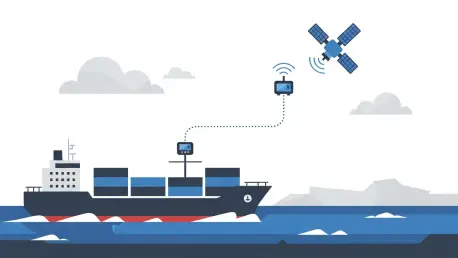
Global logistics providers have found a transformative tool in D2D connectivity, as it offers a level of visibility into supply chains that was previously impossible to achieve. In the period from 2026 to 2028, the ability to track high-value equipment across oceans and deserts in real-time has become a standard requirement for international trade. Unlike legacy systems that provided intermittent updates, modern satellite-enabled IoT devices offer continuous data streaming, allowing for immediate intervention if a shipment deviates from its planned route or environmental parameters. This capability is essential for pharmaceutical companies and food distributors who must maintain strict cold-chain integrity from manufacture to the destination. The reliability of these connections ensures that no container is ever truly lost, even in the middle of the Pacific Ocean. By integrating these data points into advanced analytics platforms, managers can optimize routes and reduce fuel consumption, leading to more sustainable operations.
Beyond simple location tracking, the use of Direct-to-Device technology enables sophisticated predictive maintenance for industrial machinery located in inaccessible areas. Engines, turbines, and heavy excavators used in remote infrastructure projects can now transmit detailed health reports directly to central engineering hubs via satellite. This constant stream of performance data allows technicians to identify potential failures before they occur, scheduling repairs during planned downtime rather than responding to emergency breakdowns. The economic impact of preventing a single catastrophic failure in a remote mining operation can often justify the entire investment in satellite IoT infrastructure. Moreover, the ability to push firmware updates over-the-air via satellite ensures that devices remain secure throughout their entire lifecycle. This proactive approach to asset management reduces the need for expensive on-site inspections and extends the operational life of high-value equipment.
Strategic Implications for Industrial Scalability
Revolutionizing Agriculture and Mining Operations
Precision agriculture has reached a new level of sophistication as farmers utilize satellite-connected sensors to monitor soil moisture and crop health across thousands of acres. In regions where terrestrial cellular coverage is non-existent, D2D technology provides the backbone for autonomous tractors and automated irrigation systems that maximize yield while minimizing resource use. The ability to collect and analyze data from every corner of a farm allows for more precise application of fertilizers and pesticides, reducing environmental runoff and improving overall sustainability. This data-driven approach is also being mirrored in the mining industry, where remote sensing equipment monitors structural integrity and environmental conditions in real-time. By connecting these disparate sensors directly to satellite networks, companies can ensure the safety of their workforce and the protection of the surrounding ecosystem. The integration of satellite IoT into these primary industries is fostering a more resilient global food and raw material supply chain.
The scalability offered by D2D satellite connectivity is particularly beneficial for large-scale environmental monitoring projects that span entire continents or oceanic regions. Scientists and regulatory bodies can now deploy vast arrays of sensors to track wildlife migration or detect early signs of forest fires in areas that were previously unreachable. This continuous monitoring capability provides a much clearer picture of ecological changes and allows for more effective conservation strategies. For industrial firms, this technology facilitates compliance with increasingly stringent environmental regulations by providing verifiable data on carbon emissions and resource consumption. The transition to satellite-connected sensors eliminates the need for manual data collection in hazardous or remote environments, significantly reducing operational risks for field personnel. Furthermore, the standardized nature of these devices means they can be easily redeployed or upgraded as project requirements evolve. The volume of data transmitted allows for much more accurate climate modeling.
Resilience and Future Strategic Considerations
Critical infrastructure, such as power grids and water treatment facilities, requires a level of communication reliability that terrestrial networks alone cannot always provide. In the event of a natural disaster or a cyberattack that disables land-based towers, Direct-to-Device satellite connectivity serves as a vital failover mechanism to ensure that essential services remain operational. Utility companies are increasingly integrating satellite-capable IoT devices into their distribution networks to provide real-time monitoring and control of remote substations and pipelines. This redundancy is crucial for maintaining the stability of the energy grid and for coordinating rapid response efforts during emergencies. By bypassing vulnerable ground-based infrastructure, satellite links offer a secure and resilient path for critical control signals and telemetry data. This layer of protection is becoming a standard component of national security strategies as countries seek to harden their infrastructure against a growing range of threats.
To fully capitalize on these advancements, industrial leaders looked toward comprehensive integration strategies that prioritized device interoperability and data security across hybrid networks. Organizations began by conducting thorough audits of their existing remote assets to identify which systems would benefit most from immediate satellite connectivity upgrades. Technical teams prioritized the adoption of hardware that supported open 5G NTN standards, ensuring that their investments remained compatible with the rapidly evolving satellite landscape. Strategic partnerships between industrial firms and satellite service providers facilitated the creation of customized data plans that balanced cost with the need for high-frequency updates. Security protocols were also updated to include robust encryption for all satellite-bound traffic, protecting sensitive industrial data from interception. By taking these proactive steps, enterprises successfully bridged the gap between their terrestrial and remote operations, creating a more cohesive digital ecosystem.