
The rapid convergence of quantum physics and defense engineering is currently precipitating a paradigm shift that will fundamentally redefine how global military forces maintain situational awareness in increasingly contested environments. While the broader public remains captivated by the theoretical potential of massive quantum computers, defense strategists have focused their attention on the immediate, tangible advantages offered by quantum sensing. These technologies are no longer confined to the sterile environments of high-end research laboratories but are being actively refined into field-deployable tools that address the most critical vulnerability in modern warfare: the fragility of navigation systems. Position, Navigation, and Timing (PNT) data acts as the invisible lifeblood of every modern military operation, facilitating everything from the precise coordination of infantry movements to the terminal guidance of long-range cruise missiles. However, as the digital battlefield becomes more saturated with interference, the reliance on traditional satellite-based signals has transformed from a strategic asset into a dangerous liability. The transition toward quantum-enhanced navigation is therefore not merely an incremental technological upgrade; it represents a fundamental move toward operational sovereignty, ensuring that a nation’s military assets can function independently of external infrastructures that are increasingly prone to disruption, manipulation, or total destruction by sophisticated adversaries.
The Vulnerabilities: Traditional Navigation under Threat
The architectural foundation of modern military maneuvers remains tethered to Global Navigation Satellite Systems, such as the United States’ GPS, which provides the high-precision data required for complex mission sets. However, the fundamental physical properties of these satellite signals present a significant security risk, as they are exceptionally weak by the time they reach receivers on the Earth’s surface. This low-power nature makes them incredibly easy to drown out with noise or to replace with deceptive signals, a reality that has given rise to the era of navigation warfare. In recent and ongoing conflicts, state actors have successfully deployed electronic warfare suites that render satellite-guided munitions nearly useless, forcing high-tech militaries to revert to less accurate, traditional methods of engagement. When a multi-million-dollar precision missile loses its GPS lock, its circular error probable increases exponentially, which not only degrades mission effectiveness but also raises the risk of collateral damage and fratricide. The widespread availability of jamming and spoofing technology means that even non-state actors can now contest the electromagnetic spectrum, turning what was once a guaranteed technological advantage for advanced militaries into a point of failure that can be exploited with relatively inexpensive equipment.
Physical and environmental factors further compound the risks associated with a satellite-dependent navigation posture. Beyond the electronic spectrum, the actual orbital infrastructure is increasingly vulnerable to kinetic anti-satellite weapons, high-energy lasers, and the growing density of space debris, any of which could trigger a cascading failure of global positioning capabilities. Furthermore, traditional navigation systems are inherently limited by geography; they cannot penetrate the deep ocean, operate reliably within subterranean complexes, or provide consistent data under dense forest canopies. These “denied” environments are exactly where many modern high-stakes missions occur, from submarine patrols to special operations in urban or mountainous terrain. Natural phenomena, such as intense solar flares or atmospheric disturbances, also possess the power to degrade signal quality to the point of operational uselessness. This combination of intentional human interference and unpredictable environmental challenges has created an urgent requirement for a navigation solution that is entirely self-contained, passive, and immune to the external factors that currently dictate the limits of military movement.
Quantum Solutions: Secure Timing and Inertial Tracking
Quantum sensing provides a revolutionary path forward by moving away from the “talk-and-listen” model of satellite navigation toward a self-reliant system based on the immutable laws of atomic physics. At the heart of this transition is the development of quantum clocks, which utilize the ultra-stable vibrations of atoms to maintain time with a precision that dwarfs traditional quartz-based oscillators. In military contexts, timing is just as critical as positioning, as it allows for the synchronization of encrypted communication networks and the precise calibration of radar and sensor arrays. While classical clocks inevitably “drift” and lose synchronization over time, necessitating a constant reset via satellite signals, quantum clocks can maintain perfect accuracy for weeks or months without any external reference. This capability ensures that a naval task force or an air wing can maintain a high-bandwidth, secure communication environment even if an adversary successfully knocks out the regional GPS signal. By eliminating the constant need for external time-fixing, quantum systems provide a level of resilience that allows for sustained operations in isolated or electronically suppressed theaters.
The most transformative application of this technology is found in quantum inertial navigation, which effectively creates a “quantum compass” that can track a platform’s movement with extreme accuracy. These systems employ atom interferometry, a process where atoms are cooled to near absolute zero using lasers until they exhibit wave-like properties. By measuring how these atomic waves shift in response to the movement of a ship, aircraft, or missile, quantum accelerometers and gyroscopes can calculate changes in velocity and orientation with a sensitivity levels that are orders of magnitude beyond current mechanical or optical sensors. Unlike classical inertial measurement units, which accumulate errors that can lead to a deviation of several kilometers over a single day, quantum sensors minimize this drift to virtually negligible levels. This allows a submarine to remain submerged for months, navigating the deep ocean with pinpoint precision without ever needing to surface for a GPS fix. Because these measurements are performed on internal atoms within a sealed vacuum chamber, the system is completely passive and cannot be jammed, spoofed, or detected by enemy electronic surveillance, providing a truly autonomous navigation capability.
Geophysical Fingerprinting: Navigation through Earth’s Fields
Beyond tracking internal motion, quantum sensing enables a highly sophisticated form of navigation known as geophysical map-matching, which uses the Earth itself as a reference. Every location on the planet has a unique signature based on minute variations in the local magnetic and gravitational fields, caused by the composition of the crust and the terrain below. Quantum magnetometers are capable of detecting these subtle magnetic anomalies with such high resolution that they can distinguish between different paths through a mountain range or specific underwater trenches. By comparing real-time readings from a quantum sensor against high-resolution magnetic maps, a military platform can confirm its exact position with high confidence. This method is particularly effective because the Earth’s magnetic field is a constant presence that cannot be “turned off” or manipulated by an adversary. While traditional magnetic sensors have been used for decades, they often lacked the sensitivity required for high-precision military navigation; quantum sensors bridge this gap, providing the fidelity needed to turn magnetic anomalies into a reliable, unjammable navigation grid.
The application of quantum gravity sensors, or gradiometers, adds another layer of redundancy and precision to this geophysical navigation strategy. These sensors measure the local pull of gravity, which varies based on the density of the earth or sea floor directly beneath the sensor. A quantum gradiometer is sensitive enough to detect the difference in gravitational pull caused by a subterranean bunker or a massive underwater rock formation. This creates a “gravitational fingerprint” for every square meter of the Earth’s surface, offering a navigation reference that is entirely independent of any man-made signals or electronic transmissions. For long-range missiles or autonomous underwater vehicles, this capability represents the ultimate fallback; if the satellite signal is jammed and the inertial sensors require verification, the system can simply “look” at the gravity or magnetic fields to reset its position. This multi-modal approach, combining quantum inertial tracking with magnetic and gravitational map-matching, ensures that a military unit always has a reliable source of PNT data, regardless of the intensity of the electronic warfare environment or the physical degradation of the satellite constellation.
Strategic Implementation: The Path to Operational Sovereignty
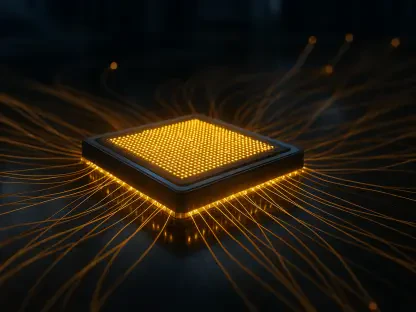
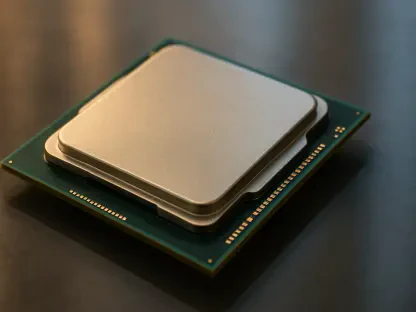
The successful integration of quantum sensing into the modern arsenal requires more than just scientific breakthroughs; it demands a concerted effort to overcome significant engineering and logistical hurdles. Currently, many quantum sensors are laboratory-sized instruments that require extreme conditions, such as ultra-high vacuums and cryogenic cooling, to function. For these tools to be useful on the battlefield, they must be miniaturized and ruggedized to survive the intense vibrations, temperature fluctuations, and shock of combat environments. The current focus of research and development, particularly under programs like India’s National Quantum Mission, is the creation of “Quantum-on-a-Chip” technologies. By shrinking the lasers, vacuum chambers, and atomic traps onto integrated circuits, engineers are working to produce sensors that are small enough to fit inside a drone, a handheld radio, or the nose cone of a precision-guided munition. This miniaturization is the final frontier in making quantum navigation a standard feature of military hardware, shifting it from a specialized tool for strategic assets to a ubiquitous capability for the common soldier.
As these technologies matured throughout the current cycle ending in 2028, a hybridized approach to navigation became the most effective strategy for ensuring mission success. Rather than viewing quantum sensing as a total replacement for traditional GNSS, military planners are developing “PNT Fusion” architectures that treat satellite signals, quantum inertial data, and geophysical mapping as complementary inputs. In a standard environment, the system utilizes GPS for its ease of use and high update rate; however, the moment the system detects interference or signal degradation, it seamlessly transitions to its internal quantum references. This layered defense-in-depth ensures that there is no single point of failure in the navigation chain. Furthermore, the push for “navigation sovereignty” has led to massive investments in high-resolution geophysical surveys of border regions and maritime zones, as the effectiveness of quantum map-matching is directly tied to the quality of the underlying digital maps. By mastering these internal physics-based measurements and the data infrastructures that support them, modern military forces are effectively insulating themselves from the vulnerabilities of the satellite era, securing a decisive advantage in the high-stakes world of 21st-century warfare.
In conclusion, the transition toward quantum sensing represented a vital move for defense establishments seeking to maintain operational integrity in a landscape of increasing electronic and physical threats. The development of atomic clocks and quantum inertial sensors provided a self-contained alternative to vulnerable satellite signals, effectively neutralizing the advantages of adversarial jamming and spoofing. By leveraging the unique magnetic and gravitational signatures of the Earth, military platforms achieved a level of precision and autonomy that was previously unattainable with classical technology. These advancements emphasized the importance of indigenous research and the miniaturization of complex hardware for field use. Ultimately, the successful deployment of these systems ensured that navigation remained a reliable constant, allowing commanders to project power and maintain coordination even when the electromagnetic spectrum was entirely compromised. The shift to quantum-enhanced PNT established a new standard for resilience, fundamentally altering the strategic calculations of modern warfare and securing a path to technological independence on the battlefield.