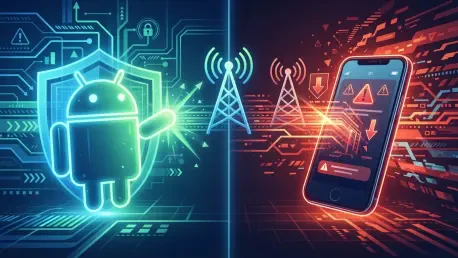

Security experts at the Electronic Frontier Foundation have spent years advocating for a standalone 2G kill switch to prevent localized phishing via fraudulent cellular hardware. While the average consumer looks toward the future of 5G speeds, a quiet vulnerability persists in the hardware of almost every modern smartphone. Despite major American carriers like AT&T, Verizon, and T-Mobile having fully decommissioned their legacy 2G and CDMA networks by mid-2024, the physical radios in flagship devices remain capable of connecting to these ancient protocols. This backward compatibility is ostensibly maintained for international roaming or emergency service access in fringe areas, yet it creates a glaring security hole. Because 2G networks lack the modern mutual authentication required by LTE and 5G, they operate on a foundation of implicit trust. This design flaw allows sophisticated actors to bypass carrier-level protections that users have come to rely on for daily safety. The result is a landscape where the latest technology is held hostage by the vulnerabilities of the previous century.
The Mechanics: Legacy Protocols and the Trust Vulnerability
The architectural weakness of second-generation cellular technology stems from its reliance on a one-way trust model that was developed before the modern era of cybersecurity threats. In a standard 5G or 4G LTE environment, a smartphone and a cell tower engage in a digital handshake where both parties verify each other’s credentials before establishing a link. However, 2G connectivity lacks this mutual verification, meaning the mobile device blindly trusts any broadcasting station that presents a sufficiently strong signal. When a smartphone detects a high-power 2G signal, it often prioritizes that connection, dropping its secure and encrypted 5G link in favor of the legacy tower. This behavior is hard-coded into the cellular modem to ensure connectivity in low-signal areas, but it effectively opens a backdoor that can be exploited by anyone with the right hardware. The phone simply assumes the tower is legitimate, allowing unauthorized traffic to flow into the device without the user’s knowledge.
This fundamental lack of authentication is compounded by the fact that 2G encryption is notoriously weak and easily cracked by modern computing power. In many instances, attackers can even instruct the phone to disable encryption entirely, making all data transmitted between the device and the fake tower completely transparent. This technical loophole transforms a multi-thousand-dollar smartphone into a vulnerable terminal that accepts commands and data from an unverified source. Consequently, even as mobile security improves at the operating system level, the underlying radio communication remains an Achilles’ heel. This vulnerability is not a bug that can be patched with a simple software update to the protocol itself, as the flaw is inherent to the 2G standard. As long as the cellular modem is permitted to hunt for and connect to these signals, the device remains susceptible to being tricked by rogue hardware that mimics a legitimate, yet decommissioned, network infrastructure.
The Threat: Criminal Use of Portable SMS Blasters
The theoretical risks of 2G have materialized into a tangible global threat through the proliferation of devices known as SMS blasters or “cell-site simulators.” These portable, fake cell towers are small enough to be concealed in a vehicle, a briefcase, or even a backpack, allowing criminals to bring the attack directly to a target. By broadcasting a high-intensity 2G signal, these devices force every smartphone within a specific radius to disconnect from legitimate carrier networks and latch onto the rogue station. Once the connection is established, the attacker has a direct line to the device, completely bypassing the sophisticated spam and phishing filters that telecommunications companies have spent billions of dollars to implement. Because the text message originates from the rogue tower rather than the carrier’s core network, it is never scanned for malicious links or fraudulent patterns, making the attack incredibly difficult to intercept before it reaches the victim.
In early 2026, law enforcement agencies in several major metropolitan areas reported a surge in the use of these devices for large-scale financial fraud. Arrests in cities like Toronto and London revealed that organized crime syndicates were using SMS blasters to send tens of thousands of deceptive messages to unsuspecting commuters in crowded transit hubs. These messages often masquerade as urgent alerts from major banks, delivery services, or government tax agencies, urging users to click on a link to resolve a supposed account issue. Because the message appears on the phone exactly like a standard SMS, and the device shows a strong signal, victims are frequently lured into a false sense of security. These real-world incidents underscore that the 2G vulnerability is no longer just a concern for high-level espionage; it has become a standard tool for street-level criminals seeking to harvest credentials and personal information from the general public.
Android: A Model for User-Controlled Cellular Defense
Google has addressed this structural vulnerability by providing users with granular control over their cellular hardware through the Android operating system. Since the introduction of a dedicated 2G toggle in Android 12, the platform has empowered individuals to manually disable the legacy radio functionality of their devices. This simple software switch prevents the smartphone’s modem from ever attempting to connect to a 2G signal, effectively neutralizing the threat of SMS blasters. By treating 2G as an optional and potentially hazardous feature rather than a mandatory background service, Android has created a significant defensive advantage. This proactive stance acknowledges that in regions where 2G has been retired, there is no legitimate reason for a phone to seek out such a connection, and thus, the radio should be locked down to prevent exploitation by malicious actors who are operating in the vicinity.
The evolution of this security feature has continued into the current landscape, with Android 16 integrating “2G Network Protection” into a centralized Safety Center. This shift ensures that the setting is no longer buried in obscure menus but is instead a prominent part of the user’s overall security health check. Major manufacturers like Samsung have followed this lead, making the toggle a standard part of their custom interfaces across all price points. This widespread adoption across the Android ecosystem means that from 2026 to 2028, hundreds of millions of users will have the ability to opt out of an obsolete and dangerous protocol with a single tap. This implementation demonstrates a sophisticated understanding of the modern threat environment, where the ability to disable legacy features is just as important as the addition of new ones. By prioritizing user agency, Android has set a benchmark for how mobile operating systems should handle the transition away from insecure technology.
Apple: The Compromise of Lockdown Mode Connectivity
While Apple is often praised for its focus on privacy, its approach to 2G security remains frustratingly restrictive and binary. Currently, the only way for an iPhone user to disable 2G connectivity is by enabling Lockdown Mode, a high-security setting designed for individuals who may be targeted by state-sponsored cyberattacks. This mode does effectively block 2G signals, but it does so at the cost of the device’s core functionality. Lockdown Mode is an extreme measure that imposes significant limitations on how the iPhone operates, making it an impractical solution for the vast majority of consumers who simply want to avoid phishing scams without losing the features they use daily. For the average user, the choice presented by the iOS ecosystem is an unfair trade-off: remain vulnerable to localized cellular attacks or sacrifice the modern smartphone experience that they have already paid for.
The functional sacrifices required by Lockdown Mode are extensive and impact nearly every aspect of the user interface. When the mode is active, the device blocks most message attachments, removes link previews from the Messages app, and restricts incoming FaceTime calls from unknown contacts. Furthermore, advanced web technologies are disabled, causing many websites to load slowly or break entirely, and ecosystem features like Shared Albums and Game Center are completely turned off. This all-or-nothing philosophy means that an iPhone user cannot simply turn off their 2G radio while continuing to use their Apple Watch or share photos with family members. This lack of a standalone toggle suggests a disconnect between Apple’s security marketing and the practical needs of its user base. By bundling 2G protection with such extreme functional restrictions, the company effectively leaves millions of everyday users exposed to a well-known and preventable cellular vulnerability.
The Shift: Moving Toward Universal Security Standards
The analysis of current mobile security trends revealed that the disparity between Android and iOS regarding 2G management was a matter of design philosophy rather than technical limitation. Researchers concluded that because the ability to block 2G already exists within the iOS framework via Lockdown Mode, there was no engineering hurdle preventing its release as a standalone feature. The study of recent cybercrime patterns suggested that as long as one major platform remains vulnerable, criminals will continue to refine their use of SMS blasters to target that specific user base. It was determined that the most effective way to protect the integrity of the cellular ecosystem was to provide all users with a simple, high-level switch to disable legacy protocols once they were no longer supported by legitimate carriers. This move was seen as essential for maintaining public trust in mobile communications as the world moves toward a fully authenticated 5G future.
The path forward for the mobile industry required a transition where security settings were both accessible and transparent for the average consumer. Experts recommended that manufacturers should consider making the 2G kill switch a standard part of the initial device setup process in countries where the technology has been retired. The historical data from the past few years indicated that the presence of a dedicated toggle significantly reduced the success rate of localized phishing campaigns. Moving forward, the industry pointed toward a future where cellular modems automatically disable insecure legacy modes unless specifically authorized for international travel. Until these automated protections become universal, individuals were advised to advocate for better software transparency and to remain cautious of any text messages that bypass standard communication channels. This evolution in thought emphasized that true security is found not in complexity, but in the power of the user to control their own hardware.