
Professional gamers now have access to the ROG XREAL R1, a wearable peripheral featuring a 240Hz refresh rate and a near-instant 0.01ms response time for competitive play. This specific advancement underscores a broader transformation within the consumer electronics sector, where global smart glasses shipments surged by a remarkable 247.5% throughout 2025. This rapid expansion signifies a fundamental shift in human-computer interaction, moving away from pocket-bound screens toward sophisticated, face-worn interfaces. The growth is largely fueled by the maturity of generative artificial intelligence and the commercial refinement of augmented reality technologies. As we navigate the current landscape of 2026, these devices have transitioned from experimental novelties into essential productivity and entertainment tools. The market has effectively split into three distinct architectural categories: AI-centric frames designed for audio-visual assistance, AR glasses that project data onto the physical world, and tethered XR displays built to replace traditional high-definition monitors.
Dominant AI and Camera-Integrated Wearables
Leading Social and Performance Models: Balancing Aesthetics and Optics
The second-generation Ray-Ban Meta continues to define the standard for daily-wear smart glasses by prioritizing a form factor that is indistinguishable from classic eyewear. By housing sophisticated internal components within the iconic Wayfarer and Skyler frames, the manufacturer has successfully bypassed the social stigma often associated with bulky head-mounted displays. Technically, the device is equipped with a 12MP ultrawide camera capable of capturing 3K video at high bitrates, ensuring that first-person content remains professional in quality. The inclusion of 32GB of internal storage allows users to store a vast library of media locally, while the five-microphone array provides spatial audio recording and crystal-clear voice commands. This hardware suite is optimized for Meta AI, enabling users to perform complex conversational queries or receive real-time descriptions of their surroundings without ever reaching for a smartphone.
In a different sector of the market, Amazon has targeted a specific demographic with its third-generation Echo Frames, which deliberately omit cameras to prioritize privacy and battery efficiency. These glasses serve as an always-accessible portal to Alexa, allowing users to manage complex smart home ecosystems, dictate reminders, and filter notifications through discrete open-ear speakers. Because they lack heavy optical sensors, they offer unparalleled comfort for all-day use, particularly for those requiring prescription lenses. Meanwhile, the Oakley Meta HSTN bridges the gap between lifestyle and performance. Utilizing Oakley’s proprietary frame materials, these glasses offer superior grip and impact resistance for high-intensity athletics. While they share the 12MP camera and AI capabilities of the Ray-Ban models, their design is specifically engineered to remain stable during cycling or running, providing athletes with a hands-free method to document training or receive physiological data via audio feedback.
Innovations in Modular Intelligence: The Rise of Customization
The Solos AirGo 3 has introduced a unique value proposition through its SmartHinge technology, which separates the technology-filled temples from the aesthetic frames. This modular design allows users to swap out their look in seconds while maintaining their digital connection, effectively future-proofing the device against changing fashion trends. Beyond its physical flexibility, the AirGo 3 is notable for its deep integration with ChatGPT, providing a more versatile and context-aware AI assistant than many of its competitors. This system excels at real-time language translation and complex information retrieval, making it a favorite for business travelers and academics who require immediate, reliable data. With an IP67 rating for water and dust resistance, the hardware is built to withstand varied environments, while the 10-hour battery life ensures it remains functional through an entire workday of audio-based productivity.
The broader implications of this modularity reflect a maturing industry that understands the need for hardware longevity and personal expression. By decoupling the frame from the internal electronics, Solos has addressed one of the primary hurdles of wearable tech: the fear of obsolescence. This approach encourages a longer lifecycle for the electronic components while allowing the user to refresh the external appearance as easily as they would a traditional pair of spectacles. Furthermore, the focus on high-fidelity audio and voice-driven AI highlights a trend where “screenless” productivity is becoming increasingly viable. As multimodal AI models become more adept at processing visual data from external sensors, these modular audio glasses are evolving into sophisticated spatial computers that do not require a visual display to provide immense value to the wearer.
Standalone and Heads-Up Display Technology
Advancing the Augmented Reality Interface: Visualizing Data
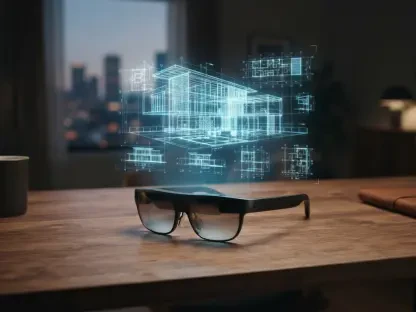
The Meta Ray-Ban Display has successfully pushed the boundaries of what a lightweight frame can achieve by incorporating a full-color, in-lens display system. This move represents the first true mass-market adoption of augmented reality within a standard eyewear form factor. To manage this interface without the need for touch sensors on the frame, the device utilizes a Meta Neural Band, which interprets subtle wrist and finger gestures into digital commands. This interaction model allows for a truly hands-free experience, where users can navigate menus or respond to messages while keeping their hands in their pockets or occupied with other tasks. The visual overlay is particularly effective for real-time translation, as it projects captions of foreign speech directly into the user’s line of sight, effectively eliminating language barriers in face-to-face interactions.
The practical utility of this heads-up display extends into urban navigation and professional workflow management. When walking through a city, the glasses project subtle directional arrows and landmark markers onto the sidewalk, preventing the need for the user to look down at a phone screen. For professionals, the display can show incoming priority emails or calendar alerts that appear only when relevant, maintaining a balance between digital connectivity and physical presence. The hardware is designed to sense ambient light levels, automatically adjusting the brightness of the in-lens projection to ensure clarity whether the user is in a dimly lit office or under the midday sun. This seamless integration of digital information into the physical environment marks a significant step toward a world where computing is contextual and omnipresent.
Minimalist and Professional HUD Systems: Function Over Multimedia
Taking a more specialized approach, the Even Realities G2 focuses on extreme clarity and longevity by utilizing a monochrome Micro LED display. Rather than attempting to render complex graphics or video, the G2 projects high-brightness green text at 1,200 nits, ensuring perfect legibility even in direct sunlight. This minimalist strategy allows the device to function for two full days on a single charge, a feat currently unmatched by more power-hungry AR models. The device is primarily marketed as a professional tool, serving as a discrete teleprompter for public speakers or a notification hub for executives who need to stay informed during meetings without appearing distracted. By omitting cameras and speakers, the G2 also avoids the privacy concerns and social friction often associated with smart eyewear, making it a highly acceptable choice for formal environments.
This focus on functional minimalism addresses a significant segment of the market that values utility over entertainment. The G2 is engineered for users who find full-color AR overlays too intrusive or distracting for their daily routine. Its ability to show turn-by-turn navigation, incoming texts, or pre-written notes in a simple, non-distracting format allows the wearer to remain fully engaged with their physical surroundings. The choice of Micro LED technology is strategic, as it provides the necessary brightness for outdoor visibility while maintaining a very small footprint within the frame. This design philosophy suggests that for many users, the “smart” in smart glasses does not need to mean “complex,” but rather “efficient” and “reliable,” providing exactly the information needed at exactly the right time.
Immersive XR Displays and Portable Cinema
High-Fidelity Visual Solutions: Redefining Portable Media
In the realm of extended reality, VITURE has established a dominant position by focusing on the highest possible visual fidelity for media consumption and remote work. The VITURE Beast model offers an expansive 174-inch virtual screen that remains anchored in the user’s environment thanks to advanced 3DoF tracking. This spatial anchoring is critical for preventing the motion sickness that often occurs when a virtual screen moves with every slight head vibration. For users with vision impairments, the VITURE Pro 2 includes an adjustable diopter ranging from 0 to -5.0D, allowing many to experience crisp 1080p Micro OLED visuals without their prescription inserts. These devices are increasingly being adopted by frequent travelers who use them to turn the back of an airplane seat into a private, high-definition cinema or a multi-monitor workstation.
Similarly, XREAL has maintained its market share with the a01+, which is widely praised for its lightweight 62-gram design. Despite its minimal weight, the device supports a 120Hz refresh rate and HDR10, making it a premier choice for watching high-dynamic-range content. It projects a virtual screen equivalent to 147 inches, providing a balanced level of immersion that does not feel overwhelming during long viewing sessions. These tethered displays function by connecting to a variety of host devices, including smartphones, tablets, and gaming consoles, through a single USB-C cable. This architectural choice allows the glasses to remain slim and lightweight by offloading the heavy processing and battery requirements to the host device, creating a “portable theater” experience that is far more convenient than carrying a traditional projector or large monitor.
Specialized Hardware for Competitive Gaming: The Low-Latency Edge
As competitive gaming continues to grow, specialized hardware like the ROG XREAL R1 has become indispensable for players who demand zero-compromise performance. The R1 is specifically tuned for high-speed action, featuring a 240Hz refresh rate that ensures frame delivery is as smooth as on a high-end desktop monitor. The near-instant 0.01ms response time is a significant technical achievement, virtually eliminating ghosting and input lag, which are critical factors in fast-paced esports. To further enhance the gaming experience, the R1 features electrochromic dimming, allowing the wearer to electronically tint the lenses to near-total opacity. This feature effectively blocks out the real world, providing a level of immersion usually reserved for VR headsets while maintaining the comfort and form factor of glasses.
The synergy between the ROG XREAL R1 and the ecosystem of handheld gaming PCs, such as the ROG Ally, has created a new category of mobile gaming. Users are no longer limited to the small built-in screens of their handhelds; they can now enjoy a desktop-class visual experience in any environment. This hardware is also increasingly utilized by professional simulation racers and pilots who benefit from the 3DoF head tracking, which allows them to “look into” turns and maintain better spatial awareness within the game engine. By focusing on the specific needs of the gaming community—such as refresh rate, latency, and environmental isolation—Asus and XREAL have moved beyond general-use wearables to create a high-performance peripheral that competes directly with traditional monitors and high-end television sets.
Market Trends and Industry Projections
Emerging Platforms and Strategic Alliances: The Battle for the OS
The smart glasses market is currently witnessing a significant shift toward platform ecosystem wars, as major players move from hardware production to software dominance. Snap is transitioning its Spectacles line into a full spatial computing platform, targeting developers who can build custom AR experiences using a proprietary Snap OS. This move aims to create a closed ecosystem similar to modern smartphone platforms, where the value is driven by a diverse library of third-party applications. Concurrently, the alliance between Samsung, Google, and Qualcomm is working to establish “Android XR” as the open-standard alternative. This collaboration is expected to produce a range of devices from various manufacturers, all utilizing a unified operating system that integrates seamlessly with existing Android apps and services, potentially creating the most diverse hardware ecosystem in the market.
These strategic moves indicate that the industry is preparing for a future where the operating system, rather than just the frame design, dictates consumer loyalty. If the Samsung-Google alliance succeeds in creating a robust, open platform, it could lead to a rapid proliferation of smart glasses at various price points, mirroring the growth pattern of the early smartphone era. This would allow smaller manufacturers to enter the space without having to develop their own software stacks from scratch. Meanwhile, Meta is continuing to iterate on its Horizon OS, attempting to bridge the gap between its VR headsets and its smart glasses. The competition between these platforms is driving rapid innovation in user interface design, gesture recognition, and cloud-assisted rendering, all of which are necessary to make these devices more capable and easier to use for the general public.
The Apple Variable and Biometric Integration: Setting New Benchmarks
Speculation remains intense regarding Apple’s entry into the lightweight smart glasses market, as the company is rumored to be refining a consumer-grade “Apple Glass” product. Unlike the more immersive Vision Pro, these glasses are expected to focus on a “glanceable” interface that serves as a seamless extension of the iPhone and Apple Watch. Key to this integration is the use of biometric sensors that could monitor the user’s eye movements or heart rate to provide contextual information via Apple Intelligence. For example, if the glasses detect a user is looking at a specific restaurant, they could automatically project the menu or rating into the field of vision. This level of predictive utility would set a new benchmark for how wearable devices anticipate user needs without requiring active input.
The potential impact of such a release would likely accelerate the adoption of smart glasses among demographics that have previously been hesitant to embrace wearable tech. Apple’s focus on privacy and refined user experience could solve many of the “social friction” problems currently facing the industry. Furthermore, the rumored integration with the Apple Watch for gesture control would leverage an existing user base, making the transition to smart eyewear feel like a natural evolution rather than a drastic change. As these technologies mature, the focus is shifting away from what the hardware can do and toward how the hardware understands the user’s intent. The convergence of health monitoring, personal notification management, and contextual AI is positioned to make smart glasses the central hub of a user’s digital life, potentially usurping the role currently held by the smartphone.
Critical Success Factors in Consumer Adoption
Aesthetics and Display Evolution: Overcoming Social Barriers
One of the most significant lessons learned by manufacturers in recent years is that technical superiority cannot overcome poor aesthetics. The success of the Ray-Ban Meta line and the Even Realities G2 has proven that for smart glasses to reach mainstream adoption, they must first function as high-quality eyewear. Social friction—the discomfort or awkwardness felt when wearing obvious technology on the face—remains a major hurdle for larger XR devices, which are currently restricted to indoor or private settings. Manufacturers are now investing heavily in miniaturizing components, such as shrinking the batteries and circuit boards into the temples and using hidden sensors that do not disrupt the frame’s silhouette. This design-first approach is essential for making these devices a permanent part of a user’s wardrobe rather than a temporary gadget.
Simultaneously, the industry is navigating a technical pivot between Micro OLED and Micro LED display technologies. Micro OLED has become the standard for tethered XR glasses because it offers the deep blacks and high contrast ratios necessary for a cinematic viewing experience. However, these displays often struggle with brightness in outdoor environments. In contrast, Micro LED is emerging as the preferred choice for always-on AR glasses like the G2. While currently more difficult to produce in full color at a small scale, Micro LED offers extreme brightness and lower power consumption, allowing data to be visible even in harsh sunlight. The choice between these two technologies typically dictates the primary use case of the device, with manufacturers having to decide whether they are building a tool for indoor entertainment or outdoor utility.
Intelligence and Power Management: The Multimodal Shift
The true power of smart glasses in 2026 lies in their ability to “see” and “hear” as the user does, a capability known as multimodal AI. Modern systems powered by Meta AI or integrated ChatGPT are no longer reactive; they are proactive. By analyzing the camera feed and audio environment, these glasses can identify objects, provide historical context for landmarks, or translate signs and menus instantly. This transforms the eyewear from a simple notification screen into an active digital assistant that understands the physical world. However, this level of processing requires significant power, which brings the industry to its most persistent bottleneck: battery life. Currently, most AI-integrated glasses provide between 6 and 10 hours of active use, which is sufficient for many but falls short of a full 16-hour day.
To address these power limitations, the industry has adopted a multi-pronged approach involving fast-charging cases and more efficient wireless protocols. The implementation of Wi-Fi 7 and low-power Bluetooth standards has reduced the energy required for the glasses to communicate with a smartphone or the cloud. Some manufacturers are also experimenting with localized AI processing, using dedicated low-power chips to handle basic tasks on-device while offloading complex computations to a tethered phone or a nearby edge server. This balance of local and cloud processing is vital for maintaining performance without causing the frames to overheat. As battery energy density continues to improve slightly each year, the ultimate goal remains a device that offers the slim profile of a traditional pair of glasses while providing a full day of “smart” functionality on a single charge.
Final Market Segmentation and Use Cases
Tailoring Choices to User Needs: A Review by Persona
The 2026 smart glasses market has matured to a point where a single device is no longer expected to fulfill every role, leading to clear segmentation based on user behavior. For content creators and social media influencers, the Ray-Ban Meta (Gen 2) remains the premier choice due to its high-quality 3K video and the ease with which footage can be edited and uploaded. The ability to livestream directly from the glasses has changed the nature of “vlogging,” making it more immersive and less intrusive. On the other hand, professional users who spend their days in meetings or transcribing data find the Even Realities G2 to be a superior tool. Its distraction-free interface and long battery life prioritize productivity over multimedia, allowing users to stay connected without being overwhelmed by digital clutter.
For the entertainment-focused segment, the distinction between portable cinema and gaming has led to the rise of specialized XR hardware. Travelers and movie enthusiasts gravitate toward the VITURE Beast for its massive virtual screen and superior optics, which provide an experience that a smartphone or tablet simply cannot match. Meanwhile, the ROG XREAL R1 has carved out a dedicated following among competitive gamers who prioritize the 240Hz refresh rate and low latency required for high-stakes play. For the general consumer who wants a budget-friendly entry into the ecosystem, the Amazon Echo Frames offer the most practical utility. By focusing on audio-based assistance and smart home control, these glasses provide a meaningful digital upgrade to daily life without the high cost or complexity of visual AR systems.
Strategic Pathways for Future Development: Industry Evolution
The 2026 market demonstrated that the transition from smartphones to smart eyewear was not a replacement but a redistribution of tasks. Manufacturers successfully proved that offloading frequent interactions—such as checking notifications, navigating streets, or capturing quick photos—to the face reduced the friction of digital life. The industry matured by moving past the “spec wars” and focusing instead on how these devices fit into human social structures and professional workflows. Developers prioritized subtle, gesture-based interfaces and localized AI processing, which together made the technology feel more like a personal capability and less like an external tool. Consumers adopted these devices in record numbers because the value proposition moved from “what can this do” to “how does this make my life easier.”
Future success for stakeholders in this space depended on the continued refinement of display technologies and the expansion of cross-platform software ecosystems. The 2026 landscape established that the most successful products were those that respected user privacy while providing high-value contextual information. Stakeholders observed that the most significant growth occurred in sectors where the technology solved specific, real-world problems—such as language barriers for travelers or screen fatigue for office workers. As we look beyond this year, the groundwork has been laid for a new era of computing where the physical and digital worlds are no longer separate entities but are viewed through a single, seamless lens. The actionable next step for the industry involves standardized protocols for spatial data to ensure that as users move between different hardware and software environments, their digital world remains consistent and accessible.