
The High Stakes of Google’s Latest Hardware Ambitions
The global smartphone landscape has shifted from a race for higher clock speeds to a sophisticated battleground where artificial intelligence and deep software integration define the true value of a flagship device. The mobile industry currently finds itself at a significant crossroads where the plateauing of physical hardware advancements has mandated a pivot toward software-driven innovation. Google’s unveiling of the Pixel 11 series represents more than just a seasonal update; it is a calculated attempt to redefine what a flagship device should prioritize in an AI-first world. By moving away from the “spec-sheet wars” and leaning into a deeply integrated ecosystem, the company is challenging the long-standing dominance of traditional market leaders.
This strategic evolution suggests that a cohesive user experience, powered by generative artificial intelligence, can potentially disrupt the traditional metrics of success. Market analysts observe that the Pixel 11 series serves as a vehicle for the “Gemini” ecosystem to interact more naturally with the physical world, moving beyond the simple app-based interactions of the past. This exploration looks at whether a primary focus on artificial intelligence and software fluidity can finally tip the scales in Google’s favor on the global stage, especially as consumer interest shifts from raw processing power to meaningful utility and personalization.
The Strategic Evolution of the Pixel Ecosystem
Betting on Proprietary Silicon and Intelligence Over Raw Memory
The introduction of the Tensor G6 chipset marks a pivotal moment for Google, as it moves further away from off-the-shelf components to support its “Gemini” AI suite. This custom silicon is engineered specifically to handle multimodal processing locally, allowing for faster response times and enhanced privacy for AI-driven tasks. While competitors often rely on broader-market processors, the proprietary nature of the Tensor G6 enables a level of synergy between hardware and software that is unique within the Android environment. This focus on “intelligence over brawn” represents a fundamental shift in how internal components are valued.
However, the decision to limit RAM in base models has sparked significant debate among enthusiasts and technical reviewers alike. With the standard Pro models starting at 12GB of RAM and requiring a step up to higher storage tiers for 16GB, Google is betting on the efficiency of its software management rather than sheer capacity. This approach highlights a strategic belief that clever resource allocation and optimized AI models can outperform traditional hardware benchmarks. By prioritizing internal efficiency, Google aims to provide a consistently smooth experience that remains resilient even as the demands of artificial intelligence grow more complex.
Redefining Premium Identity Through Specialized Camera Tech and Visual Cues
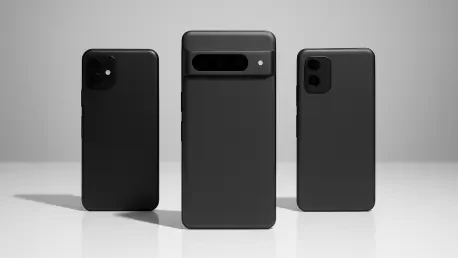
Google has long been a leader in mobile photography, but the Pixel 11 Pro series introduces hardware changes designed to maintain that lead against increasingly aggressive competition. The adoption of larger sensors and a refined 50MP main module allows for superior light intake and detail retention, particularly in challenging environments. Beyond the glass, the unique “HiLight” RGB LED on the camera visor serves as a multifunctional interface. This visual cue acts as a notification hub and a physical indicator for Gemini AI interactions, giving the device a distinct identity that is instantly recognizable in a sea of generic glass slabs.
The shift in focal lengths and sensor architecture also indicates a move toward professional-grade mobile imaging. By utilizing a 106mm telephoto lens and an upgraded 48MP ultra-wide sensor with autofocus, the devices offer a more versatile toolkit for both casual users and photography enthusiasts. Industry observers suggest that these hardware choices, combined with Google’s legendary computational photography, bridge the gap between simple snapshots and high-end creative work. Furthermore, the expansion of the ecosystem to include the Pixel Buds Pro 2 with Dynamic ANC and the Pixel Watch 5 reinforces a unified visual and functional language across all wearable devices.
Challenging the Foldable Status Quo with Radical Ergonomics
The Pixel 11 Pro Fold represents a significant departure from the bulky designs of the past, prioritizing a slim profile that rivals traditional smartphones in terms of pocketability. By reducing the thickness to just 10.1mm when folded, Google has addressed one of the primary barriers to foldable adoption: physical ergonomics. This pursuit of thinness makes the device feel more like a standard flagship in the hand, yet it provides the expansive screen real estate necessary for high-level multitasking and media consumption. This ergonomic-first approach signals that the foldable category has moved from experimental curiosity to a mature, daily-use form factor.
This pursuit of a thinner profile brings its own set of trade-offs, particularly regarding battery longevity and thermal management. With a battery capacity of 4,806mAh, the device must rely heavily on the efficiency of the Tensor G6 to provide a full day of usage. Critics often point out that rival foldables from international brands sometimes offer larger cells, but Google is wagering that users are ready to trade a small amount of battery density for a significantly more comfortable and pocketable device. Comparing this strategy to the high-performance designs of its rivals allows for an assessment of whether consumers truly value a svelte design over extreme endurance.
Measuring Google’s Software Prowess Against the Raw Power of International Rivals
While Google focuses on the “Gemini” ecosystem, brands like Samsung, Xiaomi, and Oppo are pushing the physical limits of smartphone technology with massive batteries and ultra-fast charging. The Xiaomi 17 Ultra, for example, boasts a 1-inch sensor and 90W wired charging, presenting a stark contrast to Google’s more conservative hardware specifications. This creates a fascinating divide in the market: the choice between a cohesive, AI-centric experience and the sheer hardware muscle of the latest Snapdragon-powered flagships. This tension is particularly evident in international markets where rapid charging is often a top priority for consumers.
Regional preferences and hardware expectations could determine the success of the Pixel 11 in a crowded international field. In markets where technical specifications are the primary driver of sales, the Pixel series faces an uphill battle against devices that offer 6,000mAh batteries and 120W charging speeds. However, Google’s strength lies in the seamlessness of its software, offering features like Live Translate and advanced Gemini Intelligence that are often more refined than the AI implementations of its competitors. The battle is no longer just about who has the best camera or the fastest chip, but who can provide the most helpful and intuitive daily companion.
Practical Insights for the Next Generation of Smartphone Users
For those looking to upgrade, the choice now depends more on lifestyle needs than on simple brand loyalty. The Pixel 11 series offers a compelling case for users who value software longevity, AI utility, and a clean interface, but it requires a realistic understanding of the hardware trade-offs involved. Potential buyers should weigh the benefits of Google’s deeply integrated Gemini ecosystem against the extreme charging speeds and higher battery density offered by international competitors. Identifying whether a phone needs to be a high-speed workstation or an intelligent personal assistant is the first step in making an informed decision.
Staying informed on trade-in incentives and software support cycles will be essential for making a purchase that remains relevant for years to come. Google’s commitment to long-term updates provides significant value for those who do not wish to upgrade their hardware every two years. Furthermore, the current promotional landscape, featuring significant bonuses for trading in older Pixel or Samsung hardware, can significantly lower the barrier to entry for the Pro models. Taking advantage of these incentives while considering the long-term utility of AI features ensures that the investment remains sound as the mobile landscape continues to evolve toward a software-first future.
The Final Verdict: Can Software Brilliance Outshine Hardware Might?
The Pixel 11 series functioned as a clear statement of Google’s belief that the intelligence of a device mattered more than its raw physical specifications. While the hardware faced stiff competition from the established dominance of Samsung and the aggressive innovation of Chinese manufacturers, the focus on a unified AI experience provided a unique value proposition. The success of these devices ultimately depended on whether the global consumer base valued a phone that anticipated their needs over one that simply offered the largest possible battery or the highest megapixel count.
As the lines between hardware and software continued to blur, the strategy behind the Pixel 11 set a new tone for the industry. The integration of custom silicon designed for local AI processing pushed the entire market toward more efficient and helpful mobile technology. Industry participants observed that this move forced competitors to accelerate their own software development, leading to a broader shift in the global smartphone war. By prioritizing the “brain” of the phone, Google successfully carved out a niche that emphasized meaningful user interaction and long-term relevance in an increasingly automated world.