
Casual users relying solely on ‘Works with Google Home’ Wi-Fi devices can avoid the additional cost of a hub by leveraging existing internet infrastructure. As the smart home ecosystem in 2026 continues to migrate toward a more integrated model, the necessity of a physical hardware intermediary has become a nuanced subject for many homeowners. Historically, the requirement for a central bridge was a standard expectation to ensure that devices from different brands could communicate effectively. However, the landscape of the Google Home environment has undergone a significant transformation, moving away from these rigid constraints. This shift is primarily driven by the advancement of cloud-based protocols and the adoption of universal communication standards that allow for a direct link between user apps and smart peripherals. Consequently, the decision to invest in a dedicated hub now hinges on the specific protocols—such as Matter or Thread—that a household intends to implement rather than a blanket requirement for all.
The Mechanics: Cloud-to-Cloud Interoperability
The standard architecture for most mainstream smart home devices relies heavily on cloud-to-cloud communication, a system that fundamentally bypasses the need for local processing hardware. When a user interacts with a standard Wi-Fi-enabled smart bulb or power plug that carries the ‘Works with Google Home’ certification, the command path is entirely digital. The request originates in the Google Home application or through a voice command, travels to Google’s data centers, and is then forwarded to the manufacturer’s own servers. From there, the signal is sent back to the specific device in the home over the existing Wi-Fi network to execute the desired action. Because this sophisticated exchange occurs over the internet, the presence of a dedicated local bridge is redundant. This streamlined approach has lowered the barrier to entry for millions of people, allowing them to build comprehensive automation systems using only their existing wireless router and a few compatible devices.
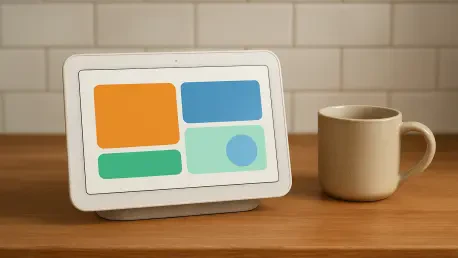
It is important to distinguish between voice interfaces and physical smart home hubs, as these terms are frequently conflated in modern marketing materials. Common hardware such as the Nest Mini or Nest Audio provides a convenient way to interact with a smart home environment, but these devices primarily function as entry points to the cloud rather than local control centers. While they are often described as having built-in hub capabilities for voice control, they do not possess the specialized radio hardware required to manage complex local mesh networks. For a household that utilizes only cloud-connected Wi-Fi equipment, these speakers are more than sufficient for day-to-day operations. Adding a more advanced hardware hub in such a scenario would not improve response times or reliability because the devices themselves are still tethered to their respective cloud servers. Therefore, understanding the communication pathway of existing hardware is essential before making further investments.
Advanced Connectivity: Matter, Thread, and Local Control
The emergence of Matter and Thread protocols has redefined the hardware landscape by reintroducing the requirement for a local controller to manage device interoperability. Matter was designed to allow products to communicate directly over a local network, while Thread provides a low-power mesh foundation for these interactions. To bridge these devices with a home Wi-Fi network, a specialized Thread border router is required. The Google Home application currently enforces this by requiring a compatible hub to be present before any Matter-certified device can be added. Only specific hardware, such as the Nest Hub Max and Nest Wifi Pro, possess the necessary sensors to act as these local coordinators. While the promise of this tech is a more seamless and responsive experience, it fundamentally changes the cost-benefit analysis. If the goal is to transition toward these modern, interoperable devices, the purchase of a compatible Google hub is no longer optional but is instead a prerequisite for system functionality.
A persistent misunderstanding in the smart home community is the belief that integrating a physical hub will grant total independence from the internet during an outage. While localized protocols like Matter and Thread are designed to improve internal communication, the Google Home ecosystem as a whole remains deeply integrated with cloud services for its core logic and automation processing. If the primary internet connection fails, many users have discovered that even with a hub, their sophisticated routines and voice commands often cease to function as intended. This reality highlights the fact that a hub acts more as a local coordinator for specific protocols rather than a fully autonomous server. For those seeking true offline resilience, it is vital to acknowledge that current mainstream technology has not yet reached a point of complete cloud independence. Maintaining a stable and high-speed internet connection remains the most critical factor in ensuring that a Google-powered smart home operates smoothly.
Homeowners who sought to optimize their setups achieved the best results by conducting a thorough audit of their existing devices to determine if the ‘Works with Google Home’ cloud model met their needs. For those who prioritized the adoption of Matter and Thread, the acquisition of a compatible border router proved to be a necessary step in unlocking faster and more reliable local performance. It was also observed that regular software maintenance played a crucial role in system stability, particularly after updates in late 2026 addressed historical issues like connectivity drops and mobile app power consumption. Moving forward, the strategic selection of hardware based on specific protocol requirements allowed users to build more efficient environments without overspending on redundant equipment. By focusing on the underlying communication standards rather than brand names alone, consumers successfully navigated the complexities of the modern smart home and ensured their infrastructure remained ready for future technological shifts.