



Oscar Vail is a luminary in the technology sector, a veteran expert whose career has been defined by an obsession with the intersection of high-end material science and consumer accessibility. From the intricacies of quantum computing to the collaborative spirit of open-source projects, Vail has spent decades dissecting the “how” and “why” behind the industry’s most significant leaps forward. Today, he turns his analytical gaze toward the world of high-fidelity audio, exploring the architectural genius of Heinz ElectroDynamic Designs—the Berlin-based firm known as HEDD. With his deep understanding of how specialized materials like carbon fiber can be harnessed to solve ancient engineering problems, Vail provides a unique perspective on a product that many are calling a mid-range miracle.
In this conversation, we explore the evolution of the HEDDphone series, moving from the brand’s traditional Air Motion Transformer technology to the innovative Thin-Ply Carbon Diaphragm dynamic drivers. The discussion navigates the delicate ergonomics of the “firm hug” design philosophy, which utilizes a 350g frame to create a non-fatiguing experience for both professional studio sessions and home-based audiophile listening. We delve into the sonic landscape of the D1, examining its ability to render microscopic details in tracks by artists like Mitski and PJ Harvey, while maintaining a bulging, tactile low-end that defies the typical expectations of open-back headphones. Finally, we break down the market positioning of these headphones, questioning how a $799 device can realistically compete with flagship competitors that cost three times as much.
How does the transition from Air Motion Transformer technology to the Thin-Ply Carbon Diaphragm define the identity of the HEDDphone D1?
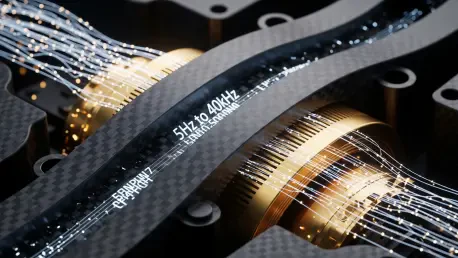
The move to Thin-Ply Carbon Diaphragm, or TPCD, is really about the pursuit of structural rigidity without the penalty of added mass. In the audio world, we are constantly fighting the physics of the driver; you want something that moves instantly but doesn’t flex or distort under its own momentum. By using an advanced carbon fiber composite for these 50mm dynamic drivers, HEDD has created a diaphragm that maintains incredible stiffness while remaining light enough to react with lightning speed. This engineering choice allows the D1 to achieve a massive frequency range of 5Hz to 40kHz without needing the heavy, conventional diaphragm-level dampening that often muddies the sound in lesser headphones. When you listen, you can feel that technical precision—it’s the reason the transients feel so immediate and the tonal balance remains so steady across such a broad spectrum. It’s a bold departure from their AMT roots, but one that proves Heinz Klaus still has a few tricks up his sleeve when it comes to material innovation.
You have described the physical experience of wearing these headphones as a “firm hug” rather than a “light touch”—how does that architectural choice impact long-term usage?
Most manufacturers try to make their headphones disappear by making them as light and airy as possible, but HEDD took a diametrically opposed path with the D1. They weigh in at 350g, which isn’t exactly featherweight, but the way they distribute that weight through a deep, encouraging grip is fascinating from a kinetic standpoint. You have these super-soft ear cup cushions that absorb the inward force, while a firm foam cushion under the headband provides a consistent point of contact on the top of the skull. This design creates a sense of security and presence that, surprisingly, doesn’t lead to physical fatigue even after hours of use in my attic office. The open-back nature also adds a layer of thermal comfort, allowing the ears to breathe while you are wrapped in that secure, velvety embrace of sound. It is a tactile, sensory experience that makes you feel connected to the hardware rather than just burdened by it.
The frequency response starts at a staggering 5Hz; how does that manifest in the low-end when you’re listening to complex, maximalist arrangements?
That 5Hz floor isn’t just a number on a spec sheet; it translates into a bulging fullness and a sense of “heft” that you normally only find in the most isolated closed-back designs. I spent a lot of time testing this with Pile’s All Fiction, which is essentially a maximalist flood of roomy orchestrations and messy, energy-dense low-end blooms. The D1 managed to parse the chaos of a track like “Loops and Poisons” with a depth-of-field that only a high-quality open-back can achieve, keeping the bass energy propulsive without letting it bleed into the rest of the mix. There is a slightly pronounced push in those lower frequencies, a little gift of warmth that gives the music a grin-worthy weight and context. It’s the platonic ideal of low-end presence, where you get the visceral impact of a kick drum but with enough air around it to appreciate the texture of the recording space.
With a 32-ohm impedance, these are technically “easy to drive,” but how does that affect their credibility in a professional studio environment where higher resistance is often the norm?
Traditionally, audio professionals look for higher impedance in their monitor headphones because it can imply a certain level of electrical “fight” and detail, but the 32-ohm rating on the D1 is a total boon for modern workflows. It means these headphones are just as happy being plugged into a high-end Universal Audio Volt 4 audio interface as they are being driven by a more modest source. During my five weeks of testing, I found that this accessibility didn’t come at the cost of clinical representation or transparency. They maintain a balanced enough response curve to be used as a serious tool for scrutiny, even if that slight low-end lift adds a touch of character. Whether I was using them for hi-res streaming on Qobuz or checking the output of a Vestax turntable setup, the D1 remained consistently composed and expressive.
When you move from the “clinical” side to the “emotive” side of listening, how do these drivers handle the human elements, like the subtle textures in a vocal performance?
This is where the tactile nature of those TPCD transients really shines, particularly on a track like Mitski’s “Cats” or “I’ll Change For You.” The D1 renders vocals with a near-sailing clarity, capturing every fathom and miniscule wave of her voice with such definition that the light plosives become a humanizing part of the experience. You can hear the dead-on impact of the kick drums and the most tactile shakers hidden deep in a ballad, all while the vocal sits in its own distinct, holographic space. It’s a revelation of definition; things pop into being with a refreshing urgency that makes you feel like you’re sitting in the room during the tracking session. Even in the dry drums and harsh leads of PJ Harvey’s Stories From The City, Stories From The Sea, there is a clear separation that keeps the performance from feeling cluttered or congested.
You mentioned testing these with a vinyl setup involving a Vestax turntable and an Audio-Technica VM-95EN cartridge—how does the D1’s soundstage interpret the more “analog” characteristics of jazz?
The D1’s aptitude for space is best demonstrated through the free-wheeling arrangements of a record like Roy Haynes’ 1963 album Cymbalism. You get those “snap-crackle” drums shining right at the front of the stage, while the flute—which can often be unlistenably harsh on lesser drivers—comes through as bright, beautiful, and searingly insistent. The double-bass is rendered as a subtle, hollow, and plucky affair, perfectly placed in that three-dimensional air between the kick and the snare. Moving to something like Lonnie Liston Smith’s “Astral Traveling,” the soundstage felt truly expansive, with the upward-spiraling piano and steady harmonium drone reaching toward a peak. It’s a full-throated, ensemble-derived experience that proves these headphones can handle the grit of a distorted guitar just as easily as the delicate breath of a woodwind instrument.
At a price point of $799.99, the D1 is marketed as a mid-range contender, but you’ve suggested they punch well into the four-figure category—what justifies that claim?
Value is always the hardest metric to pin down, but when the HEDDphone D1 outperforms audiophile-grade cans worth upwards of $2,000 or £1,899, the conversation changes from “is it worth it?” to “how is it this cheap?” While the material construction might feel a bit plasticky in places compared to the luxurious wood and metal of a Meze Audio 105 Silva, the money has clearly been funneled into the internal engineering. You are getting four-figure sonic fidelity at a mid-budget price point, which is why I’ve called these the absolute best bang-per-buck on the current market. If you are a professional who needs a daily driver for the studio or an enthusiast who wants their last set of home-listening headphones, these are essentially a steal. They clear the bar set by almost every other competitor in their bracket and give much more expensive gear a serious run for its money.
What is your forecast for the future of dynamic driver technology in the high-fidelity market?
We are entering an era where material science is finally catching up to our acoustic ambitions, and I expect we will see a massive shift toward specialized composites like the Thin-Ply Carbon Diaphragm we see here. The era of the “standard” plastic or paper cone is being challenged by these low-mass, high-rigidity materials that allow for much broader frequency responses, like the 5Hz to 40kHz range HEDD has achieved. As these manufacturing processes become more refined and affordable, we are going to see “entry-level” audiophile gear that offers the kind of microscopic detail that was previously locked behind a five-figure paywall. The D1 is a harbinger of that change—a proof of concept that you don’t need a massive, heavy footprint to deliver a grand, cinematic soundstage. I believe we will soon see more brands abandoning the “safe” legacy designs in favor of these experimental material realities to stay competitive.







