
Homeowners can now partition a single room into eight distinct monitoring zones, allowing for localized automations based on a 0.5-meter grid system. This development signals a departure from the primitive reactive logic that characterized earlier smart home devices. For years, the frustration of sitting in a dark living room because a motion sensor failed to see a person reading on a couch was a common grievance. The introduction of the Aqara FP400 addresses this fundamental flaw by replacing traditional heat-based detection with advanced radio waves. By analyzing the environment with high-frequency signals, the device provides a level of contextual awareness that was previously reserved for industrial applications or expensive custom installations. This shift from simple reactive triggers to nuanced environmental intelligence allows the modern home to feel truly responsive, anticipating the needs of occupants based on their specific location and posture rather than just the movement of a door or the flip of a switch.
Technical Precision: 60GHz Millimeter-Wave Radar and MIMO Antennae
The technical superiority of the FP400 stems from its utilization of 60GHz millimeter-wave (mmWave) radar technology, which is significantly more precise than the 24GHz hardware used in older iterations. This frequency allows for shorter wavelengths, which in turn enables the sensor to detect much smaller physical changes within its field of view. To process this data effectively, the device incorporates a 4T4R MIMO antenna array, which stands for Multiple-Input Multiple-Output. This configuration allows the sensor to send and receive signals across multiple channels simultaneously, creating a high-density point-cloud data set. Compared to earlier occupancy sensors, the volume of data points gathered is five times greater, providing a granular digital representation of the physical space. This architecture ensures that the sensor can identify fine details that would be invisible to standard infrared sensors, which generally rely on detecting significant heat signatures moving across their path.
Beyond just raw data collection, the real innovation lies in the sensor’s ability to interpret micro-movements, such as the subtle rise and fall of a person’s chest while they are breathing. This capability effectively solves the presence problem where a stationary human is often mistaken for a static object like a piece of furniture. Because the 60GHz radar reflects off the human body with such sensitivity, the device can maintain an occupied status even if the user is sleeping or completely focused on a task at a desk. This level of reliability is crucial for automating essential systems like lighting and climate control, as it prevents the jarring experience of having utilities shut off during periods of inactivity. Furthermore, the integration of these high-resolution data points allows the device to distinguish between biological entities and inanimate objects, reducing the likelihood of false negatives that have long hindered the widespread adoption of truly automated home environments.
Spatial Intelligence: Dynamic Multi-Zone Mapping and Tracking
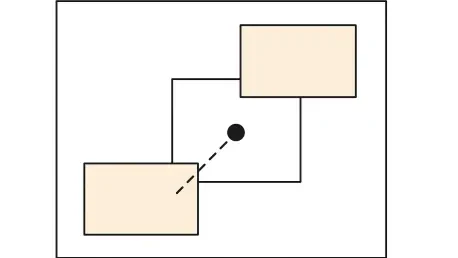
What truly differentiates the FP400 from its predecessors is the move from a binary field of view to a sophisticated spatial grid. The sensor maps the surrounding environment into a series of 0.5-meter squares, creating a digital floor plan that the user can manipulate. Within the companion software, it is possible to designate up to eight unique monitoring zones, essentially allowing a single physical sensor to act as eight virtual ones. For instance, a large open-plan living area can be partitioned into a dining zone, a work zone, and a relaxation zone. This granular control means that the smart home system can distinguish between a person walking through the kitchen to get a glass of water and someone sitting down to eat a meal. Each zone can be assigned its own specific triggers and delays, enabling a level of automation complexity that was previously impossible without installing a dozen separate motion sensors across the ceiling and walls.
The system’s ability to track up to ten different targets simultaneously further enhances its utility in multi-person households. By monitoring the real-time position and direction of movement for each individual, the FP400 can manage complex scenarios involving several people in the same room. If one person is watching television on the sofa while another is working at a nearby desk, the sensor can trigger movie mode lighting for the sofa area without affecting the task lighting required at the desk. This multi-target capability is paired with sophisticated logic that can recognize specific actions, such as entering or exiting a zone, or remaining stationary for a set duration. For example, a user might program the lights to brighten immediately when someone enters the room, but only activate the air conditioning if a person remains in the sofa zone for more than two minutes. This approach transforms the home into an invisible assistant that reacts to human behavior.
Connectivity and Implementation: Ecosystem Integration and Privacy
Connectivity remains a cornerstone of the FP400 design, as it supports both the legacy Zigbee protocol and the modern Matter over Thread standard. This dual-protocol capability ensures that the device is compatible with a wide range of smart home hubs and controllers. Thread, in particular, offers a low-latency, self-healing mesh network that is ideal for devices requiring consistent and rapid communication. However, the implementation of these protocols comes with specific technical nuances. While Matter is designed to unify different ecosystems, the current state of the standard often limits the amount of complex data that can be passed from a sensor to a third-party platform. Consequently, the high-resolution spatial maps and multi-zone configurations are typically handled within the manufacturer’s native environment before being exposed to broader systems like Apple Home, ensuring that the unique features of the hardware are not lost in translation.
Privacy has become a paramount concern for many homeowners as they integrate more technology into their living spaces, particularly in sensitive areas like bedrooms or bathrooms. While optical cameras offer high-resolution tracking, they represent a significant security risk and a psychological intrusion that many find unacceptable. The FP400 offers a compelling alternative by providing precise location and presence data without ever capturing a visual image. Because the sensor relies entirely on radar waves, it sees the world as a collection of reflection points rather than a recognizable video feed. This allows the system to determine exactly where a person is and what their posture might be without infringing on their visual privacy. This camera-less vision is an essential development for those who want the benefits of advanced automation—such as fall detection or sleep monitoring—without the inherent risks associated with streaming video data or storing it locally.
Environmental Management: Overcoming Interference and Power Constraints
Despite the advanced nature of 60GHz radar, the FP400 is susceptible to environmental factors that can interfere with its accuracy. Radar waves reflect off a variety of surfaces, and highly reflective materials such as large mirrors, metal cabinets, or glass walls can create ghost reflections. These reflections can trick the sensor into identifying a person where none exists, leading to false triggers that disrupt automations. Additionally, moving inanimate objects like ceiling fans, oscillating air purifiers, or even heavy curtains swaying in the wind can be misinterpreted as human movement. Users must take these factors into account during the installation process, carefully positioning the sensor to minimize the impact of these physical noise sources. This requirement for thoughtful placement necessitates a more hands-on approach to setup, often involving multiple rounds of testing and adjustment to achieve a perfectly stable and reliable monitoring environment.
In summary, the implementation of the FP400 redefined the expectations for presence sensing within the broader smart home market. It offered a sophisticated alternative to invasive camera systems and unreliable infrared sensors by prioritizing spatial accuracy and human privacy simultaneously. Early adopters discovered that while the initial configuration required a significant investment of time to map zones and eliminate interference, the resulting stability of their home automations justified the effort. The move toward 60GHz radar technology provided the necessary resolution to handle complex, multi-person environments that previously caused system failures. By the time these sensors became a staple in modern households, the industry had shifted its focus toward creating environments that were not just connected, but genuinely aware of the occupants’ needs. This progression underscored a fundamental change in how people interacted with their living spaces.