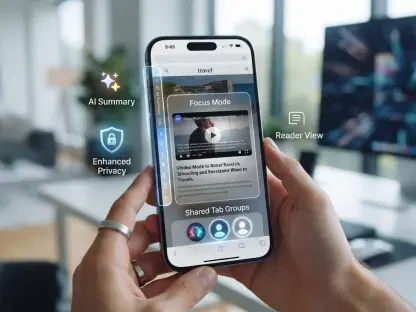

A new Liquid Glass aesthetic introduces customizable transparency and tint sliders that allow users to personalize the visual density of their device interface. This foundational shift arrives with the rollout of iOS 27 on September 14, marking a significant milestone where artificial intelligence becomes the core of the mobile experience rather than a peripheral addition. As Apple Intelligence begins to permeate every layer of the operating system, it fundamentally alters how individuals interact with their hardware, moving away from manual navigation toward a more predictive and contextual model. This transition represents a strategic pivot for the company, focusing on deep integration that prioritizes privacy while enhancing productivity across the board. The update serves as a precursor to the next generation of mobile computing, where the device learns from the user to provide a bespoke environment that anticipates needs before they are explicitly stated by the owner. Such advancements suggest that the smartphone is no longer just a communication tool but a highly sophisticated personal cognitive assistant.
Technical Prerequisites: Hardware Compatibility and Siri AI
The broad availability of iOS 27 ensures that a wide demographic of users can access the latest software improvements, as compatibility extends back to the iPhone 11 series. However, a significant technological divide has emerged regarding the most advanced functionalities of the system. While the base operating system runs efficiently on older hardware, the full suite of Apple Intelligence tools requires the sophisticated neural processing capabilities found only in the iPhone 15 Pro and subsequent models. This distinction underscores a hardware-dependent strategy where the most transformative AI experiences are reserved for devices equipped with high-bandwidth memory and advanced silicon. Users with older models will still benefit from improved stability and basic features, but the leap into autonomous digital assistance is fundamentally restricted to those utilizing more modern, powerful components capable of handling heavy local machine learning workloads. This tiered approach ensures that the performance of the latest software does not compromise the hardware integrity of older generations.
Beyond the standard AI suite, Apple has introduced another tier of exclusivity for the most demanding audio and linguistic tasks. The newly debuted expressive voices for Siri and the high-fidelity advanced dictation system are specifically optimized for the iPhone 17 Pro series and newer hardware, leveraging dedicated hardware accelerators. This stratification ensures that the ecosystem maintains a high standard of performance while encouraging hardware upgrades for those seeking the cutting edge of mobile technology. The synchronization of this software release with updates for M1-powered iPads, macOS 27, and the MacBook Neo creates a unified environment where intelligence is shared across devices. This cohesive approach allows for a seamless workflow, where a task initiated on a smartphone can be intuitively completed on a tablet or laptop. Such deep hardware-software synergy reinforces the value of staying within the updated hardware loop to maximize efficiency and maintain a consistent user experience across the entire brand ecosystem.
Ecosystem Evolution: Design, Connectivity, and User Safety
The visual identity of the iPhone has undergone its most significant refresh in recent memory with the introduction of a new design language that emphasizes depth and clarity. This aesthetic overhaul goes beyond mere cosmetic changes, as it utilizes a sophisticated rendering engine to create a more tactile and responsive interface. App icons have been sharpened with higher resolution textures and revised shading to provide a more modern, defined appearance that stands out against high-density displays. The central component of this change is the new customization slider, which grants users unprecedented control over the visual density of their screens. By allowing for fine-tuned adjustments to transparency and tint, the interface can range from a minimalist, glass-like clarity to a more vibrant and saturated look. This level of personalization reflects a broader trend toward user-centric design, where the software adapts to individual preferences rather than enforcing a rigid style across all user environments.
Technical reliability has also seen substantial improvements, particularly in the realm of network management and data handling. For years, the transition between cellular signals and Wi-Fi networks was a source of minor delays and dropped connections, but the new software utilizes predictive algorithms to ensure these handoffs are completely fluid. This optimization is especially beneficial for users who frequently move between home, office, and public environments, as it maintains a constant data stream without manual intervention. Additionally, the Messages app has been re-engineered to handle high-resolution media files with greater efficiency, ensuring that large photos or 4K videos do not stall ongoing conversations in areas with limited bandwidth. By optimizing the background processing of outgoing data, the system prioritizes text communication so that messages are delivered instantly even while heavy media uploads are in progress, effectively solving a common frustration for many mobile device owners.
The successful adoption of iOS 27 required thorough preparation, particularly in managing the substantial storage overhead necessary for a smooth installation process. Users were encouraged to clear approximately 25 GB of space to accommodate the new neural frameworks and system-wide assets. For residents in regions like Florida, the transition was supported by eighteen retail locations that provided technical guidance and live demonstrations of the new AI-driven workflow. Looking ahead, the focus remained on refining how these tools integrate into daily routines while maintaining high standards of data security. Actionable steps for the future involved regularly auditing app permissions and exploring the deeper layers of Siri’s onscreen awareness to fully leverage the device’s capabilities. By transitioning to this intelligence-first ecosystem, owners transformed their phones into proactive digital assistants, setting a new benchmark for mobile utility that prioritized contextual relevance and user safety through localized processing.