
The relentless pace of technological advancement often leaves consumers questioning whether last year’s hardware can truly keep up with the demands of today’s rigorous training protocols and biometric standards. When Garmin unveiled the Forerunner 170 Music, it signaled a strategic pivot toward affordability, pricing the unit between $299 and $349. This entry-level positioning utilized a previous-generation sensor and a plastic build, immediately raising concerns about long-term data integrity.
For the dedicated athlete, these choices represent more than just a financial trade-off; they raise questions about the accuracy of metrics used to calculate VO2 max, recovery time, and aerobic load. Relying on such data to drive performance improvement requires a fundamental trust in the device strapped to the wrist. If the hardware underperforms, the lower price point becomes irrelevant, as inaccurate tracking leads to inefficient training and potentially hazardous overexertion.
The High Stakes of Budget-Friendly Biometrics
Selecting a mid-range running watch often involves a calculated risk regarding the accuracy of biometric sensors. Garmin’s decision to release the Forerunner 170 Music at a lower price point has reignited the debate over the necessity of cutting-edge hardware. Athletes must decide if saving money is worth potentially sacrificing the nuance of high-fidelity heart rate tracking during intense interval sessions.
Biometrics serve as the foundation for modern training philosophies. A minor discrepancy can shift a runner from a recovery zone into a moderate-intensity zone, fundamentally altering the physiological impact of a workout. Consequently, the device must prove that its older internals are capable of maintaining the brand’s reputation for reliability despite the hardware limitations of a budget-conscious build.
Why Sensor Generations Matter in the Garmin Ecosystem
In the world of wearable technology, “newer” is almost always equated with “better,” making the decision to use the Elevate V4 sensor a point of contention. While premium models like the Fenix 8 have moved on to V5 hardware, the V4 remains the workhorse for Garmin’s more affordable lineup. This choice highlights a trend of balancing hardware costs against the software algorithms that interpret movement.
Understanding this gap is essential for runners who need to know if they are receiving actionable data or merely a “good enough” estimate. Garmin attempts to bridge this performance chasm by utilizing sophisticated signal processing to filter out noise. This strategy aims to make the V4 sensor perform like its more expensive successors, ensuring that entry-level users are not left with obsolete tracking capabilities.
Hardware Concessions and the Shift to Elevate V4 Technology
To hit an accessible price point, the Forerunner 170 Music makes specific compromises like a lightweight plastic construction. This moves away from the rugged, metal-reinforced casings of professional models, favoring a build that suits daily wear and long-distance efforts. Internally, the reliance on the V4 optical sensor serves as the primary cost-saving measure for the manufacturer.
This section of the lineup effectively tests the theory that refined software can compensate for hardware that is no longer on the cutting edge. By prioritizing entry-level accessibility over peak technical specifications, the company provides a stable experience that avoids the teething issues of brand-new technology. It suggests that a proven, mature sensor platform can still meet the needs of most serious fitness enthusiasts.
Putting the Data to the Test Against a Polar #0 Benchmark
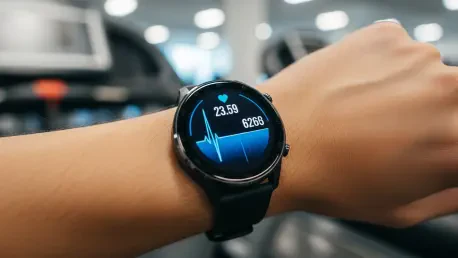
Real-world performance was measured during a 25-minute treadmill session, pitting the Forerunner 170 Music against the Polar #0 chest strap. The results were surprisingly tight; the watch recorded an average of 150 bpm and a peak of 182 bpm, nearly mirroring the Polar’s 154 bpm and 181 bpm. These findings suggest the margin of error remains well within acceptable limits for training.
There was an 8% discrepancy in calorie tracking, with 316 for Garmin versus 344 for the chest strap. This difference is largely due to the watch’s internal accelerometer factoring in physical arm movement alongside heart rate data. While the chest strap relies exclusively on electrical signals, the watch filters data through motion sensors to provide a more conservative estimate of total caloric expenditure.
Determining if the Forerunner 170 Music Fits Your Training Regimen
The testing demonstrated that the older sensor technology within the device remained far from obsolete. The recorded data proved reliable enough for marathon preparation and interval tracking without requiring a jump to significantly more expensive hardware. It was observed that maintaining a snug fit helped mitigate light leakage, which allowed the V4 sensor to maintain a high level of precision throughout the sessions.
Looking forward, runners should focus on data consistency and proper usage rather than simply chasing newer hardware versions. This device proved that expensive internals are not a prerequisite for effective biometric tracking in daily training. Future success will likely depend more on how an athlete interprets and applies their metrics than on the specific generation of the sensor used to capture them.