
Relying on ribbon cables for connectivity instead of traditional soldering prevents the common mistakes of mis-wiring that often lead to hardware failure in early DIY projects. This technical safeguard marks a significant evolution in how enthusiasts approach home automation, specifically through the introduction of the ESPHome Starter Kit. Created through a collaboration between the ESPHome team and Apollo Automation, this hardware bundle seeks to address the long-standing friction between complex firmware configuration and the desire for reliable, local-first smart home devices. For years, the barrier to entry involved a steep learning curve that included understanding pinouts, managing serial drivers, and navigating the nuances of YAML code. By providing a curated set of components that function immediately upon connection, the kit transforms the intimidating world of microcontrollers into an approachable platform for modern homeowners who prioritize privacy over the convenience of cloud-based subscriptions.
Lowering the Barrier: Native Local Automation
The primary significance of this forty-dollar kit resides in its role as a professional introductory gateway into a private, cloud-free smart home ecosystem. By integrating natively with Home Assistant, the kit offers a secure alternative to commercial devices that typically rely on external servers and proprietary data harvesting. Crucially, the design focuses on eliminating the common deterrents that discourage beginners, such as the need for soldering or the complexities of driver installation on various operating systems. This transition ensures that the hardware is not merely a temporary educational toy but a collection of highly functional components ready for long-term residential deployment. The emphasis on a polished user experience allows new users to bypass the traditional maker frustrations and move directly into the logic of automation. This strategic shift positions local control as a viable competitor to mainstream smart home products available in big-box stores today.
Lowering the Barrier: Hardware Component Design
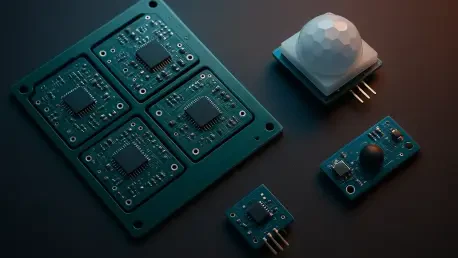
The physical layout of the hardware reflects a clear transition from disposable hobbyist electronics to permanent, high-quality residential equipment. Delivered as a professionally manufactured PCB panel that users snap apart into individual modules, the kit centers on a modern ESP32-C6 controller capable of supporting the latest connectivity protocols. It includes a variety of specialized modules, such as a precision temperature and humidity sensor, a PIR motion sensor for occupancy detection, and a versatile module featuring an RGB LED and a buzzer for status alerts. Using standardized ribbon cables for interconnectivity removes the risk of electrical shorts or incorrect wiring, providing a robust and aesthetically pleasing experience that rivals high-end commercial products. This design philosophy ensures that the finished project looks intentional rather than experimental, encouraging users to mount these devices permanently throughout their living spaces to manage their home environments efficiently.
Streamlining Logic: Hardware Interface Stability
A recurring frustration in the DIY hardware community involves the inconsistency of hardware interfaces and the frequent failure of software drivers, particularly when working with generic development boards. The ESPHome Starter Kit addresses these systemic issues by ensuring a stable, immediate connection through a modern USB-C interface, removing the technical friction that often halts a project before it truly begins. This foundational reliability allows users to focus their energy on the creative aspects of home automation rather than wasting hours troubleshooting basic serial communication or power delivery problems. When the hardware works predictably, the cognitive load shifts from how do I make this turn on to how can I make this improve my daily life. This reliability is essential for maintaining momentum in a hobby that has historically been plagued by high abandonment rates due to minor technical hurdles. The kit essentially standardizes the entry point for the entire ESPHome ecosystem for every user level.
Streamlining Logic: Software Configuration Mastery
The software experience is equally refined, employing a modular approach to YAML, which serves as the configuration language for the entire platform. Instead of overwhelming the novice with an expansive wall of code, the official documentation and built-in tutorials introduce configuration blocks piece by piece as hardware modules are physically added. This training wheels philosophy ensures that beginners learn the underlying logic of the platform through a series of low-stakes, successful interactions. By building the configuration incrementally, users eventually develop a deep understanding of how sensors, triggers, and actions interact within a smart home. This educational method builds the necessary confidence to handle more complex syntax independently, eventually allowing users to venture beyond the starter kit into bespoke hardware configurations. The goal is to demystify the backend logic of smart devices, giving homeowners complete sovereignty over how their personal technology functions and communicates daily.
Practical Solutions: Scaling for the Household
The true value of this hardware is revealed when it transitions from a controlled educational environment into a bespoke automation system tailored to a specific household. It is designed to scale with the evolving needs of the user, moving beyond simple demonstrations like blinking lights to solve actual residential problems. For example, by integrating the kit with sophisticated AI-driven tools like Frigate, a homeowner can transform the basic motion sensor into a part of a complex notification hub. This could involve alerting the household only when a pet enters a restricted area or when a delivery is detected at the front door during specific hours. The modular nature of the hardware means that individual sensors can be relocated to where they provide the most utility, such as placing the temperature sensor in a server closet or the motion sensor in a hallway. This flexibility proves that the kit is a starting point for a professional-grade installation rather than a standalone gadget.
Practical Solutions: Community and Extensibility
Beyond the initial components provided in the box, the kit serves as a strategic entry point into a vast community-driven library of supported hardware. The ESPHome ecosystem allows for the seamless integration of advanced devices, ranging from low-power E-ink displays for weather stations to NFC readers for secure entry systems. These components can eventually replace privacy-invasive commercial alternatives, offering a level of customization that is simply not possible with off-the-shelf consumer products. This extensibility ensures that the initial investment remains valuable as the user’s technical skills grow. By learning the platform through this kit, homeowners gain the ability to build local voice assistants or customized energy monitors that integrate perfectly with their existing infrastructure. This path creates a deeply interoperable network where every device is tailored to the specific architecture of the home, ensuring that the technology serves the residents without compromise.
Future Insights: Impact on the Ecosystem
In the time following the release of this hardware, the DIY community saw a marked increase in the adoption of local-only automation protocols among non-technical users. The kit demonstrated that professional-grade hardware could be made accessible without sacrificing the depth of the underlying platform. By removing the fear of hardware damage through ribbon cables and providing a clear path from setup to deployment, the initiative successfully broadened the reach of private smart homes. Future considerations for this ecosystem now involve deeper integration with emerging standards like Matter over Thread, which the ESP32-C6 controller already supports. Homeowners who started with this kit found themselves well-positioned to navigate the complexities of modern networking while maintaining total control over their data. This approach established a new standard for educational hardware, proving that the best way to foster innovation is to provide a solid foundation that balances ease of use with limitless technical potential.