



The global tech community typically anticipates a flagship product launch with a mixture of grand keynotes and high-decibel marketing campaigns, but the recent unveiling of the OnePlus Watch 4 felt more like a quiet footnote in a corporate ledger. This uncharacteristically subdued entry into the wearable market stands in stark contrast to the brand’s historically loud “Never Settle” ethos, leaving long-time followers to parse through technical specifications in search of a justification for its existence. When a major manufacturer releases a successor that mirrors the previous generation’s physical blueprint while withholding fundamental details like retail pricing or a regional rollout schedule, it suggests a strategic hesitation that is rare in the high-stakes world of mobile accessories.
The absence of a traditional hype cycle for the OnePlus Watch 4 raises valid questions about the internal confidence levels surrounding the device’s unique selling points. Analysts have observed that the company opted for a digital-first disclosure that emphasized structural durability over groundbreaking technological leaps, signaling a departure from the aggressive market disruption strategies of the past. This “whisper launch” approach might imply that the product is a transitional placeholder designed to keep the brand relevant in the Wear OS conversation, rather than a definitive statement of engineering prowess. Consequently, the burden of proof now rests on the hardware itself to demonstrate whether these incremental refinements warrant the attention of a increasingly skeptical consumer base.
A Muted Debut: The “Never Settle” Brand Under Pressure
The arrival of the OnePlus Watch 4 has been met with a peculiar silence that contradicts the energetic branding usually associated with the company’s product ecosystem. Instead of a stage filled with executives highlighting revolutionary sensors or AI-driven health metrics, the device appeared on official listings with little fanfare and a notable lack of clarity regarding its actual availability. This departure from the norm is particularly striking because it forces the product to compete in a vacuum where its aesthetic similarities to the Watch 3 are immediately apparent, leading to early criticism that the company might be playing it too safe in an industry that traditionally rewards bold risks.
This strategic restraint suggests a more calculated, perhaps even defensive, approach to the current hardware landscape. By avoiding the spectacle of a massive launch event, the brand may be acknowledging that the Watch 4 is an evolutionary step rather than a revolutionary one. This lack of marketing noise creates a vacuum that is quickly being filled by speculation regarding production costs and the brand’s shifting priorities toward regional stability. For a company that once prided itself on being a “flagship killer,” the understated introduction of this wearable hints at a transformation into a more mature, yet significantly more conservative, entity that prioritizes maintaining its current position over chasing radical innovation.
Tracking the Shift: From Innovation toward Iteration
The broader smartwatch industry has entered a phase of consolidation where hardware breakthroughs are becoming increasingly rare and difficult to market to a saturated audience. In this climate, the move toward “iterative evolution” seen in the OnePlus Watch 4 is less of an anomaly and more of a reflection of a global plateau in wearable technology. Manufacturers are finding that the gains in processing power and sensor accuracy have hit a point of diminishing returns, leading them to focus on refining the user experience through software optimization and material durability. For OnePlus, this shift marks a pivotal moment where the brand must transition from being a disruptive underdog to a reliable provider of premium, stable peripherals.
Furthermore, this pivot highlights a strategic choice to favor long-term hardware reliability over the flashy, unproven features that often define early-stage tech adoption. By choosing to polish an existing, successful design rather than reinventing the wheel, the brand aims to solidify its reputation for quality among its core demographic. However, this strategy carries the inherent risk of alienating enthusiasts who have come to expect a constant stream of “firsts” from the company. The narrative of the brand is currently being rewritten from one of constant revolution to one of steady, predictable improvement, a change that reflects the realities of a more mature and less volatile market.
Breaking Down the Hardware: What Actually Changed?
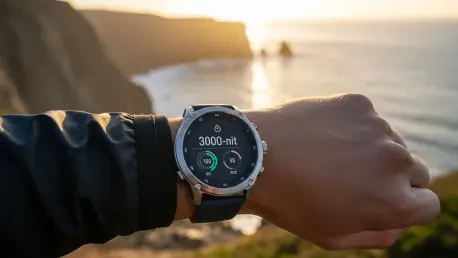
A deep dive into the internal architecture of the OnePlus Watch 4 reveals a device that is remarkably consistent with its predecessor, utilizing the same Qualcomm Snapdragon W5 processor and 2GB of RAM configuration. While some might view the reuse of the internal core as a missed opportunity for a performance leap, the decision ensures a level of stability and familiarity in the user interface that many find reassuring. The real engineering focus was directed toward the display technology; the 1.5-inch LTPO OLED screen now delivers a peak brightness of 3000 nits. This improvement makes the watch face legible in the harshest outdoor environments, effectively setting a new standard for visibility within the Wear OS category.
Beyond the screen, the refinements are subtle and largely centered on the physical profile and durability of the chassis. The watch has shed approximately 7 grams of weight and seen its thickness reduced by nearly a millimeter, a change that enhances the ergonomic fit for long-term wear during athletic activities. The transition to a titanium alloy case paired with a high-durability sapphire crystal lens suggests a focus on premium longevity rather than novelty. These “3s” style upgrades, characterized by minor physical trims and enhanced environmental protections like the IP69 rating, represent a focus on the tactile and visual quality of the device rather than its raw computational capabilities.
The Endurance Factor: A Titan of Battery Life
Despite the criticisms regarding a lack of visual or internal innovation, the OnePlus Watch 4 maintains a significant lead in the one area that matters most to daily users: battery longevity. Expert testing has confirmed that the device continues to outperform its direct competitors from Apple and Samsung by a substantial margin. By optimizing the efficiency of the LTPO display and the existing power management of the Snapdragon W5, the watch can sustain up to five days of use in its standard smart mode. This endurance extends to an impressive 16 days when utilizing power-saver functions, a feat that remains nearly unmatched in the high-performance Wear OS ecosystem.
The consensus among industry analysts is that while the device may feel redundant to some, it remains the “battery life champ” for those who refuse to charge their wearable every night. Critics have rightfully pointed out that superficial changes, such as renaming color variants from “Obsidian” to “Midnight,” do little to advance the product’s identity. However, they also acknowledge that the core value proposition—exceptional uptime and rugged build quality—is still very much intact. This persistence in performance ensures that the watch remains a top-tier recommendation for users who prioritize utility and reliability over the presence of new, often experimental, health monitoring sensors.
Determining Your Upgrade Strategy: Making the Right Choice
Choosing whether to invest in the OnePlus Watch 4 requires a pragmatic assessment of one’s current wearable status and specific environmental needs. For individuals who currently own the previous generation, the marginal improvements in weight and brightness are likely insufficient to justify the cost of an upgrade, especially since the processing power remains identical. The absence of new health metrics means that the daily experience of tracking vitals or sleep patterns will feel virtually unchanged. In this scenario, holding onto a functional older model is the more logical and economically sound path, as the software experience is expected to remain comparable across both generations for the foreseeable future.
However, for those entering the brand’s ecosystem or moving from an older, less efficient smartwatch, the Watch 4 presents a compelling argument centered on extreme durability. The addition of the IP69 rating, which protects against high-pressure water jets, makes this model the definitive choice for enthusiasts of high-impact water sports or those who work in demanding outdoor conditions. Prospective buyers should carefully monitor the final retail pricing before committing; if the cost exceeds the established entry point of the previous model significantly, the value proposition shifts back toward the older, nearly identical hardware. Ultimately, the decision rests on whether the peace of mind provided by a more rugged, brighter device outweighs the premium price tag of a refined, rather than revolutionized, successor.
The evaluation of the OnePlus Watch 4 concluded that the device functioned more as a refined tool for a specific niche than a broad market disruptor. This release demonstrated that the company prioritized hardware durability and power efficiency over the introduction of unproven sensors or radical design changes. For the consumer, the path forward involved a careful comparison of existing needs against the watch’s peak brightness and IP69 rating. While the launch remained understated, the technical benchmarks established that the brand aimed to provide a reliable, long-lasting wearable for those who valued structural integrity. Moving into the next development cycle, the focus shifted toward how the brand would balance these iterative gains with the growing demand for more significant technological innovation.







