
The persistent trajectory of mobile hardware development has reached a fascinating crossroads where the novelty of folding screens is finally transitioning into a practical reality for the everyday consumer. The Motorola Razr 2025 FIFA Edition represents a definitive moment in this evolution, functioning as a bridge between the high-priced experimentalism of the past and the functional accessibility required for the present day. This device does not merely offer a foldable panel but attempts to redefine the value proposition of the flip-phone category by balancing aesthetic flair with pragmatic engineering. By examining the evolution of the Razr line through the lens of this specific limited edition, one can discern a clear shift in how manufacturers are approaching the saturation of the smartphone market. This review intends to dissect the technical nuances, the strategic design choices, and the long-term viability of a device that seeks to democratize a form factor once reserved for the technological elite.
Defining the Value-Driven Foldable Smartphone
The emergence of the Motorola Razr 2025 signifies a broader industry movement toward the “affordable foldable,” a concept that seemed paradoxical only a few years ago. Traditionally, the folding mechanism and the flexible substrate of the display accounted for a massive portion of the bill of materials, forcing prices into the ultra-premium tier. Motorola challenged this status quo by identifying the core components that users truly value—namely the folding aesthetic and the external display utility—while optimizing the internal specifications to keep costs manageable. This strategy allowed the Razr 2025 to debut as a high-value alternative to the flagship “Ultra” models, providing a gateway for consumers who are curious about foldable technology but hesitant to commit to a four-figure investment.
In the context of the current technological landscape, the Razr 2025 serves as a disruption to the duopoly often seen in the high-end foldable sector. By prioritizing a “sleeper hit” status, the device targets a demographic that values style and compact portability over the raw, often unnecessary, processing power of high-end gaming chips. The Razr 2025 proves that a foldable phone can be a daily driver for the average user without requiring the financial sacrifices usually associated with cutting-edge innovation. This shift is crucial for the longevity of the foldable category, as it moves the technology away from being a “status symbol” and toward being a standard tool in the mobile arsenal.
Furthermore, the timing of the Razr 2025’s market presence is particularly interesting given the recent release cycles. As newer models entered the market with higher entry prices, the Razr 2025 solidified its position as the go-to recommendation for those seeking maximum “bang for their buck.” The value is not just in the price tag but in the realization that mid-range hardware has progressed to a point where it can support complex, dual-display software environments with minimal friction. This realization has forced competitors to reconsider their own pricing structures, ultimately benefiting the consumer by driving innovation in the mid-tier segment.
Technical Specifications and Limited Edition Features
The FIFA World Cup 2026 Aesthetic Design
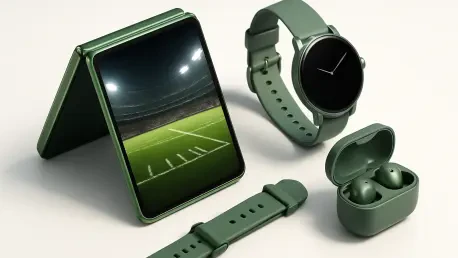
The FIFA World Cup 2026 Edition of the Razr 2025 is more than a simple branding exercise; it is a masterclass in material science and tactile design. The most striking feature is the “Spring Bud” green finish, which utilizes a premium eco-leather, or vegan leather, texture. This material choice is a strategic departure from the slippery glass backs found on most modern smartphones, offering a natural grip that significantly reduces the likelihood of accidental drops. The eco-leather is composed of a durable polyurethane-based composite that resists stains and maintains its vibrant hue even under the stresses of daily handling, providing a sensory experience that feels both organic and high-tech.
Subtle branding elements distinguish this version from the standard colorways like Gibraltar Sea or Parfait Pink. The official FIFA World Cup 26 logo is meticulously imprinted on the lower rear panel in a refined gold finish, providing a sophisticated contrast against the verdant green leather. This branding is integrated into the material rather than being a mere surface print, ensuring that it does not fade or peel over time. The frame of the device also features specific accents that align with the tournament’s visual identity, making it a genuine collector’s item for sports enthusiasts. This design philosophy emphasizes that limited editions can be elegant and understated, rather than gaudy or overly promotional.
Beyond the aesthetics, the physical build of the FIFA Edition retains the robust hinge mechanism that has become a hallmark of Motorola’s engineering. The hinge is designed to be nearly invisible when the phone is unfolded, and it provides a satisfying, damped resistance during the folding motion. The use of high-strength steel and aerospace-grade aluminum in the internal structure ensures that the device can withstand the rigors of frequent opening and closing. This attention to detail in both the outer skin and the inner skeleton makes the FIFA Edition feel like a premium piece of hardware, belying its mid-range pricing.
Dual-Display Technology and Visual Experience
At the heart of the Razr 2025 experience is its dual-display architecture, which has been refined to maximize utility on both the inside and outside. The internal 6.9-inch pOLED panel is a technical marvel, boasting a 1080 x 2640 resolution and a peak brightness of 3,000 nits. This extreme brightness is not just a marketing figure; it is a functional necessity that ensures the screen remains legible even under the harsh glare of midday sun at a football stadium. The 120Hz refresh rate provides the fluid motion expected by modern users, making every scroll and transition feel instantaneous. The pOLED technology also allows for deep blacks and an infinite contrast ratio, which is particularly effective when viewing high-dynamic-range content.
The 3.5-inch AMOLED cover screen is where the Razr 2025 truly separates itself from its competitors. While other manufacturers treat the external display as a secondary notification window, Motorola has designed it to be a fully functional “mini-phone.” With a 90Hz refresh rate and its own 1,700-nit peak brightness, the cover screen is sharp and responsive enough for complex tasks. It supports HDR10+ and Dolby Vision, ensuring that even when the phone is closed, the visual quality remains uncompromised. The resolution of 1056 x 1066 results in a high pixel density, making text crisp and icons easy to distinguish at a glance.
The synergy between these two displays is facilitated by a sophisticated software layer that manages continuity. When a user begins a task on the cover screen and decides they need more real estate, opening the phone seamlessly transitions the application to the larger internal panel. Conversely, the cover screen can be used as a high-resolution viewfinder for the rear cameras, allowing for the highest quality selfies in the industry. This dual-display approach changes the way a user interacts with their device, often reducing the “digital friction” of constantly unfolding the phone for simple interactions like replying to a message or checking a map.
Internal Hardware and Processing Performance
To achieve its competitive price point, the Motorola Razr 2025 utilizes the MediaTek Dimensity 7400X chipset, a choice that has sparked much discussion among tech enthusiasts. This 4nm processor is designed specifically for high-efficiency performance in foldable devices, balancing power consumption with thermal management. While it may not top the benchmark charts like the latest Snapdragon 8-series chips, the Dimensity 7400X is more than capable of handling the multitasking requirements of the modern Android ecosystem. In daily usage, the performance is remarkably smooth, with apps launching quickly and the interface remaining jitter-free thanks to the well-optimized Moto Hello UX software.
The memory and storage configurations are another area where Motorola has made strategic compromises. The inclusion of 8GB of RAM is sufficient for the vast majority of users, allowing several apps to remain resident in memory without aggressive background closing. However, the use of UFS 2.2 storage instead of the faster UFS 4.0 standard found in flagship models is a notable bottleneck. This choice means that while the phone feels fast during normal operation, the “cold start” times for massive games or the installation of large software updates are noticeably longer. For the target audience of this device, however, these few extra seconds are rarely a dealbreaker compared to the significant cost savings.
One of the most impressive aspects of the hardware is the thermal efficiency of the MediaTek platform. Foldable phones often struggle with heat dissipation due to their thin chassis and the physical separation of components across the hinge. The Dimensity 7400X manages to stay cool even during extended video streaming or light gaming sessions, preventing the thermal throttling that can plague more powerful but less efficient chips. This consistent performance ensures that the device remains reliable throughout the day, providing a stable platform for both productivity and entertainment.
Camera Systems and Innovative Imaging Features
The imaging capabilities of the Razr 2025 FIFA Edition are built around a versatile dual-camera array that prioritizes real-world utility over sheer megapixel counts. The primary 50MP sensor features an f/1.7 aperture and Optical Image Stabilization (OIS), which is critical for maintaining sharpness in low-light conditions and during handheld video recording. This sensor utilizes an in-sensor crop technique to provide a 2x optical-quality zoom, effectively giving users a “telephoto-lite” experience without the need for additional bulky hardware. The color science leans toward a natural look, avoiding the over-saturation that often affects mid-range mobile photography.
The secondary 13MP ultra-wide lens provides a 120-degree field of view, making it ideal for capturing expansive stadium shots or group photos. This lens also incorporates an autofocus system that allows it to double as a macro camera, enabling users to get as close as a few centimeters to their subject. While the ultra-wide sensor does not match the low-light performance of the main 50MP sensor, it is a valuable tool for creative compositions. One minor ergonomic challenge is the placement of these lenses; because they are situated near the edge of the device, users must be mindful not to let their palms creep into the corner of the frame when holding the phone in a traditional grip.
The real innovation in the Razr’s camera system lies in the software integration with the folding form factor. The “Camcorder Mode,” activated by folding the phone at a 90-degree angle, provides a nostalgic and stable way to record video, complete with a dedicated interface that places controls within easy reach of the thumb. Additionally, the “double-twist” gesture to launch the camera is a tactile shortcut that remains one of Motorola’s most beloved features. These small software touches, combined with the ability to use the cover screen as a mirror, transform the act of taking photos from a standard smartphone task into a more interactive and flexible experience.
Emerging Trends and Foldable Market Shifts
The current landscape of the mobile industry is witnessing a significant pivot away from the pursuit of “peak specs” and toward the “peak experience.” The Razr 2025 is at the forefront of the “sleeper hit” movement, where devices that offer a balanced, lifestyle-oriented feature set at a mid-range price point are gaining more traction than traditional flagships. This trend is driven by a consumer base that has become increasingly weary of the $1,200+ price tags of folding devices. By proving that the folding experience can be delivered reliably at nearly half that cost, Motorola is forcing a re-evaluation of what constitutes a “premium” device.
Moreover, the normalization of foldable technology is leading to a shift in consumer expectations regarding durability and longevity. As the supply chains for flexible displays and complex hinges mature, the failure rates that once plagued early foldables have plummeted. This increased reliability allows manufacturers to focus on secondary features, such as aesthetic partnerships and limited-edition branding, to differentiate their products. The FIFA World Cup 2026 Edition is a prime example of using a major global event to cement a device’s cultural relevance, moving the conversation from “how does it fold?” to “how does it fit into my lifestyle?”
The pricing strategies of the last year have also revealed a fascinating market dynamic. When new models were introduced at higher price points, older yet still capable models like the Razr 2025 did not just fade away; they became the entry point for a whole new segment of the market. This creates a tiered foldable market that mirrors the traditional smartphone market, with entry-level, mid-range, and flagship folding options. This stratification is essential for the long-term health of the category, as it ensures that folding technology is not a temporary fad but a permanent fixture of the technological landscape.
Practical Applications and Industry Deployment
One of the most compelling practical applications of the Razr 2025 is the “mini-phone” concept enabled by its expansive cover display. Users have increasingly reported that they can perform roughly 60% of their daily digital tasks without ever opening the device. This includes responding to messages, navigating with GPS, controlling music playback, and even browsing social media feeds. This usage pattern has a profound psychological effect, as the smaller screen tends to discourage the “infinite scroll” behavior often associated with large-screen smartphones, leading to more intentional and efficient digital interactions.
In the sports and lifestyle sectors, the Razr 2025 FIFA Edition has been deployed alongside a suite of wearable accessories that enhance its utility. The bundle often includes the Moto Watch and Moto Buds Loop, creating an integrated ecosystem for active users. For example, during a match, a user can check real-time stats or notifications on their wrist, while the phone remains securely folded in a small pocket. The tactile nature of the eco-leather finish also makes it an ideal companion for outdoor activities, where traditional glass phones might be too fragile or slippery. This holistic approach to the “mobile experience” moves the focus away from the device as a standalone object and toward its role as a hub for a connected life.
The professional sector has also found unique use cases for the flip form factor. The ability to “tent” the phone or fold it to a 90-degree angle makes it an excellent tool for hands-free video conferencing or as a secondary monitor for quick reference notes. In industries like real estate or field engineering, where portability and the ability to quickly capture and review images are paramount, the Razr’s compact size and high-quality cover screen viewfinder provide a distinct advantage. These real-world deployments demonstrate that the “fold” is not just a gimmick; it is a functional tool that addresses specific ergonomic and professional needs.
Technical Limitations and Market Obstacles
Despite its many strengths, the Motorola Razr 2025 faces several technical hurdles that highlight the trade-offs required to reach its price point. The most prominent of these is the software update window, which currently stands at three years of major OS upgrades. In a market where competitors like Samsung and Google have moved toward seven-year commitments, Motorola’s shorter support cycle may deter users who plan to keep their devices for the long term. This limitation is partly a result of the mid-range chipset’s support window and the costs associated with maintaining a complex, dual-screen software stack over multiple years.
Connectivity is another area where the device shows its mid-range roots. The absence of Wi-Fi 7 support is a minor but noteworthy omission for tech-forward users who have invested in the latest home networking equipment. While Wi-Fi 6E is more than sufficient for today’s internet speeds, the lack of the newest standard limits the device’s future-proofing. Additionally, while the UFS 2.2 storage is reliable, it represents a clear performance ceiling that prevents the Razr 2025 from competing with “Ultra” models in data-intensive tasks like high-resolution video editing or large-scale file transfers.
Market obstacles also include the lingering consumer skepticism regarding the long-term durability of the flexible screen protector. While the materials have improved significantly, the inner display is still more susceptible to scratches and punctures than traditional toughened glass. Motorola provides a specialized service for screen protector replacement, but the necessity of such a service remains a barrier for those who work in demanding environments. Bridging the performance and durability gap between mid-range foldables and traditional ruggedized flagships remains one of the primary challenges for the next generation of development.
Future Outlook and Next-Generation Developments
Looking ahead, the trajectory of Motorola’s foldable technology is focused on refining the “invisible” aspects of the device, particularly battery density and hinge miniaturization. The use of silicon-carbon battery chemistry in the Razr 2025 has already yielded impressive results, allowing for a 4,500mAh capacity in a very thin frame. Future iterations are expected to push this even further, potentially reaching 5,000mAh without increasing the device’s footprint. This will be critical as more powerful AI features are integrated into the OS, which typically demand higher sustained power draw.
The hinge mechanism is also a candidate for significant innovation. Engineers are working toward a “zero-gap” design that is even more resistant to fine dust particles while further reducing the visible crease in the internal display. As manufacturing tolerances become even tighter, we may see the introduction of new composite materials that offer the strength of steel with the weight of carbon fiber. These developments will not only improve the physical feel of the phone but also its long-term resilience, potentially allowing for higher IP ratings that include full dust ingress protection.
Ultimately, the long-term impact of affordable foldables like the Razr 2025 will be the total recalibration of consumer expectations. Once users become accustomed to the convenience of a “mini-phone” cover display and the portability of a flip design, returning to a traditional “slab” phone feels like a step backward. This shift will likely force all major manufacturers to offer a mid-range foldable option, leading to a surge in creative software applications designed specifically for folding screens. The Razr 2025 has set the stage for a future where the folding phone is the standard, not the exception.
Final Assessment of the Motorola Razr 2025
The Motorola Razr 2025 FIFA Edition established itself as a landmark device that successfully navigated the complex balance between innovation and affordability. It moved the foldable conversation forward by proving that a device did not need the absolute fastest processor or the most expensive camera sensors to be a compelling and highly functional daily driver. The “Spring Bud” green eco-leather and the gold FIFA branding added a layer of tactile luxury that made the phone feel special, transcending its mid-range technical specifications. By focusing on the user experience—specifically through the best-in-class cover screen software—Motorola created a device that felt more “modern” than many of its higher-priced rivals.
The battery life of the Razr 2025 was a particular highlight, frequently exceeding the expectations set by traditional flip-style smartphones. This endurance was achieved not through raw capacity alone but through a synergy between an efficient MediaTek chipset and a usage pattern that favored the smaller, lower-power cover display. Users found that the ability to perform tasks without unfolding the phone was not just a novelty but a fundamental improvement in how they interacted with mobile technology. This practical utility, combined with the device’s aggressive pricing, made it the most logical entry point for the vast majority of consumers looking to explore the foldable market.
In the final analysis, the Razr 2025 served as a clear indicator that the foldable era had truly arrived for the masses. While it made necessary concessions in areas like storage speed and software update longevity, these trade-offs were viewed as acceptable within the context of its massive value proposition. The device demonstrated that the soul of a smartphone lies in its ability to adapt to the user’s life, rather than forcing the user to adapt to the device. As the industry looked toward the next cycle of development, the Razr 2025 remained a benchmark for how to build a foldable that was as practical as it was beautiful, leaving a lasting impact on the design philosophy of the entire mobile sector.