
The seamless click of a folding screen has transitioned from a nostalgic novelty into a high-stakes battleground for mobile dominance, yet Motorola’s latest endeavor suggests a brand caught between its pioneering spirit and economic reality. The Razr 70 series arrives at a moment when consumers no longer view foldable glass as a miracle but as a functional requirement for high-end productivity. While the hardware remains a masterclass in industrial design, the strategic execution behind this lineup raises significant questions about whether a refined hinge and a polished exterior are enough to sustain a premium legacy in an increasingly competitive market.
Evolution of the Motorola Flip Foldable Ecosystem
The transition of the Razr from a luxury fashion statement to a functional powerhouse reflects a broader shift in how mobile technology integrates into daily life. By refining the teardrop hinge and shrinking the internal bezel, Motorola has successfully addressed early criticisms regarding screen durability and crease visibility. This evolution is rooted in the “clamshell” philosophy, which prioritizes a compact footprint without sacrificing the expansive canvas required for modern media consumption.
However, the context of this evolution has changed as competitors saturate the market with aggressive software commitments. While the Razr once stood alone, it now exists in a landscape where users demand that their $1,000 investments remain relevant for more than a few seasons. The challenge for Motorola has shifted from proving that the screen can bend to proving that the ecosystem can sustain the user’s digital life over a multi-year horizon, a metric where the brand still struggles to find its footing.
Analyzing the Hardware Architecture and Capabilities
The Razr 70 UltrPerformance and Component Integration
As the flagship of the collection, the Razr 70 Ultra utilizes the Snapdragon 8 Elite chipset to drive a highly responsive user experience. This silicon is designed to handle the thermal challenges unique to thin, foldable chassis, balancing high-speed processing with power efficiency. In practice, this means the device can manage heavy multitasking on the external display without the lag often associated with secondary screens. Yet, despite these benchmarks, the Ultra finds itself in a precarious position because its internal architecture, while robust, does not significantly outpace the performance of standard flagships that cost hundreds of dollars less.
Mid-Range and Entry-Level Iterations: The 70+ and Standard Razr 70
The Razr 70+ serves as the bridge between utility and luxury, introducing a 50MP ultra-wide camera system and an upgraded 4,500mAh battery. These hardware choices aim to fix the historical “foldable tax”—the idea that one must sacrifice battery life and camera quality for the sake of a folding screen. Meanwhile, the standard Razr 70 attempts to democratize the form factor, though it faces an internal rival in the form of last year’s discounted flagship models. This creates a confusing hierarchy where the newest entry-level device often offers fewer features than a slightly older premium model at the same price.
Emerging Trends in the Foldable Smartphone Market
The foldable sector is currently moving toward a “total utility” phase where the external display is no longer a mere notification window but a primary interface. Motorola has pushed this trend further than most, allowing full application functionality on the cover screen, which reduces the need to unfold the device for simple tasks. Additionally, the industry is seeing a massive push toward improved hinge longevity, with manufacturers now aiming for hundreds of thousands of folds to combat the perception that these devices are fragile.
Real-World Applications of Foldable Technology
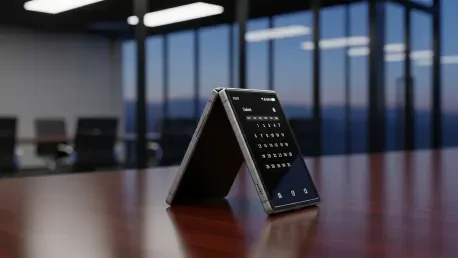
The Razr 70 series excels in scenarios that demand hands-free versatility, such as digital content creation. The “tent mode” allows the device to act as its own tripod, enabling creators to film high-quality 4K video using the primary cameras while monitoring the frame on the external screen. For professionals, the ability to pin compact productivity tools—like calendar snapshots or authentication apps—to the cover display facilitates a level of speed that traditional “slab” phones cannot match.
Strategic Challenges and Adoption Hurdles
The primary obstacle for the Razr 70 series remains the disconnect between its price and its long-term value. With a starting price that competes with established ultra-flagships, the lack of a transparent, long-term software support policy is a glaring omission. Users are becoming more conscious of device longevity, and Motorola’s commitment of three OS updates feels thin when compared to the seven-year cycles offered by major rivals. This creates a hurdle where the physical hardware may outlast the software that powers it.
Future Projections for the Razr Series
Looking ahead, the success of the Razr will likely depend on breakthroughs in flexible cover materials that can resist scratches as effectively as traditional glass. As foldable technology matures, we can expect a pivot toward more specialized software that treats the folding action as a functional input, perhaps integrating gesture controls that respond to the angle of the screen. The series has the potential to move beyond a niche category if Motorola can align its pricing with the reality of the hardware lifecycle.
Final Assessment and Industry Impact
The Razr 70 series demonstrated that Motorola has perfected the physical art of the flip phone, offering a design that is both elegant and ergonomically superior. Moving forward, the industry will likely see a shift where software longevity becomes as vital as the hinge itself. To secure its future, the brand must bridge the gap between premium design and long-term utility, ensuring that the software experience is as resilient as the hardware. This series set a high bar for aesthetics, but the next evolution will require a deeper commitment to the user’s long-term digital investment.