
The convergence of massive computational breakthroughs and a generational shift in executive leadership has placed the upcoming Worldwide Developers Conference on June 8 at the center of the global technology conversation. Apple has officially finalized the schedule for this monumental event, which will begin with a high-production cinematic keynote at 10 am PT, broadcasting live from the heart of Apple Park to a global audience of developers, creators, and investors. This year’s gathering is distinctly positioned as a historic crossroads, moving beyond the standard iterative software updates of the past decade to address a fundamental transformation in how humans interact with silicon. The atmosphere surrounding the Cupertino campus suggests a company prepared to shed its characteristic caution in favor of an aggressive, AI-first philosophy that will define its hardware and software trajectory for the next several years.
Observers and industry analysts are treating this specific conference as the formal launchpad for a long-awaited artificial intelligence metamorphosis that has been years in the making. By synchronizing groundbreaking software reveals with a transition in top-level management, the company is signaling a new chapter that seeks to blend its traditional design elegance with the demanding, data-intensive requirements of the generative era. The stakes are undeniably high, as the market expects a definitive answer to the rapid advancements made by competitors in the field of large language models. This event is not merely about new features; it is about establishing a cohesive vision that maintains the brand’s premium status while proving that its ecosystem can remain the primary interface for an increasingly automated and digitally assisted world.
Decoding the Visual and Functional Shift
Visual Symbolism and the Siri Redesign
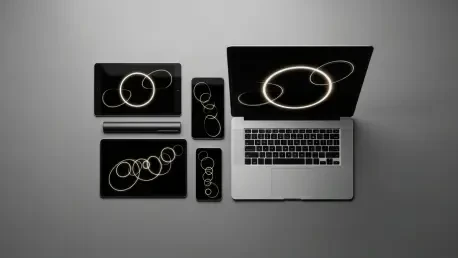
The invitation for the event has sparked significant debate among interface designers due to its intriguing “Coming Bright Up” tagline and a graphic featuring glowing, concentric circles. These visual cues are widely interpreted as a preview of a comprehensive overhaul of the Siri user experience, moving away from the static, bottom-of-the-screen orb that has defined the assistant for years. Analysts suggest that the new design will utilize a vibrant “glow” effect that interacts dynamically with the physical edges of the device screen or the Dynamic Island, creating a more ambient and persistent presence. This shift indicates that the digital assistant is no longer intended to be a separate tool called upon for specific tasks, but rather a layer of intelligence that lives within the glass itself, responding to the environmental context and user intent through subtle chromatic shifts.
This aesthetic evolution serves a functional purpose by signaling the assistant’s enhanced awareness of what is currently happening on the user’s screen. By abandoning the traditional icon in favor of a full-frame or edge-based lighting effect, the interface suggests a more integrated relationship between the operating system and the AI. This “brightness” likely represents the processing of real-time data, where the intensity or movement of the glow provides feedback to the user regarding the assistant’s level of engagement or cognitive load. This approach aligns with the company’s long-term goal of making technology feel more organic and less mechanical, ensuring that the transition into a high-utility AI era does not compromise the minimalist beauty that users have come to expect from their premium hardware devices.
The Launch of Next-Generation Siri
This conference marks the definitive debut of a revamped Siri that intends to move beyond simple voice triggers and basic commands to become a truly proactive digital companion. To achieve this, a hybrid architecture has been implemented, combining sophisticated on-device processing with Google’s Gemini large language models through a strategic partnership. This collaboration is designed to provide the generative power and conversational depth of modern chatbots while adhering to the company’s strict requirements for speed and context awareness. The result is an assistant that can manage multi-step workflows, such as summarizing long email threads while simultaneously cross-referencing calendar availability and drafting a response in the user’s specific professional tone, all within a single interaction.
The move toward a proactive model signifies a departure from the reactive nature of previous assistant versions, which required explicit prompts to function. The next-generation Siri is expected to anticipate needs by analyzing patterns across various applications, offering suggestions before a user even initiates a query. For instance, it might notice a flight confirmation in a messaging app and automatically suggest the best time to leave for the airport based on current traffic and terminal congestion. By leveraging both local hardware for privacy-sensitive tasks and cloud-based models for complex reasoning, the system aims to close the functional gap with other leading AI platforms. This transition is critical for maintaining the relevance of the iPhone as the primary personal device in an era where specialized AI hardware is beginning to emerge.
The Architecture of Apple Intelligence
Generative Capabilities and Privacy Frameworks
Beyond the immediate visible changes to the assistant, the event will highlight the broader ecosystem of intelligence that now permeates the entire operating system. A central pillar of this strategy is the “Private Cloud Compute” framework, which addresses the inherent conflict between high-performance generative tasks and the company’s commitment to user privacy. This architecture ensures that when a task is too complex for on-device silicon, the data processed in the cloud remains just as secure as if it had never left the local storage. By utilizing custom-built server hardware and stateless computation, the system guarantees that personal information is never retained or used to train global models, providing a secure environment for generating sensitive documents or private imagery.
The generative capabilities themselves are being integrated into the core fabric of the user experience, moving far beyond simple text generation. Users will likely see tools for advanced image manipulation, automated data synthesis in spreadsheets, and sophisticated writing aids that can adapt to different social or professional contexts. This system-wide approach ensures that the benefits of large language models are not confined to a single application but are available as a utility across the entire device. By prioritizing a privacy-first framework, the company seeks to differentiate its offerings from competitors who rely on massive data harvesting. This strategy frames privacy not just as a moral stance, but as a competitive technical advantage that allows users to utilize powerful AI tools without the psychological burden of constant surveillance.
Deep Application Integration
The intelligence upgrades are expected to be embedded within every corner of the native software suite, transforming daily tools into highly specialized productivity engines. In applications like Mail and Messages, the AI will provide more than just smart replies; it will categorize importance based on personal relationships and professional deadlines, effectively acting as a digital secretary. For professional platforms like Final Cut Pro and Xcode, the integration goes even deeper, offering automated video color grading based on descriptive prompts or real-time code debugging and suggestions. By embedding these tools into existing workflows, the company is proving that its later entry into the generative space was a calculated move designed to prioritize refinement and practical utility over the experimental nature of third-party plugins.
This deep integration strategy serves to lock users into the ecosystem by making the native tools significantly more capable than their generic counterparts. When an AI can understand the specific relationship between a contact in the address book and a project file in the cloud, it creates a level of convenience that is difficult to replicate across fragmented platforms. The goal is to provide a seamless experience where the technology disappears into the background, allowing the user to focus on the creative or logistical task at hand. By ensuring that these features are consistent across the entire product line, the company reinforces the value of its hardware and software synergy, demonstrating that the most effective way to experience advanced artificial intelligence is through a tightly controlled and highly optimized vertical stack.
A Historic Changing of the Guard
The Transition from Cook to Ternus
A major highlight of this keynote will be its status as the final major event led by Tim Cook in his capacity as Chief Executive Officer. After steering the company through fifteen years of unprecedented financial growth and operational expansion, Cook is preparing to step down, with John Ternus scheduled to officially take over the role on September 1, 2026. This transition adds a profound layer of historical weight to the proceedings, as the tech world analyzes how this change will influence the company’s creative and technical direction moving forward. Cook’s legacy of supply chain mastery and environmental advocacy has provided a stable foundation, but the shift to Ternus suggests a desire to return to a leadership style more closely aligned with engineering and product development at the highest level.
John Ternus has become an increasingly prominent figure in recent presentations, and his background in hardware engineering is seen as a signal of the company’s future priorities. As the boundary between silicon and software continues to blur in the AI era, having a leader who understands the physical constraints and possibilities of the hardware is viewed as a strategic necessity. This transition is not being framed as a sudden departure but as a carefully choreographed handoff, intended to project stability to both consumers and Wall Street. The upcoming keynote will likely serve as a symbolic passing of the torch, where the achievements of the past fifteen years are celebrated while the vision for the next decade of intelligent computing is articulated by the new leadership team.
Leadership Continuity and Future Outlook
The visibility of key executives like Greg Joswiak and Craig Federighi alongside John Ternus during recent product cycles indicates a unified front for this leadership transition. This collective approach ensures that while the person at the top may change, the core values and operational philosophies of the organization remain intact. Ternus’s rise reflects a focus on the tight integration between custom silicon and the software it powers, a philosophy that has become the company’s primary defense against a cooling smartphone market. The “changing of the guard” is being handled with the same meticulous precision as a major product launch, ensuring that market confidence remains high during a period of significant internal and external transformation for the consumer electronics giant.
Looking ahead, the new leadership team faces the challenge of maintaining the brand’s cultural relevance in a world where hardware is increasingly commoditized. The focus on AI and spatial computing suggests that the company is looking to move beyond the glass-slab era of the smartphone toward a more immersive and intelligent future. This requires a delicate balance of maintaining the massive revenue generated by the current product lines while taking the bold risks necessary to define the next category of personal technology. By presenting a unified leadership front at this conference, the company aims to demonstrate that it possesses the vision and the executive talent to navigate the complexities of the generative AI revolution without losing the unique identity that makes its products so desirable to millions.
Ecosystem Evolution and Market Strategy
The Version 27 Software Suite
The conference will serve as the unveiling point for the next generations of the entire software family, transitioning the ecosystem to “Version 27.” These updates for iOS, macOS, and visionOS are specifically designed to accommodate the new AI-driven notification management and cross-device connectivity features. By synchronizing these updates, the company ensures that its new intelligence features are available and consistent across all hardware, from the smallest wearable to the most powerful desktop computer. This unified versioning strategy simplifies the development process for third-party creators and reinforces the idea that the “Apple Intelligence” experience is a cohesive whole rather than a fragmented collection of features. Version 27 is expected to prioritize “intelligent focus,” a system that uses local data to suppress non-essential alerts while elevating critical information based on real-time urgency.
Furthermore, these updates will likely introduce new ways for devices to work together through shared intelligence. A task started on an iPad using the new Siri could be seamlessly continued on a Mac, with the AI maintaining the full context of the interaction and the state of the files involved. This level of cross-platform synergy is a key component of the company’s strategy to increase the average number of devices owned by each customer. By making the ecosystem more intelligent as a collective unit, the company increases the “switching costs” for users who might consider moving to a different platform. Version 27 represents a fundamental shift where the operating system is no longer just a manager of files and apps, but an active participant in the user’s daily life, optimizing for productivity and mental clarity.
Market Expectations and the AI Race
The global technology industry is viewing this event as a “make or break” moment for the company’s long-term strategy in the artificial intelligence race. There is immense pressure to deliver a user experience that justifies the premium branding and successfully closes the perceived gap with pioneers like OpenAI and Google. As the world watches Tim Cook’s final major address, the ultimate test will be whether these innovations can once again redefine the relationship between humans and their personal technology. Success in this area will require more than just technical proficiency; it will require the company to prove that AI can be helpful and powerful without becoming intrusive or overwhelming. The market is looking for a vision that feels complete and ready for immediate deployment, rather than a series of perpetual beta tests.
Moving forward, the focus must remain on the practical application of these technologies to solve real-world problems for the average consumer. To maintain its market lead, the company should prioritize the expansion of its “Private Cloud Compute” to a wider range of third-party developers, allowing the entire App Store ecosystem to benefit from secure, high-performance AI. Additionally, the transition to new leadership should be used as an opportunity to accelerate the development of specialized AI hardware, such as dedicated neural processing units that can handle even more complex tasks on-device. By focusing on the intersection of privacy, utility, and seamless hardware integration, the company can ensure that it remains the dominant force in personal computing for the next decade and beyond, regardless of the rapid changes in the competitive landscape. These steps will be essential for transforming the promises made at the conference into a tangible reality for millions of users worldwide.