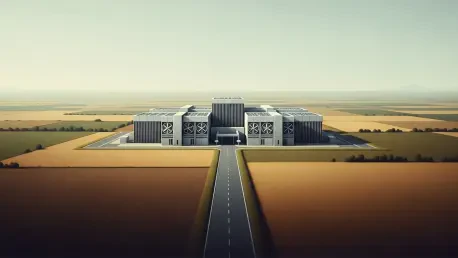

The expansive horizon of Richland Parish, once defined by the rhythmic swaying of cotton fields and corn stalks, now contends with a skyline of cranes and concrete that stretches across 2,250 acres of deep Southern soil. This massive footprint, comparable to a significant slice of Manhattan, serves as the foundation for Meta’s “Hyperion” project, a $10 billion data center complex that represents the largest economic development in Louisiana’s history. While the sheer scale of the investment suggests a new dawn for the region, it arrives with a complex set of consequences that leave many residents wondering if they are the beneficiaries or the collateral damage of the digital age.
The $10 Billion Question Hovering Over Richland Parish
In the quiet corridors of northeastern Louisiana, the arrival of a global tech giant is often viewed through the lens of survival. For a community that has watched its agricultural backbone weaken over decades, the promise of $10 billion in capital investment feels like a lifeline designed to pull the parish into the modern economy. However, the magnitude of the project is so vast that it threatens to overshadow the very people it aims to serve, sparking a localized debate about the true cost of becoming a hub for artificial intelligence.
As Mark Zuckerberg’s vision for AI infrastructure takes physical shape, the community finds itself at the center of a high-stakes experiment regarding the sustainability of rural industrialization. Local leaders have bet heavily on the idea that high-tech capital can fill the vacuum left by traditional farming. Yet, as the dust settles on the initial construction phase, the reality of hosting a massive digital fortress is beginning to reveal a friction between global corporate interests and the lived experience of small-town residents.
Why This Data Center Marks a Turning Point for the South
The Hyperion project is not merely a local construction site; it is a flagship for a national surge in infrastructure that seeks to transform the “Cotton Belt” into a data corridor. This shift is significant because it tests whether massive tax incentives, which in this case reach a staggering $3.3 billion, actually yield long-term prosperity for the host community. The project serves as a litmus test for whether Southern states can successfully pivot from manual labor to digital management without sacrificing their regional identity.
Furthermore, this development highlights a growing trend where global tech firms seek out rural areas for their abundance of land and the promise of fast-tracked energy approvals. By choosing Richland Parish, Meta has signaled that the future of AI is no longer confined to Silicon Valley but is increasingly dependent on the resources of the American heartland. The outcome of this project will likely dictate the terms of engagement for dozens of other rural counties currently being scouted by the tech industry.
Weighing the Economic Windfalls Against Rural Reality
The financial structure of the deal reveals a significant incentive gap, with the $3.3 billion in tax breaks including a total sales tax exemption on high-cost GPUs. While these components are essential for AI processing, they do little to replenish local public coffers that fund schools and roads. This disparity creates a job creation paradox; despite the multi-billion-dollar price tag, the facility is expected to sustain only 500 permanent operational roles, a modest number compared to the initial surge of temporary construction labor.
Moreover, the announcement of the project has triggered a wave of new-age gentrification that the parish was ill-prepared to handle. Property values have spiked by 170%, creating a real estate bubble that threatens to displace residents in a region where the $41,000 average income is far below national standards. Additionally, the energy surge required to keep the servers running has forced Entergy Louisiana to fast-track 5,200 megawatts of fossil-fuel-generated power, raising concerns that the environmental and financial costs of this electricity will eventually be passed down to local residential consumers.
Local Voices and Environmental Realities
The physical toll of the Hyperion project is already manifesting as a sharp decline in the quality of life for those living in its immediate shadow. Environmental advocates and rival energy providers have filed legal petitions, arguing that the reliance on natural gas turbines to power the site contradicts broader carbon-neutral goals. Many nearby neighbors have documented symptoms like dizziness and nausea, which they attribute to the constant “hum” of the facility—a phenomenon known as infrasound emission that persists twenty-four hours a day.
Living next to the campus has been compared by residents to residing beside a commercial airport that never closes. The industrial noise, coupled with the light pollution from a facility that never sleeps, has transformed a once-tranquil rural environment into a high-intensity industrial zone. These environmental realities underscore the “double-edged sword” of the tech incursion, where the promise of progress is often accompanied by significant disruptions to the physical and mental well-being of the local population.
How Communities Can Navigate the Big Tech Incursion
To protect the interests of rural citizens, local governments must prioritize transparency in utility agreements to ensure that massive data center demands do not trigger rate hikes for families. Establishing Community Benefit Agreements (CBAs) can provide a framework for securing guaranteed local hiring quotas and direct investments in parish infrastructure that exist beyond the facility gates. These legal tools are essential for ensuring that a portion of the corporate wealth generated on-site actually stays within the community.
Rural councils should also implement proactive zoning and noise ordinances that regulate decibel levels and infrasound emissions before the first turbine is even installed. Protecting affordable housing through stabilized property tax policies for long-term residents will be crucial in preventing displacement during sudden tech-induced real estate booms. By taking these steps, communities in Louisiana and beyond looked toward a future where they can host the infrastructure of tomorrow without losing the stability of their today. Such proactive measures transformed the narrative from one of exploitation to one of mutual growth.