
The subtle click of a precision-engineered hinge closing provides a satisfying punctuation mark to an era where mobile productivity was once limited by the rigid dimensions of a glass slab. For the better part of this decade, the high-end foldable market in the United States has functioned as a predictable duopoly, characterized by incremental updates and a lack of aggressive price competition. However, the landscape has shifted with the arrival of a device that seeks to dismantle the established order through a combination of engineering audacity and strategic value. By entering the arena with a price tag that sits exactly $100 below its primary rival and introducing a suite of battery technologies previously unseen in Western markets, Motorola is no longer content to play the role of the nostalgic underdog. This new entrant represents a calculated pursuit of technical perfection that, while occasionally stumbling into eccentric design choices, forces a long-overdue conversation about what a professional mobile workspace should look like.
Breaking the Monopoly on Premium Foldable Productivity
The American smartphone market has long suffered from a lack of true variety in the ultra-premium foldable segment, often feeling like a two-horse race where consumers are forced to choose between conservative iteration and familiar software ecosystems. This stagnation is finally being challenged as Motorola enters the “book-style” foldable category with a hardware proposition that prioritizes raw capability and price disruption. By positioning the device at $1,899.99, Motorola is leveraging its supply chain efficiencies to undercut the industry leader, effectively making the high-end productivity foldable more accessible to a broader range of professional users. This pricing strategy is not merely a promotional gimmick but a foundational shift in how luxury hardware is marketed, suggesting that premium features such as 16GB of RAM and 512GB of internal storage do not necessarily require a two-thousand-dollar investment.
The journey toward this flagship release marks a significant transformation for a brand that spent the last several years reclaiming its heritage through compact, fashion-forward flip phones. While those smaller devices successfully captured the cultural zeitgeist, the new “Fold” series is aimed squarely at the power user who views their phone as a primary computing terminal. This transition requires a move away from the “lifestyle accessory” label and toward a reputation for enterprise-grade reliability and high-performance throughput. The resulting hardware is a study in contrasts, offering a “near-perfect” spec sheet that includes the latest silicon and high-density displays, yet it retains a certain level of character that distinguishes it from the clinical, often sterile designs of its competitors. The choice of colors, such as Pantone Blackened Blue and Pantone Lily White, further reinforces this identity, blending professional aesthetics with a bold, almost defiant sense of style.
Furthermore, the inclusion of the Moto Pen Ultra as a bundled accessory during the launch window serves as a direct critique of the industry trend toward nickel-and-diming consumers for essential productivity tools. While other manufacturers have relegated the digital stylus to an optional, expensive add-on that often requires a specialized case, Motorola has integrated the experience into the core value of the device. This move signals a commitment to the “all-in-one” philosophy, catering to digital artists, architects, and executives who require precise input for annotation and creative workflows. By providing the tools for high-level productivity right out of the box, the device establishes itself as a serious alternative for those who find the current market offerings to be either too restrictive in their software or too expensive for their hardware limitations.
Why the Shift to Large-Scale Foldables Matters Now
As mobile workflows become increasingly complex, the limitations of the traditional smartphone aspect ratio have become a significant bottleneck for professionals who manage data-heavy tasks on the move. The demand for larger canvases has moved beyond simple media consumption, evolving into a requirement for multi-window multitasking that can genuinely replace a small tablet or a secondary laptop. The shift toward 8-inch internal displays represents the sweet spot for this new era of mobile computing, providing enough screen real estate for complex spreadsheets and video editing timelines without sacrificing the pocketability that defines a phone. Motorola’s pivot into this space is a direct response to a growing segment of “prosumers” who are tired of carrying multiple devices and are looking for a singular piece of hardware that can adapt to the diverse needs of a modern workday.
In the current technological climate, the foldable form factor is no longer a novelty but a necessity for those who operate at the intersection of creativity and communication. The ability to unfold a device to reveal a high-resolution, high-refresh-rate canvas allows for a level of immersion and detail that is simply impossible on a standard 6.7-inch glass rectangle. This shift matters now because the software ecosystem has finally matured enough to support these hardware capabilities, with developers optimizing applications for the unique transitions between cover screens and main displays. Motorola has recognized that the “flip” phone, while stylish, lacks the verticality and horizontal breadth required for serious document review or complex coding environments, thus necessitating the creation of a larger, more robust platform that can handle the rigors of an eight-hour productivity cycle.
Moreover, the durability of flexible displays has reached a tipping point where long-term ownership is no longer a gamble for the average consumer. With improvements in protective layers such as Gorilla Glass Ceramic 3 and refined hinge mechanisms, the psychological barrier to entry for foldables is rapidly dissolving. Users are now looking for devices that can survive the accidental drops and environmental exposures of daily life, and the introduction of IP48 water resistance ratings in this category is a testament to the engineering progress being made. As the distinction between “mobile” and “desktop” tasks continues to blur, the large-scale foldable stands as the definitive hardware solution for a generation of workers who refuse to be tethered to a desk. This move by Motorola isn’t just about launching another phone; it is about validating a form factor that is quickly becoming the standard for high-level professional engagement.
Engineering Extremes: From Silicon-Carbon Batteries to the Camera Plateau
The physical architecture of the latest Motorola flagship is an exercise in extreme engineering that pushes the boundaries of how thin a mobile device can realistically be while still housing a massive power source. Unfolded, the device measures a staggering 4.55mm in thickness, creating a profile that feels more like a sheet of digital paper than a complex electronic assembly. This achievement is made possible through the first-ever introduction of silicon-carbon battery chemistry to the American market, a breakthrough that allows for significantly higher energy density compared to traditional lithium-ion cells. By utilizing this technology, Motorola has packed a massive 6,000mAh capacity into a chassis that would otherwise be limited to much smaller batteries, effectively ending the endurance anxiety that has historically plagued the foldable category. This massive power reserve enables users to easily clear two full days of mixed-use without searching for a charger, setting a new benchmark for the entire industry.
However, this pursuit of extreme thinness has resulted in one of the most polarizing design elements in modern smartphone history: the rear camera “plateau.” Because the camera sensors and optics require a specific physical depth to function correctly, they cannot be integrated into a 4.55mm body. Instead, Motorola has opted for a large, square protrusion that rises abruptly from the back of the device, creating a significant height difference that causes the phone to wobble when placed on a flat surface. This “plateau” is a honest, if somewhat jarring, admission of the current limits of physics, prioritizing photographic quality over a perfectly flat back panel. While some may find the protrusion unsightly, it serves as a housing for a triple 50MP sensor array that promises “parity” across all focal lengths, a feature rarely seen in even the most expensive flagship devices.
The display technology further emphasizes this theme of engineering extremes, featuring a 6.6-inch “waterfall” cover screen that curves aggressively over the sides of the device. This design choice provides an edge-to-edge visual experience that is visually striking, though it introduces challenges for accidental touch rejection and screen protection. On the interior, the 8.1-inch AMOLED panel utilizes a sophisticated hinge mechanism that minimizes the visibility of the central crease to near-imperceptible levels during active use. While Motorola claims a peak brightness of 6,000 nits, real-world laboratory testing shows that these figures are often reached only in specific HDR bursts rather than sustained full-screen scenarios. Nevertheless, the screens remain exceptionally legible even in direct sunlight, representing the pinnacle of what current flexible display technology can achieve in terms of color accuracy and responsiveness.
Professional Analysis of the AI Ecosystem and Imaging Performance
The software experience on the new Motorola Fold is defined by a “super-abundance” of artificial intelligence, reflecting the industry’s current obsession with generative and assistive tools. Users are presented with a fragmented but powerful ecosystem that includes Google Gemini, Microsoft Copilot, Perplexity, and the proprietary Moto AI suite. While the Qualcomm Snapdragon 8 Gen 5 processor handles these simultaneous workloads with remarkable fluidity, the sheer volume of different assistants can feel overwhelming to the average professional. Moto AI, in particular, attempts to differentiate itself through features like “Catch-up,” which uses on-device intelligence to summarize missed notifications and personal communications. While these tools offer genuine utility in streamlining a busy schedule, the lack of a unified interface for all four AI models suggests that the software strategy is still in a state of rapid, sometimes disorganized, evolution.
Imaging performance on this device is a tale of high-resolution hardware meeting aggressive software processing. The triple 50MP sensor array—covering wide, ultra-wide, and periscope telephoto lenses—provides a versatile toolkit for photographers who need consistency across different zoom levels. In well-lit environments, the level of detail captured by the primary sensor is impressive, and the 3x optical zoom maintains high fidelity for portraiture and architectural shots. However, professional analysis reveals that Motorola’s image pipeline has a tendency to over-process colors, frequently resulting in hyper-saturated greens and blues that look vibrant on a smartphone screen but lack the natural reproduction required for serious photography. This aggressive tuning can be adjusted in the settings, but the default “vivid” profile is clearly designed to produce eye-catching social media content rather than color-accurate professional assets.
When utilizing the internal 8.1-inch screen for creative work, the AI integration becomes more tangible through the “Image Studio” application. This generative tool allows users to create artwork and edit photos using natural language prompts, though the results can be inconsistent. Laboratory tests have shown that the system occasionally struggles with complex anatomical details—a phenomenon known as AI “hallucinations”—and the reliance on a daily credit system for cloud-based processing may frustrate heavy users. Despite these growing pains, the overall performance of the device remains “peppy” and responsive, with 16GB of RAM ensuring that background tasks never interfere with the primary user experience. The device also supports 8K video recording at 30fps with Dolby Vision, though users should be aware that editing these large files on third-party mobile apps can still be a taxing experience even for a chipset as capable as the Snapdragon 8 Gen 5.
Essential Tactics for Mastering the Moto Fold Ecosystem
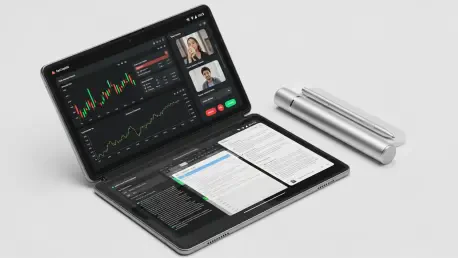
To truly unlock the potential of this eccentric powerhouse, users must move beyond traditional smartphone habits and embrace the unique multitasking framework provided by the expanded display. The most effective tactic for maximizing productivity involves using the split-screen mode to run three apps simultaneously, a layout that feels natural on the 8.1-inch internal canvas. For example, a professional could have a video conference running on one side, a shared document on the other, and a messaging app floating as a freeform window. This level of concurrency is supported by a robust taskbar that allows for quick switching between frequent applications, turning the phone into a genuine workstation. Mastering these gestures is essential for anyone who wants to justify the $1,899 investment and move away from the limitations of a single-app workflow.
The Moto Pen Ultra offers another layer of functionality, though its implementation requires some strategic adjustment. Because the pen is stored in a dedicated, “cigar-sized” external charging case rather than an internal silo, users should treat the case as a permanent fixture in their bag or briefcase rather than an occasional accessory. This case not only protects the pen but also ensures it is always charged via the phone’s reverse wireless charging feature or a standard USB-C cable. For digital artists, the key to success is to avoid applying excessive pressure to the flexible internal display; the system is sensitive enough to register light strokes, and maintaining a gentle touch will preserve the longevity of the screen’s protective layers. Additionally, using the pen for “smart cropping” and AI-assisted handwriting recognition can significantly speed up the process of taking notes during meetings or brainstorming sessions.
Mobile photographers can also utilize the foldable form factor to overcome some of the device’s inherent imaging quirks. One of the most effective strategies is to unfold the device halfway and use the “tent mode” or “stand mode” for long-exposure night shots, eliminating the need for a tripod. Furthermore, by unfolding the phone and using the cover screen as a viewfinder, users can take high-resolution self-portraits with the primary 50MP rear camera instead of relying on the smaller 32MP internal selfie lens. This tactic ensures the best possible image quality for video calls or content creation. As the ecosystem continues to evolve, the most successful users will be those who experiment with these unconventional modes, treating the hardware not just as a phone that opens, but as a modular tool capable of adapting to a thousand different professional scenarios.
The Motorola Razr Fold was a bold experiment that sought to redefine the boundaries of mobile productivity and battery endurance. By introducing silicon-carbon chemistry and an 8.1-inch canvas, the device challenged the industry to reconsider the physical limits of the smartphone. While the camera plateau and AI fragmentation presented initial hurdles, early adopters found that the sheer power and longevity of the hardware outweighed the aesthetic eccentricities. The success of this model pushed competitors to accelerate their own research into high-density power cells and more versatile form factors. Ultimately, the device served as a catalyst for a more competitive and innovative foldable market, proving that there was significant room for a third major player to disrupt the established duopoly. Professionals who integrated the device into their daily routines discovered a new level of freedom, effectively bridging the gap between mobile communication and desktop-class performance. Future iterations will likely refine the design, but the 2026 release remained a landmark moment for Motorola’s engineering department.