


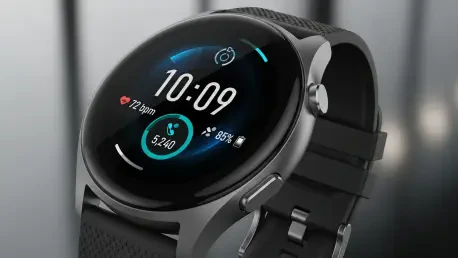

The constant cycle of daily charging remains the single greatest barrier to widespread smartwatch adoption for users who demand more than twenty-four hours of reliability. While high-end Wear OS devices often offer a plethora of features, they frequently stumble when it comes to longevity, forcing owners to plan their lives around available power outlets. The Oppo Watch X3 enters this competitive landscape as a bold contender that prioritizes endurance and physical resilience over mere aesthetic appeal. By positioning itself as a bridge between the high-tech capabilities of Google’s operating system and the rugged reliability of dedicated fitness wearables, this device seeks to eliminate the persistent anxiety associated with a dead battery. It targets a demographic that values hardware quality and functional longevity, offering a premium alternative to the established players in the wearable market without sacrificing the modern conveniences expected in 2026. This focus on reliability ensures that users can focus on their goals rather than their charge levels.
Premium Engineering and Design
Sophisticated Materials: Durability and Industrial Design
The physical architecture of the device is centered around a robust 47mm titanium case that provides a high strength-to-weight ratio, ensuring comfort for long-term wear without compromising on structural integrity. This industrial-grade material is paired with a 1.5-inch LTPO AMOLED display, which is shielded by highly resilient glass specifically engineered to withstand significant impacts and abrasive contact. Such a combination of materials allows the watch to transition seamlessly from professional office environments to demanding outdoor tasks where traditional electronics might suffer catastrophic damage. The display itself remains exceptionally sharp and vivid, offering a level of clarity that is essential for reading dense notifications or navigating maps in direct sunlight. By utilizing these premium components, the design team has created a wearable that feels substantial and reliable, appealing to individuals who prioritize hardware that can endure the rigors of manual labor or extreme sports while maintaining a sophisticated visual profile that complements a variety of personal styles.
Strategic Branding: Synergies and Aesthetic Identity
Looking closely at the external aesthetics, the device incorporates intentional design cues such as faux rivets and a ruggedized crown, signaling a departure from the minimalist trends seen in common consumer smartwatches. This stylistic direction emphasizes a utilitarian purpose, aligning the watch with traditional field chronographs rather than fragile tech gadgets. Interestingly, the internal hardware and overall footprint share significant similarities with the OnePlus Watch 2, reflecting a strategic alignment between the two brands to maximize development resources while catering to different regional market preferences. This branding approach allows for a consistent quality standard, ensuring that the hardware is proven and reliable before reaching the hands of the end-user. The bold contours of the case are not merely for show; they provide tactile feedback and protection for the internal sensors, ensuring that the device remains functional even when subjected to vibration or debris. This design philosophy ensures that the watch serves as a durable companion for those who find standard glass-and-aluminum wearables insufficient for their active lifestyle.
Industry-Leading Power Management
Dual-Processor Architecture: Performance and System Efficiency
At the core of the watch’s technical performance lies a sophisticated dual-processor architecture designed to solve the chronic efficiency problems found in many modern smartwatches. By integrating a high-performance Snapdragon W5 chipset alongside a dedicated low-power co-processor, the system is able to delegate background tasks like heart rate monitoring and notification management to the more efficient chip while reserving the primary processor for demanding applications. This intelligent distribution of resources ensures that the user interface remains responsive and lag-free, even when the watch is handling complex data streams or running multiple apps simultaneously. The large 646mAh battery provides a massive reservoir of energy, significantly outpacing the power capacities found in competing devices within the same size category. This hardware synergy is the primary driver behind the watch’s ability to sustain operations over multiple days, effectively reducing the frequency of charging cycles that often frustrate users of traditional high-end wearables. This engineering choice represents a calculated move to prioritize real-world utility over theoretical peak performance.
Real-World Longevity: Battery Capacity and Usage Modes
In practical, day-to-day scenarios, this specialized hardware configuration translates into a battery life that consistently reaches between three and five days on a single charge, depending on the intensity of use. Even when features like the Always-On Display are enabled, the device manages to clear the common two-day hurdle that typically renders other Wear OS watches unusable. For power users who engage in frequent GPS-tracked workouts or heavy notification interaction, the watch still provides enough overhead to ensure that a nightly charge is never a necessity. Furthermore, the inclusion of a specialized power-saving mode allows the device to function for over two weeks by disabling the most energy-intensive smart features while retaining essential timekeeping and health tracking functions. This versatility ensures that the device can adapt to different situations, whether it is a long weekend hiking trip or a standard work week in the city. Such a level of endurance transforms the wearable from a fragile accessory into a reliable tool that users can trust without the constant need to monitor battery percentages or carry extra charging cables during short travels.
Software Performance and User Interface
Snappy Navigation: RAM and Gemini AI Integration
The software environment is characterized by a smooth and responsive user interface, largely facilitated by the inclusion of 2GB of RAM and the latest iterations of Google’s wearable operating system. Navigating through various menus and launching third-party applications feels instantaneous, with none of the stuttering that can plague lower-spec hardware. A standout feature of this modern software stack is the deep integration of Gemini AI, which provides a voice-activated assistant capable of handling complex queries and task automation directly from the wrist. This assistant proves particularly useful for setting reminders, checking weather patterns, or performing quick calculations without needing to interact with a paired smartphone. When connected to a Wi-Fi network, these AI features maintain their high performance, allowing the watch to function as a truly independent smart device. The synergy between the powerful internal hardware and the refined software ensures that the user can access critical information quickly, making the device an effective productivity tool for busy professionals who need to manage their digital lives on the go with minimal friction or delay.
Interface Challenges: Clutter and Customization Limitations
Despite the technical proficiency of the underlying operating system, the user interface occasionally suffers from a lack of organizational refinement, presenting a cluttered array of app icons that can be difficult to navigate efficiently. Some users may find that certain pre-installed applications feel redundant or occupy valuable space in the app drawer, complicating the process of finding preferred tools. Additionally, the selection of watch faces provided by the manufacturer often lacks the depth of customization found in some competing ecosystems, forcing a choice between overly complex data-heavy designs or simplistic options that lack functional utility. While the inclusion of experimental features, such as a remote scroll function for short-form video applications, demonstrates an attempt at innovation, these tools often feel more like superficial gimmicks than essential additions to the wearable experience. These minor software inconsistencies suggest that while the hardware is exceptionally polished, the digital interface could benefit from a more streamlined approach that prioritizes user-defined personalization and reduces visual noise to improve the overall ease of navigation for the average daily user.
Health Tracking and Global Accessibility
Tracking Precision: Biometric Accuracy and Activity Detection
Health and fitness monitoring capabilities represent a significant portion of the device’s value proposition, yet these features can sometimes show inconsistencies in high-intensity scenarios. While the watch is remarkably proficient at detecting simple physical movements, such as casual walking or light jogging, it may struggle to accurately categorize more strenuous manual labor or specialized gym routines. This discrepancy can lead to occasional gaps in activity data, which may frustrate dedicated athletes who require precise metrics for training optimization. Furthermore, the heart rate sensors and sleep tracking algorithms occasionally report slightly higher metrics when compared to medical-grade equipment or high-end fitness rings, indicating that the device is better suited for observing general wellness trends rather than providing clinical-level accuracy. For the average user looking to maintain a general overview of their physical activity, these variances are often negligible, but they highlight the inherent limitations of wrist-based optical sensors. Despite these minor variations, the watch remains a capable health companion, offering a broad range of data points that encourage a more active and conscious lifestyle.
Technical Glitches: Connectivity and Regional Availability
Beyond the biometric tracking, the overall user experience is occasionally impacted by minor technical glitches, such as intermittent Bluetooth connectivity issues when pairing with older wireless peripherals. Users have also noted infrequent software quirks where the watch face might reset to a default setting or notification modes might activate at inappropriate times without manual input. These issues, while not debilitating, indicate that the firmware could benefit from further optimization to ensure a completely seamless interaction across all connected ecosystems. Perhaps the most significant hurdle for prospective buyers is the limited official retail availability in certain Western markets, which forces many enthusiasts to rely on international importers to acquire the device. This lack of a direct local presence can complicate issues related to warranty support and localized software features, potentially deterring those who prefer the security of a standard retail purchase. However, for those willing to navigate these logistical challenges, the device offers a unique combination of rugged design and exceptional battery performance that is difficult to find elsewhere in the current wearable market.
Future Considerations and Strategic Implementation
As the wearable market continued to evolve throughout the current year, the Oppo Watch X3 established a clear blueprint for how hardware endurance could coexist with modern smart features. The decision to prioritize a titanium build and dual-processor efficiency provided a solution to the long-standing problem of daily charging fatigue that had hindered the industry for years. Moving forward, manufacturers would do well to focus on refining software interfaces and improving the precision of health algorithms to match such impressive physical specifications. For consumers looking to maximize their investment, prioritizing devices with verified battery longevity and durable materials remained the most logical strategy to ensure a long lifecycle for their technology. This approach not only reduced the frequency of device replacement but also enhanced the overall reliability of the digital tools used in everyday life. As software patches were released to address initial glitches, the platform became increasingly stable, proving that a hardware-first design philosophy could successfully challenge the status quo. Future developments will likely build on these foundations to create even more autonomous and resilient personal devices.







