
A new Fitness Index benchmarks strength and flexibility against age-specific data points to give users a clearer picture of their overall physical standing. This innovative metric serves as the cornerstone of the Samsung Galaxy Watch Ultra 2, a device that has been meticulously designed to challenge the established dominance of specialized professional sports wearables. In the current landscape of 2026, the demand for a device that seamlessly transitions from high-intensity mountain expeditions to professional corporate environments has never been higher. Samsung has responded by engineering a smartwatch that prioritizes both extreme durability and sophisticated intelligence, aiming to capture the interest of serious athletes and tech enthusiasts alike. Positioned as the definitive flagship within the Android wearable ecosystem, this timepiece addresses the limitations of its predecessors by refining its physical profile without compromising on the heavy-duty features that define the Ultra brand. For those who have previously felt forced to choose between a feature-rich smartwatch and a rugged sport tracker, this iteration offers a compelling middle ground that justifies its premium price point.
Industrial Design: Resilience and Display Innovations
Titanium Construction: Engineering for Extreme Environments
The physical architecture of the Galaxy Watch Ultra 2 represents a significant leap forward in materials science for consumer electronics. Utilizing a specialized titanium frame, the device is built to satisfy the rigorous MIL-STD-810H certification, ensuring it can withstand the corrosive nature of saltwater, the abrasive impact of desert sand, and the sudden temperature shifts common in high-altitude environments. While the 47mm chassis remains a substantial presence on the wrist, the engineering team has successfully reduced the thickness to 10.7mm, creating a more streamlined silhouette that slides under a jacket sleeve more easily than previous models. This reduction in bulk does not come at the expense of protection, as the sapphire crystal lens is recessed slightly within the titanium housing to prevent direct impact during a fall. The integration of a more flexible, breathable strap system further enhances the wearing experience, allowing the sensors to maintain consistent contact with the skin without causing irritation during sweat-heavy sessions. This focus on structural integrity makes the watch a reliable companion for activities ranging from technical scuba diving to industrial site management.
Visual Fidelity: The Breakthrough of 5,000-Nit Brightness
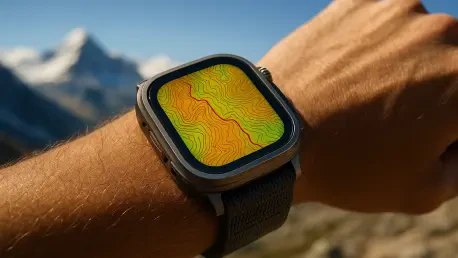
Visibility is often the Achilles’ heel of outdoor smartwatches, but the 1.52-inch Super AMOLED display on this device effectively solves that long-standing frustration. By achieving a peak brightness of 5,000 nits, the screen remains perfectly legible even under the blinding glare of high-noon sun on a snowy peak. This level of luminosity ensures that complex topographic maps and intricate health data points are discernible at a glance, reducing the need for users to break their pace to shade the watch. The software intelligently manages this power-hungry feature, utilizing an ambient light sensor to modulate brightness levels instantly and preserve battery life when the wearer moves indoors. Complementing this brightness is the exceptional color accuracy and deep contrast levels inherent to AMOLED technology, which makes navigating the interface a visually satisfying experience. Even in the dimmest conditions, such as during a pre-dawn run or in a darkened movie theater, the display can drop to a minimal level of light, ensuring it is never intrusive yet remains functional.
Software Ecosystem: Intelligence and User Interaction
Integrated Intelligence: The Evolution of Gemini AI
A standout development in the current software architecture is the deep integration of Gemini AI, which transforms the watch from a passive data collector into an active assistant. The “Raise to Speak” function allows users to interact with the device using natural language processing, making it possible to ask complex questions or dictate messages while maintaining full physical focus on a workout. During a long-distance cycling session, for instance, a rider can request a real-time update on their average pace compared to their previous best without ever taking their hands off the handlebars. This AI-driven approach extends to health insights, where the software analyzes trends across multiple weeks to offer personalized suggestions for recovery and training intensity. Unlike earlier iterations of voice assistants that often struggled with background noise or specific accents, the current system leverages sophisticated noise-canceling microphones to ensure high accuracy even in windy outdoor conditions. This layer of intelligence effectively bridges the gap between raw data and actionable knowledge, providing a more intuitive experience for the modern athlete.
Physical Interface: Customization and Tactical Controls
The user experience is anchored by a three-button layout and a highly responsive touchscreen, designed to provide reliable control in diverse scenarios. The “Action Button” is particularly noteworthy, as it allows for deep customization, enabling users to map specific functions such as starting a triathlon workout, activating the emergency siren, or turning on the high-intensity flashlight. While some purists might miss the physical rotating bezel found on other Samsung models, the digital bezel and haptic feedback provide a precise alternative that works well even with light gloves. The software interface has been optimized to prioritize speed and clarity, with larger icons and a simplified menu structure that reduces the cognitive load during strenuous activity. Gesture controls have also been refined, allowing users to answer incoming calls or dismiss alerts with a simple double-pinch movement of the hand wearing the watch. This tactical approach to design ensures that the device remains functional when fingers are wet or when the user is in a fast-paced environment where precise touchscreen navigation might be difficult.
Physiological Metrics: Advanced Health Monitoring
The BioActive Core: Comprehensive Wellness Analysis
At the heart of the health-tracking suite is the BioActive Sensor, a sophisticated array that monitors everything from heart rate variability to body composition. In 2026, the focus has shifted toward proactive wellness, and the new “Energy Score” provides a daily snapshot of the user’s physiological readiness by synthesizing sleep data, activity history, and resting heart rate. This allows for a more nuanced understanding of how external stressors and physical exertion impact the body over time. The device also includes advanced specialized features such as sleep apnea detection and continuous blood oxygen monitoring, which are essential for those training at high altitudes or managing chronic health conditions. By providing a holistic view of recovery, the watch helps prevent overtraining and encourages a more sustainable approach to fitness. The integration with the broader health ecosystem ensures that all data is securely stored and can be shared with medical professionals if necessary, making the watch a powerful tool for both preventative health and peak performance optimization.
Performance Tracking: Specialized Training and Accuracy
Athletic performance tracking has been expanded to include over 100 different sports modes, each tailored with specific data fields and tracking logic. For those engaging in technical activities like scuba diving, the watch provides real-time depth monitoring and water temperature data, while trail runners benefit from the enhanced dual-frequency GPS which offers pinpoint accuracy even in dense forests or urban canyons. The Daily Cardio Load feature is particularly beneficial for managing long-term training cycles, as it categorizes activity levels into a color-coded scale that indicates whether a user is maintaining, improving, or risking injury to their cardiovascular system. While the internal sensors are highly capable, the device also supports connection to external heart rate straps and cycling power meters for those who require professional-grade precision. This versatility makes it suitable for everyone from weekend warriors to elite competitors who need a reliable way to quantify their progress. The software also provides post-workout analysis that breaks down pace, elevation gain, and recovery time, offering a complete picture of every session.
Operational Sustainability: Battery Life and Strategy
Energy Management: Defining the Multi-Day Standard
The battery life of the Galaxy Watch Ultra 2 marks a significant engineering milestone, effectively addressing one of the most common complaints regarding high-end smartwatches. Under standard usage conditions with the “Always On” display enabled and periodic GPS tracking, the device consistently delivered up to 60 hours of operation on a single charge. This three-day window is a substantial improvement that allows users to track their sleep patterns for multiple nights without worrying about the device dying mid-cycle. The power management system has been refined to prioritize essential sensors during low-battery states, ensuring that basic tracking and notification features remain active even when the capacity drops below ten percent. Charging speeds have also been optimized, with the magnetic induction puck providing a significant top-off in just thirty minutes, which is often enough to last through an entire day of moderate use. This balance of high-performance hardware and sustainable power consumption reflects a mature approach to wearable design, where the technology serves the user’s lifestyle rather than dictating it through frequent charging requirements.
Strategic Verdict: Future-Proofing the Fitness Journey
The Galaxy Watch Ultra 2 established itself as a formidable contender in the premium wearable market through its combination of industrial-grade durability and sophisticated health analytics. It successfully moved beyond the role of a simple smartphone companion to become a dedicated tool for physiological optimization and athletic development. Users who transitioned to this device benefited from a seamless integration with the Android ecosystem, finding that the initial setup process was a worthwhile investment for the depth of data provided. The titanium construction and the 5,000-nit display proved to be essential features for those who spent significant time outdoors, while the AI-driven insights offered a level of personalization that was previously unavailable in standard consumer models. Moving forward, owners of this device should focus on regular calibration of the BioActive sensors and consistent use of the Energy Score to maximize the benefits of the long-term data trends. This timepiece not only met the high expectations of the 2026 market but also provided a clear path for the future of proactive health management and rugged personal technology.