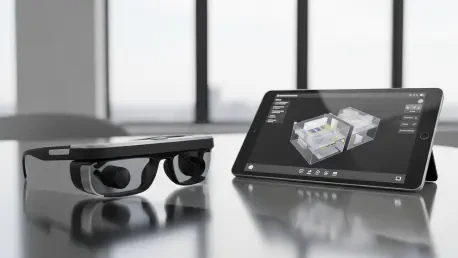

The arrival of fully autonomous augmented reality hardware marks a definitive departure from the era of tethered accessories and smartphone-dependent wearable displays. As consumers grow increasingly accustomed to simple camera-enabled frames, the introduction of a sophisticated spatial computing platform suggests a much deeper, more immersive integration of digital information into physical environments. This transition is not merely about adding a lens or a sensor; it represents a fundamental shift in how human-computer interaction is structured in the current technological landscape. By housing all processing and power requirements within a recognizable pair of glasses, the latest Spectacles aim to prove that high-end immersion does not require a bulky headset or a wired connection to a secondary device. While the broader market remains focused on iterative updates to audio-only devices, this bold leap into standalone optics challenges the industry to reconsider the boundaries between virtual and actual realities. The stakes remain high for a company moving beyond social media to become a hardware powerhouse.
Strategic Market Evolution and Pricing
Targeting the Specialized Developer Segment
The pricing strategy for these advanced Spectacles clearly indicates that the device is intended for a specialized professional audience rather than the general public. At a cost of $2,195, the hardware is positioned as a high-end tool for developers and early adopters who are invested in the future of spatial computing. This premium price tag places the device in a category similar to professional cinematography equipment or enterprise-level drones, emphasizing its role as a development platform rather than a toy. By targeting this niche group, the manufacturer avoids the immediate pressure of mass-market sales while fostering a community capable of creating the complex software needed for augmented reality to thrive. This approach allows for a controlled rollout where technical feedback can be prioritized over retail volume. Consequently, the high entry barrier serves to curate an ecosystem of innovators who are willing to overlook early aesthetic or battery limitations in favor of exploring a new frontier of interactive technology.
Cultivating a Proprietary Spatial Ecosystem
Rather than relying on existing operating systems, the device utilizes a custom-built architecture designed specifically to handle the unique demands of three-dimensional rendering. This decision to build a proprietary software stack ensures that every aspect of the hardware is optimized for low-power consumption and high-performance visual output. Developers are encouraged to utilize familiar tools like Lens Studio to build experiences that feel native to the spectacles, creating a seamless bridge between digital creation and physical viewing. The focus on a standalone experience means that the software must be more robust and efficient than previous iterations that offloaded processing to a smartphone. By establishing this foundation now, the company is securing its place in a world where the operating system of the face becomes as critical as the mobile platforms of the past decade. This strategic foresight involves more than just hardware; it is a calculated attempt to define the very language of spatial interaction for the next wave of wearable computing.
Breakthrough Hardware and Optical Engineering
Advanced Visual Optics and Standalone Design
Engineering a device that weighs only 134 grams while containing the processing power of a modern computer required significant breakthroughs in miniaturization and material science. The visual core of the device relies on advanced waveguide technology, which uses billions of microscopic nanostructures to project digital images directly into the wearer’s field of vision. This allows for a multi-colored and vivid display that covers a wide field of view, comparable to observing a massive desktop monitor from a standard sitting distance. Unlike previous versions, these frames do not require any external batteries or wires, making the experience significantly more natural and less restrictive for the user. The inclusion of specialized optical engines ensures that digital objects appear grounded in the real world, maintaining their position and clarity regardless of how quickly the person moves. This level of technical sophistication underscores the commitment to creating a truly portable spatial computer that can be worn without causing physical fatigue.
Operational Sustainability and Ethical Design
The successful introduction of these Spectacles established a new precedent for privacy and international expansion within the wearable technology sector. Designers implemented highly visible LED indicators that served to alert the public whenever the cameras were active, fostering a culture of transparency and mutual respect in shared spaces. As the device reached international markets like the United Kingdom and France, it offered a glimpse into how global audiences navigated the social implications of advanced head-worn computing. Strategic considerations focused on empowering users to maintain strict control over their personal data, which helped mitigate many of the common concerns associated with ubiquitous cameras. Moving forward, developers and users alike looked toward refining these social norms and technical standards to ensure that spatial computing remained a beneficial addition to daily life. The lessons learned from this rollout provided a roadmap for future iterations, emphasizing that technical excellence must be matched by a robust commitment to user privacy and community safety.