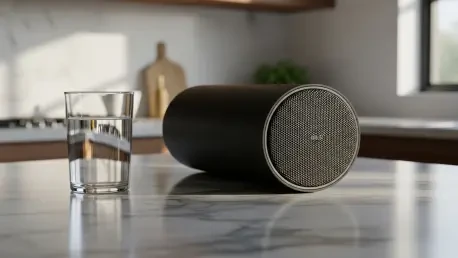

The modern home is increasingly filled with listening devices, yet a growing segment of the population is actively seeking high-performance audio that respects the sanctity of a private conversation. The Sonos Era 100 SL emerges as a direct response to this paradox, offering a sophisticated piece of hardware that intentionally lacks the one feature most manufacturers have spent years forcing onto consumers: an integrated microphone array. By stripping away the voice-activation components, this device positions itself as a “speechless” alternative that focuses purely on the delivery of high-fidelity sound. This strategic exclusion serves a dual purpose, appealing simultaneously to the privacy-conscious individual and the budget-minded audiophile who views integrated assistants as a redundant and unnecessary expense.
This hardware iteration represents a significant milestone in the trajectory of modular home audio, effectively replacing the aging Sonos One SL while bridging the gap between legacy systems and the modern Era architecture. It is not merely a stripped-down version of its sibling, the standard Era 100, but rather a specialized tool designed for specific deployment scenarios where voice interaction is either impossible or undesirable. As the smart home market matures, the demand for such “passive” high-end devices has surged, reflecting a shift in consumer sentiment away from total automation and toward intentional, high-quality experiences. The Era 100 SL stands at the center of this movement, promising to deliver the same expansive soundstage and technical precision as the flagship models without the lingering concern of an “always-listening” sensor.
The current landscape of wireless audio is increasingly defined by the ability to scale, and the Era 100 SL provides the most accessible entry point for those looking to build or expand a high-performance ecosystem. Its emergence clarifies the brand’s commitment to high-end audio as the primary driver of value, rather than relying on the novelty of software-based smart features. For users who have already invested in a centralized voice assistant or those who prefer to manage their environment through a physical interface, the SL model eliminates the technical clutter and focuses the investment where it matters most: the internal acoustic drivers and the wireless stability required for high-resolution streaming.
Evolution of the Speechless Speaker: Understanding the Era 100 SL
The “speechless” core principle behind the SL designation marks a definitive departure from the industry’s obsession with the “all-in-one” hub model that dominated the previous decade. By removing the integrated microphone arrays, Sonos has not only addressed the growing anxieties surrounding digital privacy but has also streamlined the internal processing power to focus entirely on signal reproduction. This technical choice is a recognition that many environments, such as bathrooms, bedrooms, or dedicated home theaters, do not require individual voice triggers. Instead, these spaces benefit from a dedicated playback device that integrates seamlessly into a broader network controlled by a single, centralized interface.
In the context of its predecessor, the Sonos One SL, the Era 100 SL represents a massive leap forward in both physical architecture and processing capabilities. While the One SL was a beloved workhorse, its acoustic limits were defined by a mono-directional driver set that often struggled to fill larger rooms with nuanced detail. The Era 100 SL solves this by adopting the wider, more elliptical footprint of the standard Era 100, allowing for a more complex arrangement of internal components. This evolution ensures that the “value” model of the lineup is no longer treated as a secondary acoustic citizen but rather as a specialized performance tool that maintains the brand’s signature sound profile.
The relevance of this model in the current market cannot be overstated, particularly as consumers become more discerning about where their money is being allocated. In a landscape where high-resolution audio streaming has become the standard, the ability to purchase a speaker that prioritizes the internal DAC and driver quality over a licensed voice assistant is a major selling point. The cost-efficiency gained by removing the microphones allows for a more competitive price point without sacrificing the premium build quality or the sophisticated software ecosystem that defines the modern listening experience. This makes the SL model the logical choice for those who are skeptical of the “smart” trend but still desire the convenience of a wireless, multi-room system.
Core Technical Architecture and Sound Performance
Acoustic Engineering and Driver Configuration
The internal hardware of the Era 100 SL is a masterclass in compact acoustic engineering, featuring a single, enlarged mid-woofer and two angled tweeters that work in concert to create a surprisingly broad soundstage. This configuration is a significant upgrade from the single-tweeter design found in previous entry-level models, as the dual angled tweeters facilitate a much better sense of stereo separation within a single enclosure. By directing high-frequency waves outward at precise angles, the speaker creates a sense of depth and spatial positioning that was previously impossible for a device of this size. This is supported by three Class-D digital amplifiers, each fine-tuned to the specific electrical characteristics of the drivers they power, ensuring that the system operates with maximum efficiency and minimal distortion even at higher volumes.
In terms of actual performance, the frequency response is characterized by a refined balance that avoids the common pitfall of over-emphasizing the low end at the expense of clarity. The mid-woofer handles the transition from lower-mid frequencies to bass with impressive agility, providing a solid foundation for textured vocals and instrumental layers. When testing complex tracks, such as orchestral arrangements or dense electronic compositions, the SL demonstrates an ability to keep individual elements distinct. This midrange clarity is particularly evident in vocal-heavy genres, where the “airiness” of the presentation allows the nuances of a singer’s performance to remain front and center, rather than being swallowed by the percussion.
Refined bass management is perhaps the most notable improvement in this generation of hardware. Unlike the sometimes undisciplined and “boomy” low end found in earlier small-format speakers, the Era 100 SL utilizes sophisticated digital signal processing to ensure that the bass remains tight and rhythmic. While the physical limitations of a compact enclosure prevent the reproduction of the deepest sub-bass frequencies, the “punch” of the mid-bass is exceptionally well-defined. This results in a listening experience that feels authoritative and full-bodied, making the speaker suitable for a wide variety of musical styles without the need for an external subwoofer in smaller listening environments.
Connectivity and Ecosystem Integration
The wireless capabilities of the Era 100 SL reflect the latest standards in data transmission, incorporating Wi-Fi 6 and Bluetooth 5.3 to ensure a stable, high-bandwidth connection. The inclusion of Wi-Fi 6 is particularly critical for multi-room audio, as it allows for lower latency and better management of network traffic, which is essential when streaming high-resolution audio across multiple devices simultaneously. Furthermore, the integration of Apple AirPlay 2 provides a seamless “one-tap” experience for iOS users, allowing them to bypass the dedicated app for quick playback while still benefiting from the speaker’s superior hardware. These wireless standards are not just about convenience; they are the backbone of a system designed to last through the next several years of network evolution.
The technical interface provided by the Sonos app remains one of the most robust in the industry, offering deep integration with high-resolution streaming services like Tidal and Amazon Music. This software-hardware synergy allows the Era 100 SL to pull 24-bit audio directly from the cloud, bypassing the compression often found in traditional Bluetooth connections. The app also serves as the control hub for the system’s sophisticated EQ settings and room-calibration tools, providing users with the ability to tailor the sound to their specific environment. This level of granular control ensures that the speaker can compensate for acoustic challenges, such as being placed in a corner or on a highly reflective surface like a kitchen countertop.
Physical connectivity on the device is handled through a single, versatile USB-C port located on the rear of the chassis. However, the functionality of this port relies heavily on proprietary adapters for those who wish to use a 3.5mm analog line-in or a hardwired Ethernet connection. While this “adapter-based” approach reduces the clutter on the back of the speaker and maintains its sleek aesthetic, it does introduce a level of friction for users who have legacy equipment like turntables or CD players. Despite this reliance on dongles, the inclusion of an analog-to-digital pathway through the USB-C port is a significant upgrade over the purely wireless models of the past, offering a bridge between the physical and digital audio worlds.
Current Trends in Wireless Audio and Software Optimization
A major industry shift is currently taking place, moving away from the “party sound” of the early wireless era and toward more balanced, “disciplined” sound signatures. In the past, small speakers were often engineered to produce as much bass as possible to compensate for their size, frequently resulting in a muddy and tiring audio profile. The Era 100 SL represents the modern “disciplined” approach, where the focus is on accuracy and the preservation of the original recording’s dynamics. This trend toward high-fidelity reproduction in a compact form factor reflects a more mature consumer base that values the integrity of the music over raw, distorted volume.
Another significant trend is the rise of hardware-level privacy as a premium feature. For years, the integration of microphones was marketed as a high-tech necessity, but the market has reached a saturation point where many consumers now view “speechless” devices as more desirable. This shift has allowed manufacturers to market the removal of microphones not as a limitation, but as a deliberate design choice that enhances the user’s control over their environment. This move toward “dumb” but high-performing hardware allows for a more modular home setup, where voice control is restricted to a few key areas while the rest of the home remains a private sanctuary for listening.
There is also a growing disparity in the software-based optimization experience between iOS and Android users, which has become a focal point of discussion within the audio community. Room calibration, which uses the microphone of a mobile device to analyze how sound bounces off walls and furniture, is a cornerstone of the modern premium audio experience. However, the technical difficulty of account for the thousands of different microphone configurations across the Android ecosystem has led to a tiered experience where Apple users have access to more advanced tuning tools. This trend highlights a broader challenge for the industry: how to provide a truly universal “plug-and-play” acoustic optimization that does not rely on the specific hardware in the user’s pocket.
Practical Applications and Placement Scenarios
The Era 100 SL is exceptionally well-suited for standalone deployment in small-to-medium rooms, where its wide soundstage can truly shine. Because of its humidity-resistant construction, it has become a favorite for “utility” areas of the home that were previously neglected by high-end audio, such as kitchens and bathrooms. In these environments, the lack of a microphone is often seen as a benefit, as the high ambient noise of a running shower or a boiling pot often renders voice assistants unreliable anyway. The physical touch controls on the top of the unit provide a reliable way to manage playback when the user is within reach, making it a practical choice for high-traffic zones where a phone might not always be at hand.
In more dedicated listening spaces, the implementation of stereo pairing transforms two SL units into a powerful, immersive audio system. When two speakers are linked within the app, they stop acting as individual mono sources and instead divide the audio signal into distinct left and right channels. This significantly expands the soundstage and provides a level of imaging that a single speaker simply cannot replicate. Because the SL model is more affordable than the standard Era 100, building a stereo pair becomes a much more attractive proposition for those who want a “proper” hi-fi setup in a bedroom or home office without breaking the bank.
Beyond standalone or stereo use, the SL model plays a vital role in larger home theater configurations as rear surround speakers. When paired with a Sonos soundbar and a subwoofer, two Era 100 SL units provide the necessary spatial cues to create a 5.1 or 7.1 surround sound environment. In this scenario, having microphones on the rear speakers would be entirely redundant, as the soundbar typically handles all voice commands for the room. By using the SL versions for the rear channels, homeowners can save a significant amount of money while still enjoying the full technological benefits of the Era platform’s upgraded drivers and improved wireless connectivity.
Technical Hurdles and Market Obstacles
One of the most persistent hurdles for the Era 100 SL is the “Android Gap,” specifically regarding the lack of “Quick Tuning” Trueplay calibration for users without Apple devices. Trueplay is a transformative technology that adjusts the speaker’s output to match the room’s unique acoustics, but the “Advanced” version requires the precisely calibrated microphones found in iPhones. While the standard Era 100 uses its own internal microphones to perform a “Quick Tuning” for Android users, the SL model’s lack of microphones means this feature is completely unavailable to half the smartphone market. This creates a situation where Android users may not be able to get the absolute best performance out of the speaker unless they can borrow an iOS device for the initial setup.
The challenge of limited physical connectivity remains a point of friction for many consumers, particularly given the reliance on separate, proprietary adapters. In a world where universal USB-C connectivity is becoming the standard, the fact that a basic 3.5mm input requires a specialized dongle can feel like a step backward. This design choice forces users to weigh the cost and clutter of additional accessories against the sleekness of the speaker’s minimalist design. For those who still value physical media or want to connect the speaker to a computer without relying on Bluetooth latency, this “adapter tax” can be a significant deterrent compared to competitors who offer built-in analog ports.
Finally, there are the unavoidable physical limitations of a compact enclosure when attempting to reproduce deep sub-bass frequencies. No matter how much digital signal processing is applied, a speaker of this size simply cannot move enough air to satisfy fans of heavy dub, pipe organ music, or cinematic explosions. While the bass is “tight” and “punchy” for most genres, those looking for a truly visceral, floor-shaking experience will inevitably need to add a dedicated subwoofer to the system. This creates a market obstacle where the “entry-level” price of the speaker may be deceptive for users who find themselves needing to spend hundreds more to achieve a truly full-range sound.
The Future of High-Fidelity Wireless Systems
Looking forward, the success of the SL line will likely influence future hardware cycles, encouraging manufacturers to move toward more modular and specialized audio components. The idea of a “smart” speaker being a single, self-contained unit is being replaced by the concept of a “smart ecosystem,” where the intelligence resides in the network rather than the individual driver. This could lead to a future where high-end speakers are completely divorced from the rapidly aging world of voice-assistant hardware, allowing them to remain relevant for decades as purely acoustic devices. The Era 100 SL serves as a successful proof-of-concept for this modular approach, proving that consumers are willing to trade “all-in-one” convenience for better sound and enhanced privacy.
Potential breakthroughs in universal room correction could eventually bypass the current hardware limitations that plague the “Android Gap.” Future software updates might allow the speaker to use ultrasonic pulses or AI-driven acoustic modeling to map a room without the need for an external microphone at all. If such a technology were to be deployed, the Era 100 SL would instantly become a much more viable option for the entire global market, regardless of which phone they use. This shift toward “hardware-independent” calibration would represent a major win for the industry, ensuring that the best sound quality is accessible to everyone, not just those within a specific mobile ecosystem.
The long-term impact of this value-driven premium model on the competitive landscape is likely to be significant, forcing other manufacturers to reconsider their pricing and feature sets. As the SL model proves that there is a massive market for high-quality “passive” wireless speakers, we can expect to see more “speechless” versions of flagship products from other major players. This competition will likely drive down prices and increase the variety of options for consumers who want to build a professional-grade home audio system without the unnecessary overhead of voice-controlled chips. The Era 100 SL has effectively redefined what “entry-level” means for a premium brand, setting a high bar for audio performance that rivals will struggle to meet at this price point.
Final Assessment: A Value-Driven High-End Experience
The evaluation of the Sonos Era 100 SL revealed a device that successfully navigated the delicate balance between technical regression and strategic refinement. While the removal of the microphone array initially seemed like a simple cost-cutting measure, the testing process demonstrated that this omission actually improved the value proposition for a specific, yet large, demographic. The acoustic performance exceeded the standards set by previous compact models, offering a level of clarity and soundstage width that transformed the listening experience in small-to-medium rooms. The internal amplifiers and angled tweeters proved to be the true stars of the hardware, delivering a sophisticated sound signature that was both accurate and engaging across a wide variety of musical genres.
The findings highlighted that the “speechless” nature of the device was its greatest strength in terms of market positioning, providing a much-needed option for privacy-conscious users and those building multi-room systems. However, the review also identified that the “Android Gap” remained a significant drawback, as the lack of internal microphones prevented non-iOS users from accessing the vital Trueplay room-calibration features. This limitation meant that for a large portion of the potential user base, the speaker’s performance was somewhat dependent on the acoustic properties of the room without any easy software-based remedy. Despite this, the stability of the Wi-Fi 6 connection and the seamless integration with high-resolution streaming services ensured that the device remained a leader in its class.
The final verdict on the Era 100 SL established it as the primary entry point for anyone serious about entering the Sonos ecosystem or expanding their existing setup. It successfully replaced the legacy One SL by offering better technology and superior sound for a similar price, effectively dominating the sub-$200 premium audio market. For those who did not require integrated voice control, the SL model represented the most logical and efficient use of their audio budget. In the years following its release, this model served as a benchmark for how “passive” wireless speakers should be designed, focusing on modularity, privacy, and acoustic purity above all else. Future developments in room correction and modularity will likely build upon the foundation laid by this device, ensuring its place as a classic in the world of high-fidelity home audio.