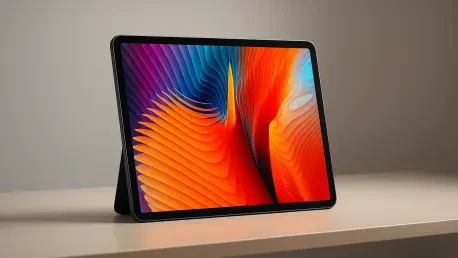

The trend of surface-level specifications meeting premium standards allows budget tablets to offer significant storage capacities for under 200 dollars. This development marks a major shift in the global tablet market, where the longstanding dominance of established giants is being tested by aggressive pricing strategies from emerging manufacturers. For many years, consumers felt compelled to choose between high-cost premium devices from brands like Apple or Samsung and low-quality generic alternatives that often failed within months of purchase. However, the current landscape in 2026 demonstrates that the middle ground has matured significantly, providing hardware that looks and feels remarkably similar to its expensive counterparts. The Teclast T65 serves as a prime example of this phenomenon, challenging the Samsung Galaxy Tab A11 by offering a massive 13.4-inch display for roughly 190 dollars. This represents nearly half the price of the Samsung equivalent, forcing a reevaluation of what truly constitutes value in portable computing today.
Dissecting the Balance: Price and Performance
Performance Bottlenecks: Raw Power vs. Visual Fluidity
While the raw specifications of a device like the Teclast T65 might appear superior on a comparison chart, the real-world application often reveals a different story regarding internal optimization. The inclusion of a 120Hz refresh rate is a notable selling point, as it promises the kind of fluid scrolling and responsive navigation typically reserved for flagship models costing three times as much. However, the integration of these high-end display features frequently outpaces the capabilities of the budget-oriented octa-core processors found within these frames. During intensive multitasking or when shifting between high-resolution streaming and heavy web browsing, the underlying architecture can struggle to maintain the frame rates necessary to justify the high-refresh screen. This creates a technical bottleneck where the visual hardware is ready for smooth performance, but the central processing unit and system-on-a-chip lack the necessary instructions and raw speed to deliver a cohesive experience.
Hardware Compromises: Energy Management and Build Quality
To achieve such competitive pricing, manufacturers must inevitably make strategic concessions in areas that are not immediately visible on a promotional spec sheet. One of the most prominent trade-offs in large-format budget tablets is the balance between screen size and energy management. The expansive 13.4-inch display of the Teclast T65 is undeniably impressive for cinematic viewing, yet it acts as a massive drain on the internal power cells. To keep costs low, these devices often utilize standard battery technologies rather than high-density alternatives, and they frequently omit the expensive power delivery components required for rapid charging. This results in a scenario where a tablet can provide a full day of casual use but takes an exceptionally long time to recover its charge compared to high-end rivals. For users who are accustomed to modern fast-charging standards found in contemporary smartphones, the transition to a budget tablet can be jarring when it requires several hours to move from low to full.
Navigating the Competition: The Budget Landscape
Market Alternatives: Specialization From TCL and Amazon
The competitive landscape of affordable tablets is far from a one-brand race, as other players like TCL have carved out significant niches by focusing on utility rather than oversized screens. The TCL Tab 10 Gen 4, for instance, targets the ultra-budget segment with a price point hovering around 150 dollars, prioritizing long-term durability and consistent performance for light tasks. This device does not attempt to mimic the high-refresh rates of the Teclast but instead offers a stable 10.1-inch platform that excels in educational settings or for basic administrative work. Its primary strength lies in its predictable battery life and reliable Wi-Fi connectivity, making it an excellent choice for students or professionals who need a secondary screen for document editing and communication. However, it noticeably lacks the graphical muscle required for the sophisticated mobile gaming titles that have become popular in 2026, reinforcing the idea that these devices are specialized tools.
Value Evaluation: Matching Hardware to User Requirements
The final assessment of these tablets revealed that consumers who successfully integrated budget hardware into their lives were those who matched the device’s specific strengths to their personal routines. To maximize the value of such an investment, buyers should have prioritized their primary use cases, such as media consumption or basic browsing, rather than expecting a budget device to handle high-end productivity tasks. Looking forward, the next logical step for the industry involves improving the efficiency of the chipsets used in these affordable frames to better support the high-refresh displays that have now become standard. Prospective owners would have been wise to invest in high-quality external peripherals, such as Bluetooth speakers or fast-charging adapters, to mitigate some of the inherent hardware compromises. By moving away from a brand-first mentality and focusing on functional requirements, users established a more sustainable approach to technology acquisition that favored practical utility over logos.