
While the initial fascination with wearable gadgets centered on the futuristic novelty of wrist-based computing, the enduring presence of these devices in daily life suggests a deeper psychological and functional reliance that transcends mere technical curiosity. This persistence is particularly noteworthy given that the fundamental operations of a smartwatch—notifying the user of messages, tracking steps, and telling the time—have remained remarkably consistent over the last ten years. As the digital landscape becomes increasingly cluttered, the wrist remains the most valuable real estate for glanceable information, serving as a secondary interface that filters the overwhelming noise of a primary smartphone.
The survival of the smartwatch category rests on its ability to transition from a disruptive novelty into a silent utility. Users continue to strap high-tech sensors to their wrists not because the technology offers a revolutionary new function every year, but because the refinement of these sensors has made health and time management more friction-less. The value proposition has shifted from “what can this device do” to “how effortlessly can it do it.” This evolution signifies a maturation of the market where the focus is no longer on adding complex features that drain battery, but on perfecting the core pillars of the user experience to ensure the device remains a permanent fixture of the daily wardrobe.
Why Do We Still Strap High-Tech Sensors to Our Wrists When Their Core Functions Haven’t Fundamentally Changed in a Decade?
The answer to why smartwatches persist lies in the subtle psychological shift toward passive data collection and the desire for “digital minimalism.” Although the hardware has become faster and the screens more vibrant, the primary use cases—checking the time, managing notifications, and monitoring heart rate—have been stable since the mid-2010s. This stability indicates that the smartwatch has found its optimal form factor for a specific set of tasks that a handheld phone handles poorly. The wrist provides an immediate, tactile connection to the body that a pocketed device cannot replicate, making it the ideal location for sensors that require constant contact.
Moreover, the smartwatch acts as a cognitive filter in an era of notification fatigue. By allowing users to triage incoming information with a half-second glance, these devices reduce the frequency with which an individual must engage with the more distracting environment of a smartphone screen. This efficiency creates a paradoxical benefit where more technology on the body actually leads to less time spent “connected” to the broader internet. The core functions remain unchanged because they effectively solved a specific human problem: the need for essential information without the baggage of total digital immersion.
From Fitness Trackers to Luxury Titanium: Understanding the Wearable Shift Since 2016
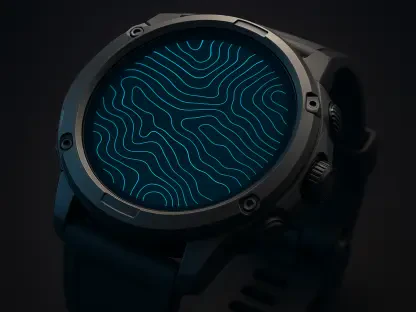
The trajectory of wearable technology over the past decade reflects a transition from utilitarian plastic peripherals to high-end horological statements. In 2016, the market was dominated by fitness bands that prioritized step counting and sleep tracking within lightweight, often unattractive, rubberized enclosures. These early devices were viewed primarily as tools for the gym or the trail, lacking the aesthetic versatility required for professional or formal environments. As the technology matured, manufacturers realized that for a device to be worn twenty-four hours a day, it had to compete with the visual appeal and prestige of traditional mechanical watches.
This realization sparked a material arms race, moving the industry toward aerospace-grade titanium, sapphire crystal, and even ceramic or zirconium alloys. This shift was not merely about durability; it was about integration. By adopting the design language of traditional watchmaking, smartwatch companies bridged the gap between a “gadget” and “jewelry.” This evolution allowed the devices to permeate every aspect of life, from the boardroom to the bedroom, ensuring that the biometric sensors remained active across all social contexts. The transition from 2016 to the present day highlights a market that finally understood that a wearable is, first and foremost, an item of clothing.
The Three Pillars of Sustained Smartwatch Utility
The long-term success of any modern wearable depends heavily on the ergonomics of “invisible” design. While technical specifications such as processor speed or RAM are often highlighted in marketing materials, physical comfort is the primary factor that determines whether a device remains on the wrist or ends up in a desk drawer. A smartwatch must account for the complex anatomy of the human wrist, utilizing curved chassis designs and lightweight materials to minimize skin irritation and physical fatigue. When a device achieves a weight-to-distribution ratio that allows the user to forget its presence, it transcends its status as an accessory and becomes a true extension of the biological self.
In addition to physical comfort, the requirement for an Always-On Display (AOD) has shifted from a luxury feature to a fundamental necessity. In the early stages of smartwatch development, the “lift-to-wake” gesture was a necessary compromise to preserve meager battery lives. However, this mechanic often failed in real-world scenarios, such as during a subtle glance in a social setting or while holding an object. A timepiece that requires a deliberate physical motion to display the time is fundamentally flawed. Modern standards now dictate that a display must remain visible at all times, ensuring the device fulfills its most basic promise as a watch without requiring the user to perform for the hardware.
Finally, the battery life paradox continues to define the relationship between functionality and user routine. There is a common stigma surrounding the “daily charge,” yet for many, this is a non-issue compared to the loss of functionality. The decision to prioritize daytime utility over sleep tracking allows for thinner, more powerful devices that can be charged alongside a smartphone at night. However, for users who view sleep metrics as vital, the demand for multi-day endurance becomes the primary technical hurdle. Balancing these conflicting needs requires a clear understanding of the user’s personal “off-hours” and whether they value a device that lives through the night or one that performs with maximum intensity throughout the day.
Material Prestige Versus Functional Parity: Decoding the Price-to-Performance Gap
The contemporary smartwatch market operates on a vast financial spectrum, ranging from $49 budget trackers to $899 ultra-premium models. Surprisingly, the functional gap between these extremes is narrower than many consumers realize. A budget fitness band often utilizes the same fundamental accelerometer and heart rate sensor technology found in its more expensive counterparts, achieving roughly 90% of the core health-tracking utility. For many users, the data gathered by a sub-$100 device is statistically comparable to that of a luxury model, raising questions about the true value of the premium price tag.
The escalation in cost is primarily an investment in material prestige and independent hardware capabilities rather than fundamental sensor accuracy. High-end models differentiate themselves through the inclusion of standalone GPS, NFC for mobile payments, and cellular connectivity, allowing the watch to function independently of a smartphone. Furthermore, the use of luxury materials like titanium and sapphire glass offers a level of scratch resistance and aesthetic longevity that plastic alternatives cannot match. In this context, the price-to-performance gap is less about “data” and more about “durability and independence.” Aesthetics act as a vital metric here; the emotional connection to a beautiful object often ensures more consistent usage than a utilitarian but unattractive tool.
A Strategic Framework for Selecting Your Next Smartwatch
Selecting a modern smartwatch requires a systematic evaluation that begins with the sixteen-hour comfort test. Potential users should prioritize the chassis weight and the curvature of the back plate, as even the most advanced sensor suite is useless if the device causes discomfort after a full day of wear. The goal is to identify a device that conforms to the wrist’s unique shape, ensuring that the optical sensors maintain consistent contact without requiring an uncomfortably tight strap. This physical synergy is the foundation of long-term retention and reliable data collection.
Prospective buyers must also determine whether their lifestyle necessitates a glance-based interface or a gesture-reliant screen. For those in high-stakes professional environments or active outdoor settings, an Always-On Display is non-negotiable for maintaining situational awareness. Simultaneously, the user must align the device’s battery capacity with their specific nighttime routines. If the intention is to monitor sleep cycles and recovery, selecting a device with a multi-day capacity is essential. Conversely, if the watch is viewed as a daytime-only tool, one can prioritize a more vibrant, power-hungry display that recharges overnight.
Ultimately, the choice should involve an honest assessment of materials over marketing hype. Investing in premium metals and high-end glass should be viewed through the lens of personal style and long-term durability rather than immediate technical gain. A smartwatch is one of the few pieces of technology that is visible to others at all times, making its role as jewelry just as significant as its role as a computer. By choosing a device that resonates aesthetically, the user ensures that the “joy of wear” persists long after the initial novelty of the internal features has faded.
The maturation of wearable technology was characterized by a shift from chasing raw power toward perfecting the human-device interface. Manufacturers eventually realized that success depended less on revolutionary sensors and more on how a device complemented the wearer’s physical and social existence. The most successful designs prioritized the subtlety of the Always-On Display and the necessity of ergonomic comfort, allowing the hardware to disappear into the background of daily life. By evaluating devices based on material longevity and the practical realities of charging cycles, users identified the models that truly served their needs. This period of refinement proved that the most valuable tech was the kind that required the least amount of attention while providing the most consistent utility.