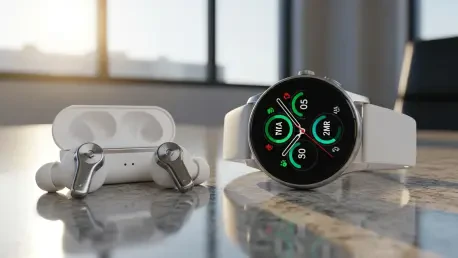

The intersection of high-fidelity audio and wearable intelligence has reached a critical inflection point where hardware specifications alone no longer define the premium user experience for modern mobile consumers. Realme has officially positioned itself at the forefront of this smart ecosystem market with the announcement of the Buds Air8 Pro and the Watch S5, scheduled for release on May 22. These devices represent a significant leap in integrated technology, moving beyond simple connectivity to offer a cohesive AI-driven environment. The Buds Air8 Pro earphones serve as a cornerstone of this strategy, featuring a sophisticated dual-driver arrangement consisting of 11mm and 6mm units. By incorporating dual DACs and supporting Hi-Res Audio along with LHDC codecs, the hardware provides an acoustic foundation that rivals professional-grade equipment. The true innovation lies in the Next AI integration, which provides real-time translation for over thirty languages directly through the earbuds. This level of utility, paired with a massive 55dB ultra-depth active noise cancellation and triple-microphone AI clarity, ensures that the device functions as a communication tool rather than just a playback accessory.
Advanced Engineering: The Evolution of Wearable Displays and Biometrics
The introduction of the Realme Watch S5 further reinforces the commitment to high-performance hardware by offering a 1.43-inch circular AMOLED display that achieves a peak brightness of 1,500 nits. This level of luminosity, combined with a 60Hz refresh rate, ensures that the user interface remains fluid and visible even under the harshest midday sun. The design philosophy emphasizes both aesthetics and durability, utilizing a ceramic-textured back and a lightweight 32g frame that houses three physical navigation buttons. Beyond its visual appeal, the wearable functions as a comprehensive health hub, monitoring heart rate, blood oxygen levels, and environmental noise pollution in real-time. With the inclusion of a five-system GNSS for precise global positioning and 5ATM water resistance, the device caters to outdoor enthusiasts who require reliable data during any of the 110 supported sports modes. Its twenty-day battery life stands out as a critical metric for long-term health tracking, ensuring that the biometric sensors provide a consistent and uninterrupted stream of data for analysis.
Strategic Implementation: Integrating Intelligence into the Digital Ecosystem
The strategic launch of these peripheral devices alongside the Realme 16T smartphone effectively demonstrated a shift toward a more intelligent and interconnected hardware ecosystem. By prioritizing specialized audio engineering and high-end display technology, the manufacturer successfully bridged the gap between entry-level accessibility and premium functionality. The decision to embed real-time AI translation within the audio experience addressed a practical need for global communication, while the robust battery management in the wearable sector set a new benchmark for consumer expectations in 2026. Moving forward, users should prioritize devices that offer this type of cross-platform synergy, as the value of individual gadgets now depends heavily on their ability to process complex data and provide actionable health insights. Industry observers noted that the emphasis on 3D spatial audio and low-latency gaming modes provided a blueprint for how future wearables might balance productivity with immersive entertainment, suggesting that the integration of localized AI processing will remain a dominant trend.