
The relentless pursuit of higher clock speeds and more sophisticated transistor counts has transformed the modern smartphone into a pocket-sized supercomputer, yet the user experience of launching a simple social media or banking app feels largely the same as it did several cycles ago. This stagnation occurs because the raw mathematical ability of a chip, while impressive in a laboratory setting, is frequently sidelined by the physical limitations of data transfer and software initialization. When a user taps an icon, the device must fetch megabytes of encrypted data from the NAND flash storage, decompress it into the system memory, and then execute a series of complex instructions defined by the operating system. If any part of this chain lags, the fastest processor in the world is left idling, waiting for the necessary bits to arrive. Consequently, the industry has reached a point of diminishing returns where adding more cores or increasing the frequency provides negligible benefits for the tasks most people perform.
The Invisible Barrier: Storage and Memory Throughput
While the logic gates within a processor can flip billions of times per second, the storage medium where apps reside operates on an entirely different and much slower timescale. Most high-end devices now utilize Universal Flash Storage 4.0, which offers significant speed increases over older standards, but it still lacks the instantaneous response time of the CPU’s own cache. The process of loading an app is essentially an I/O-bound task, meaning the speed is limited by how quickly the system can read from the disk rather than how fast it can calculate. Even with the introduction of newer technologies from 2026 to 2028, such as advanced NVMe-based controllers adapted for mobile use, the latency involved in seeking and transferring data remains a significant hurdle. Furthermore, as apps grow in size and complexity, the amount of data that needs to be moved from storage to RAM increases proportionally, effectively cancelling out any incremental gains made in hardware read speeds.
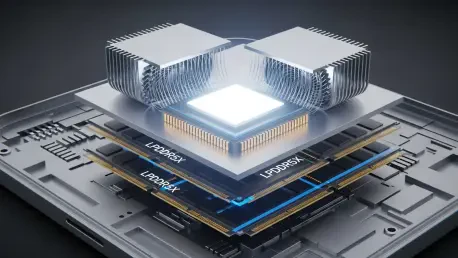
Beyond storage, the interaction between Random Access Memory and the central processor plays a critical role in the perceived fluidness of an interface. Modern smartphones often boast 12GB or 16GB of LPDDR5X RAM, which is more than enough for multitasking, but the way the Android or iOS kernel manages this memory can introduce its own set of delays. When an app is launched, the operating system must find a contiguous block of memory, clear out old cached data if necessary, and establish a secure environment for the new process to run. This management layer adds several milliseconds of overhead that no amount of CPU horsepower can eliminate. Moreover, the memory controller itself becomes a point of congestion when multiple background processes are competing for bandwidth. This explains why a budget phone from a few years ago might feel surprisingly similar to a modern flagship during the initial two seconds of an app launch, as both are constrained by the same fundamental laws.
Thermal Constraints and Optimization Realities
A significant reason why peak performance rarely translates into real-world speed is the aggressive thermal throttling required to keep thin smartphones from overheating. Modern chips are capable of reaching incredibly high frequencies, but they can only sustain those speeds for a few seconds before the heat generated by the transistors threatens to damage the internal components. In the confined space of a mobile chassis, there is no room for active cooling like fans, so the device must downclock the processor almost immediately after a heavy burst of activity begins. This means that while a chip might be advertised as having a 4.0 GHz clock speed, it may actually be running at half that speed by the time a complex app has finished loading its graphical assets. This thermal envelope creates a hard ceiling on performance that forces engineers to prioritize energy efficiency over raw speed, leading to a situation where the hardware is intentionally held back to maintain a safe temperature throughout operation.
The historical focus on increasing peak clock speeds proved to be an insufficient strategy for improving the actual responsiveness of mobile devices because it ignored the holistic nature of computing. Industry leaders eventually recognized that the primary bottleneck resided within the storage architecture and the inherent overhead of modern software stacks. Moving forward, the industry adopted a strategy centered on “intelligent pre-fetching,” where AI cores predict user intent to load assets into memory before an icon is even pressed. This transition required developers to move away from bloated cross-platform wrappers in favor of lightweight, hardware-accelerated codebases. It was observed that minimizing the instruction set for startup sequences yielded better results than simply throwing more raw power at the problem. By 2027, the standard for performance shifted from gigahertz to “time-to-interactive,” forcing a radical redesign of how operating systems prioritize background tasks to ensure efficiency.