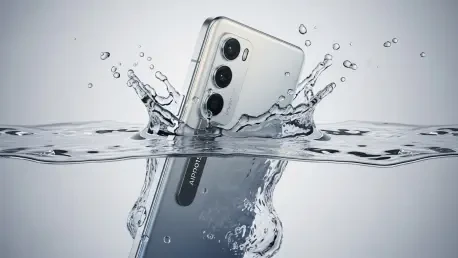

Oscar Vail joins us to discuss the highly anticipated debut of the Oppo Reno16 series in India. With its launch scheduled for July 2nd, the lineup introduces a sophisticated approach to imaging by utilizing high-resolution 50MP sensors across its entire camera array. Beyond photography, our discussion covers the unique HoloVerse 3D aesthetic, the modular Oppo Bubble accessory, and how these advancements aim to disrupt the traditional hierarchy of smartphone lenses through sensor uniformity and extreme durability.
High-end mobile photography often struggles with consistency across different lenses. How do synchronized sensor resolutions, like the four 50MP modules on the Reno16, change the user experience for creators?
It is a massive shift because you no longer feel like you are downgrading when switching to the 116° ultra-wide or the 3.5x telephoto lens. By equipping the main, 80mm telephoto, and ultra-wide cameras with 50MP sensors, Oppo ensures that the texture and detail remain crisp across the board. This uniformity removes the jarring jump in quality that usually occurs when zooming, making the photo editing process much more predictable. For the first time, even the 100° ultra-wide selfie camera matches this resolution, allowing creators to maintain a professional look regardless of which side of the phone they use.
Video production on smartphones is becoming more demanding. What impact does having 4K 60fps HDR capabilities across all four cameras have on mobile storytelling?
This level of flexibility empowers videographers to tell more cinematic stories without technical compromises. Having 4K 60fps HDR on every single module means you can cut between a wide-angle shot and a zoomed-in detail without seeing a shift in color depth or motion smoothness. It allows for a seamless narrative flow, especially when using the 3.5x telephoto to capture intimate moments with high dynamic range. When you tap that dedicated AI key on the side to assist with your shoot, you can really feel the power of ColorOS 16 working to balance the lights and shadows in real-time.
Oppo is introducing some unconventional features like the Oppo Bubble and the physical AI key. How do these additions reflect the current evolution of smartphone hardware?
The Oppo Bubble is particularly fascinating because it is a circular display that attaches to the back for high-quality selfies or functions as a wearable accessory. This adds a modular, playful element that sets the device apart from the standard glass slabs we see every year. Meanwhile, the inclusion of a dedicated AI key acknowledges that software intelligence is now a core part of the hardware experience, giving users instant access to editing functions. It is a smart move to merge digital convenience with physical hardware interaction in a way that feels natural for the user.
The Reno16 features an IP69K rating and a unique HoloVerse 3D Design. Why are these aesthetic and structural choices significant for the modern consumer?
An IP69K rating is the gold standard for durability, meaning the phone can actually survive high-pressure hot water jets and deep submersion. This provides an incredible sense of security when taking the device into extreme environments or simply using it near a pool. Visually, the HoloVerse 3D Design with its 3D Pop Planet look is a major departure from the matte gradients that have dominated the market. It creates a striking, multi-dimensional aesthetic that makes the phone feel like a piece of futuristic jewelry rather than just a tool.
What is your forecast for the Reno16 series?
I believe the Reno16 series will redefine expectations for mid-range photography when it launches on July 2nd. The introduction of the new Reno16c alongside the main model shows a clear strategy to dominate the Indian market with variety. By offering 50MP parity across lenses and shipping with Android 16 out of the box, Oppo is challenging the industry to stop neglecting secondary cameras. It is a bold step toward a future where every sensor on a mobile device is treated as a primary-grade tool.