
Oscar Vail is a seasoned technology expert who has spent years dissecting the evolution of mobile hardware and open-source ecosystems. Known for his ability to spot industry shifts before they go mainstream, Oscar has a particular talent for evaluating how mid-range devices are closing the gap with flagship competitors. Today, he shares his perspective on the recent leak of a massive hardware refresh that promises to redefine expectations for battery life and display quality in the consumer electronics space. We explore the technical implications of the new global series, from the staggering increase in battery capacities to the cutting-edge implementation of high-brightness AMOLED panels.
How do you interpret the significant leap in display technology and screen real estate found across this new series?
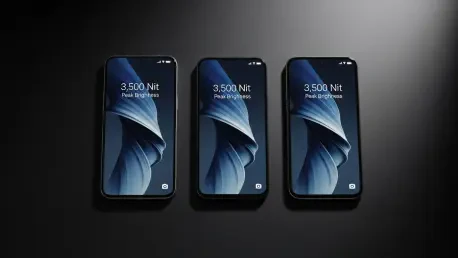
The shift toward a 6.99-inch AMOLED display on the base model is a bold move that effectively blurs the line between traditional smartphones and small tablets. When you combine that sheer size with a 120Hz refresh rate and a peak brightness of 1,800 nits, you are looking at a device that prioritizes high-fidelity media consumption above all else. The Pro models take this even further by hitting an incredible 3,500-nit peak brightness and a sharper 1280×2772 resolution, which ensures visibility even under the harshest direct sunlight. Protecting these panels with Gorilla Glass 7i on the entry-level and Victus 2 on the Pro versions suggests a serious commitment to durability that we usually only see in the highest price tiers. It is clear that the goal here is to provide a premium visual experience without the typical flagship tax.
With the base models offering a 7,700 mAh battery, how do you see this impacting the daily habits of the average user?
Moving to a 7,700 mAh battery as the starting point is a game-changer for the industry, especially when most competitors are still hovering around the 5,000 mAh mark. This extra capacity means that even the most demanding users can likely go two full days without reaching for a charger, though the 224g weight of the device is the trade-off for that endurance. I am particularly interested in how the 45W fast charging will interact with such a large cell on the Snapdragon 4 Gen 4 and 6s 4G Gen 2 platforms. Users will have to adjust to a slightly larger footprint, measuring 169.7 x 79.14 x 8.45 mm, but for many, the peace of mind that comes with nearly endless battery life will far outweigh the added bulk.
The Pro and Pro Max iterations introduce some staggering power and durability ratings; what stands out to you regarding their technical builds?
The technical specifications of the Pro Max are nothing short of monstrous, specifically the 9,210 mAh battery paired with 100W fast charging. This level of power density, combined with the Snapdragon 6 Gen 5 SoC and UFS 4.0 storage on the higher tiers, indicates a device built for extreme longevity and high-speed data processing. I’m also struck by the ruggedness of the Pro model, which carries IP66, IP68, IP69, and IP69K ratings, meaning it can withstand high-pressure water jets and deep immersion. It is rare to see a device that focuses so heavily on “life-proofing” while also delivering a 50MP main camera and high-end aesthetics like Satin Orange or Sky Blue finishes. These phones are clearly designed for people who take their tech into unpredictable environments and need it to survive without a bulky protective case.
Considering the software and camera upgrades mentioned in the leaks, how is the balance between performance and photography being handled?
It is fascinating to see Android 16 and HyperOS 3 mentioned as the software foundation, as this suggests these devices are being built with a very long future in mind. On the photography side, the series seems to favor high-quality primary sensors, utilizing a 50MP main camera across the board, but the Pro Max steps up the game for content creators with a 32MP selfie shooter compared to the 16MP version on the standard models. The inclusion of an 8MP ultrawide on the Pro helps with versatility, but the real story is the underlying hardware like the Snapdragon 6s Gen 4 chipset. By balancing these capable processors with up to 12GB of RAM and various UFS storage grades, the manufacturer is ensuring that the camera software runs smoothly without the lag that often plagues high-resolution mid-range shooters.
What is your forecast for the mid-range smartphone market?
I believe we are entering an era where “mid-range” is no longer a compromise but a specialized choice for power users who value utility over brand prestige. We are going to see a massive “battery war” triggered by these 7,700 to 9,210 mAh capacities, forcing other manufacturers to abandon the standard 5,000 mAh ceiling. Displays will continue to get brighter, likely standardizing at 3,000+ nits, making the outdoor viewing experience a primary selling point. Ultimately, the market will shift toward these high-endurance, highly durable “super-mid-rangers” that offer 90% of a flagship’s capability at a fraction of the cost, making it harder for consumers to justify spending over a thousand dollars on a phone.